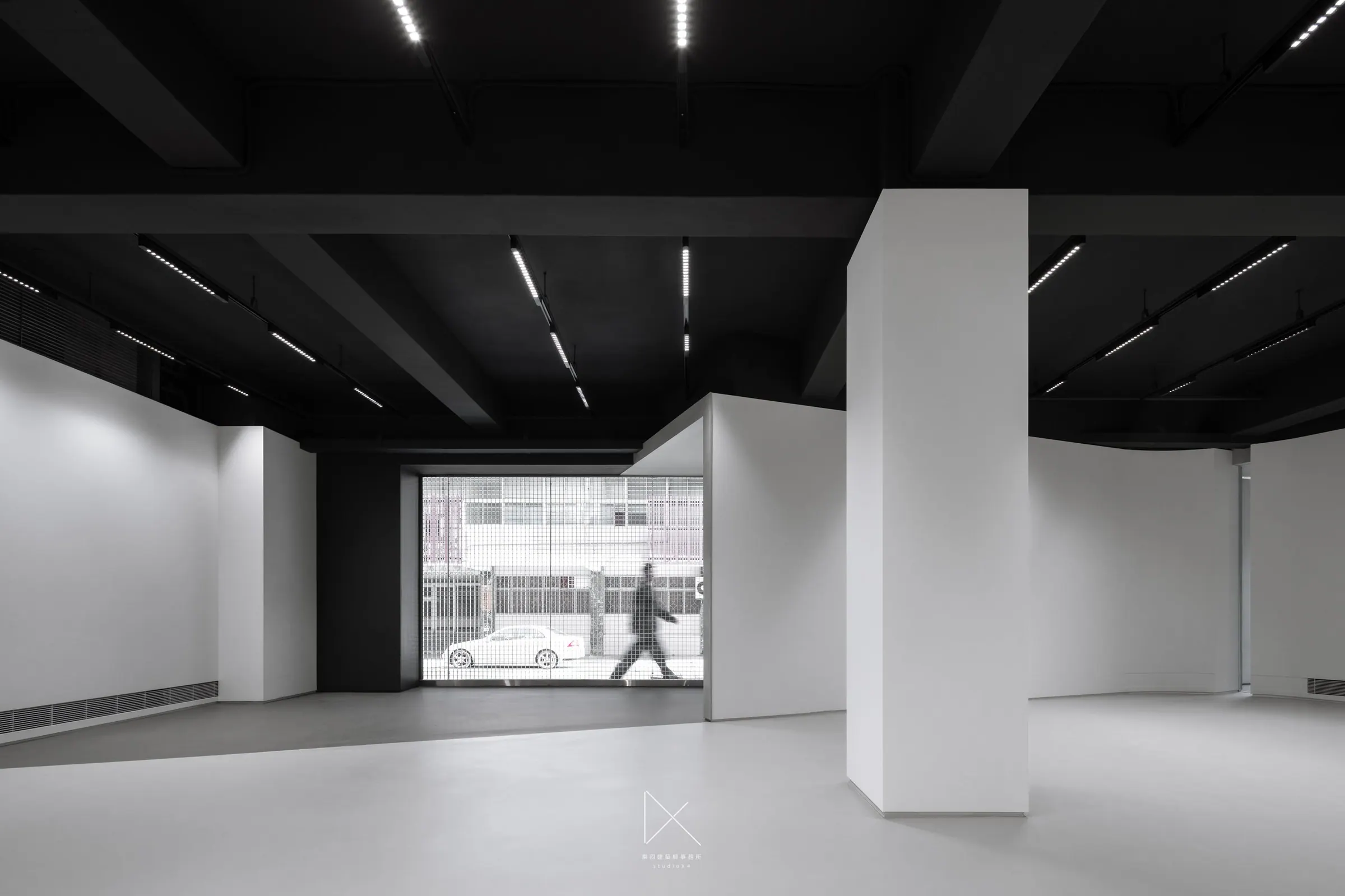
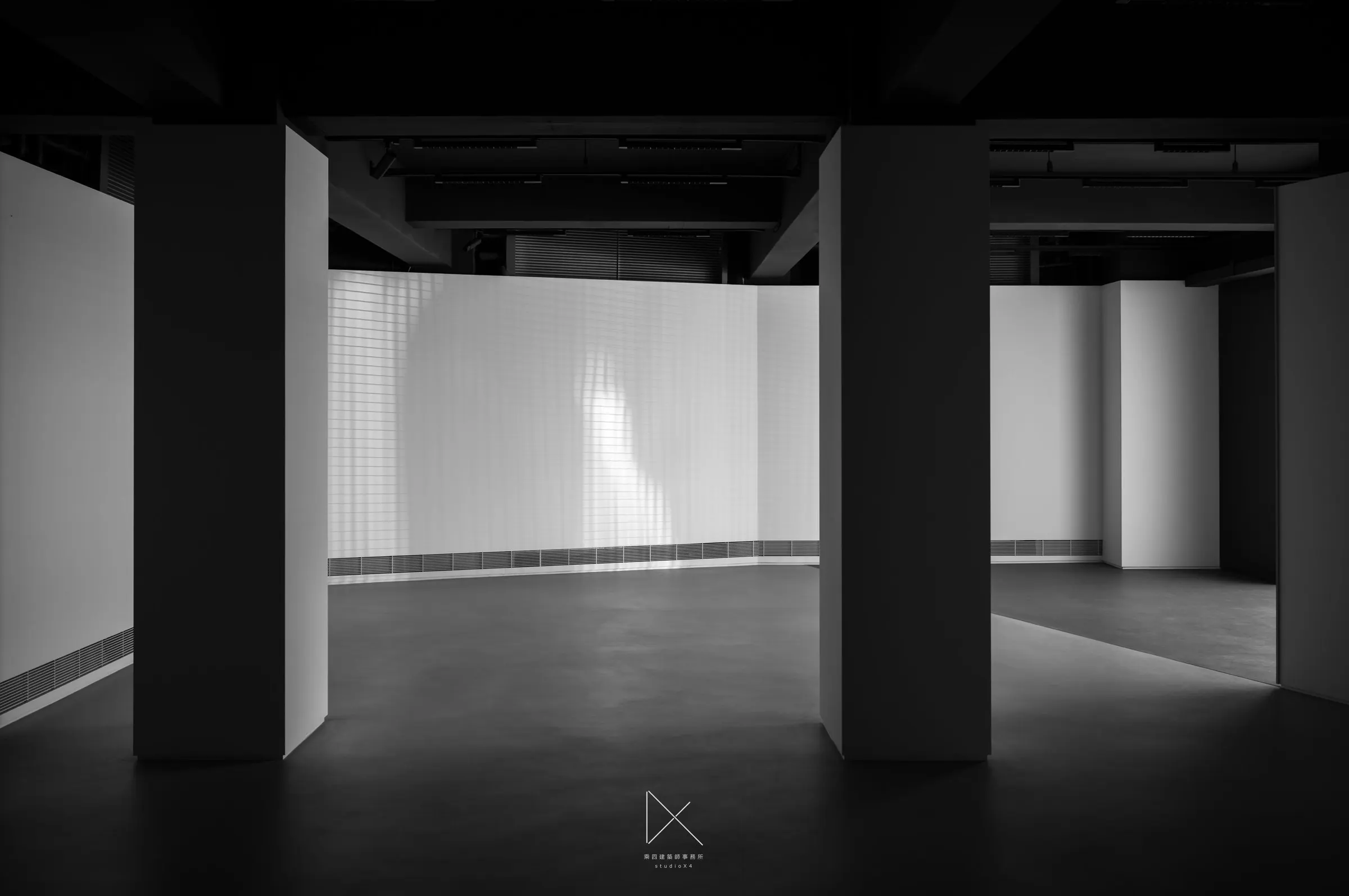
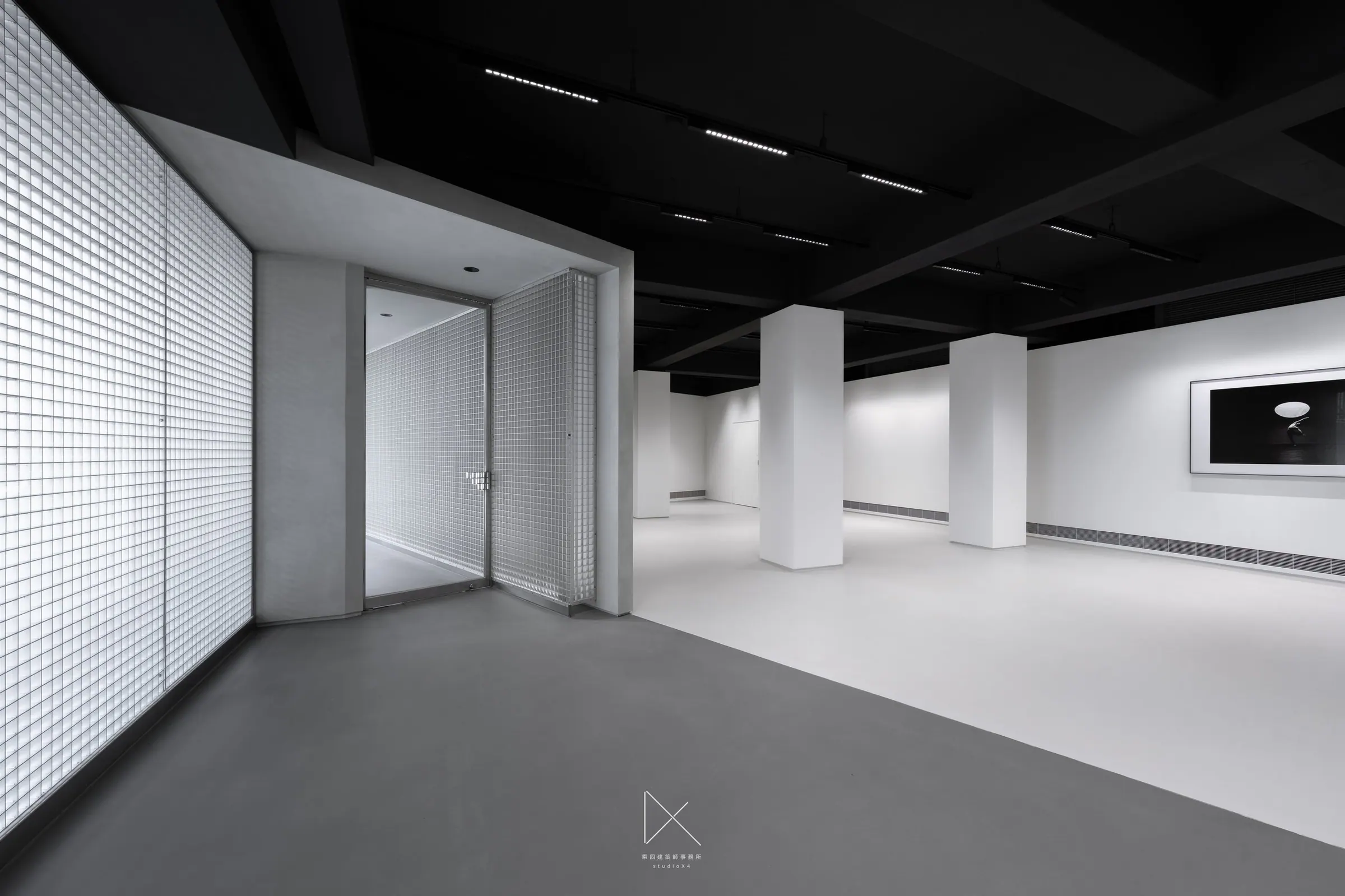
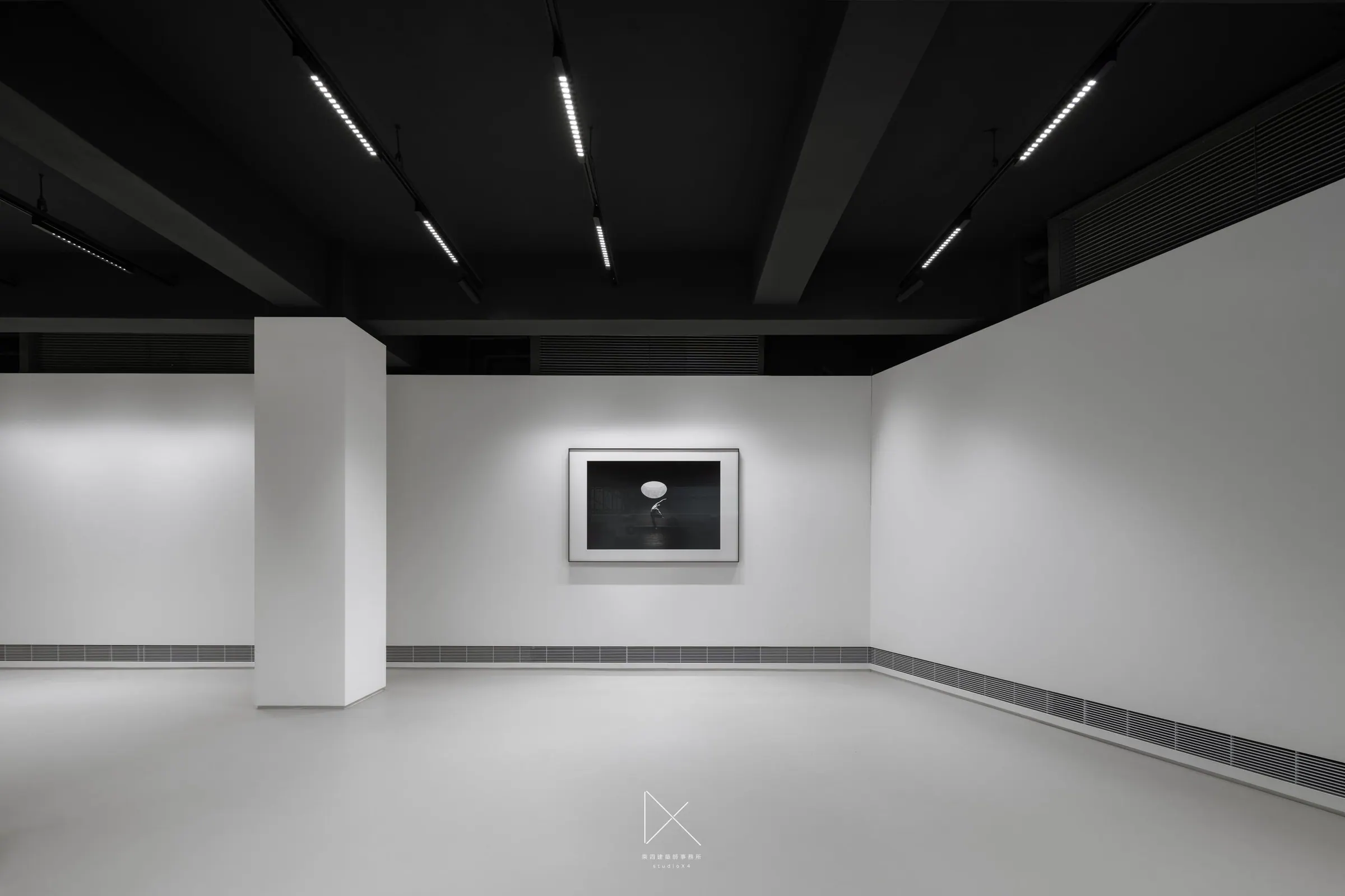
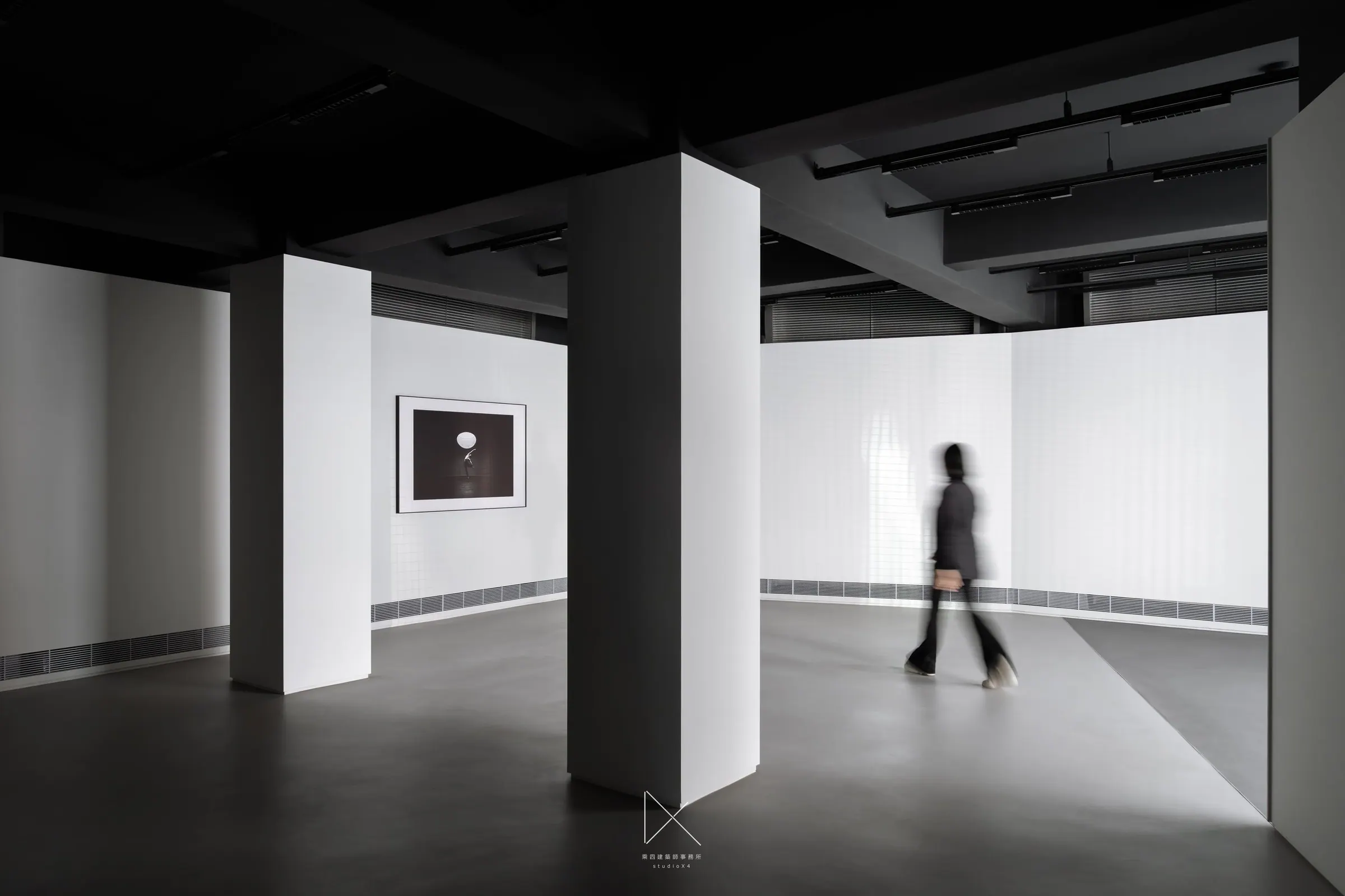
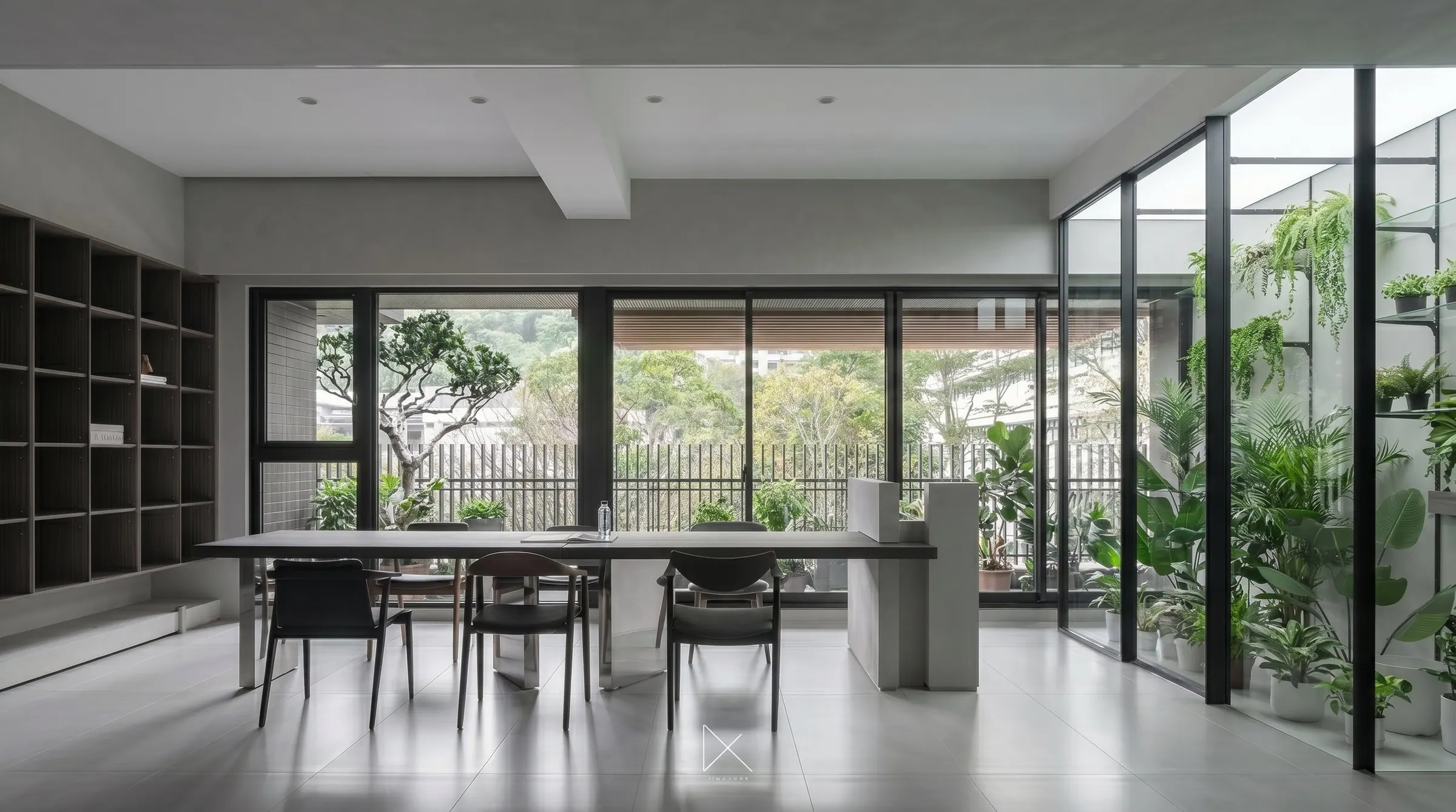
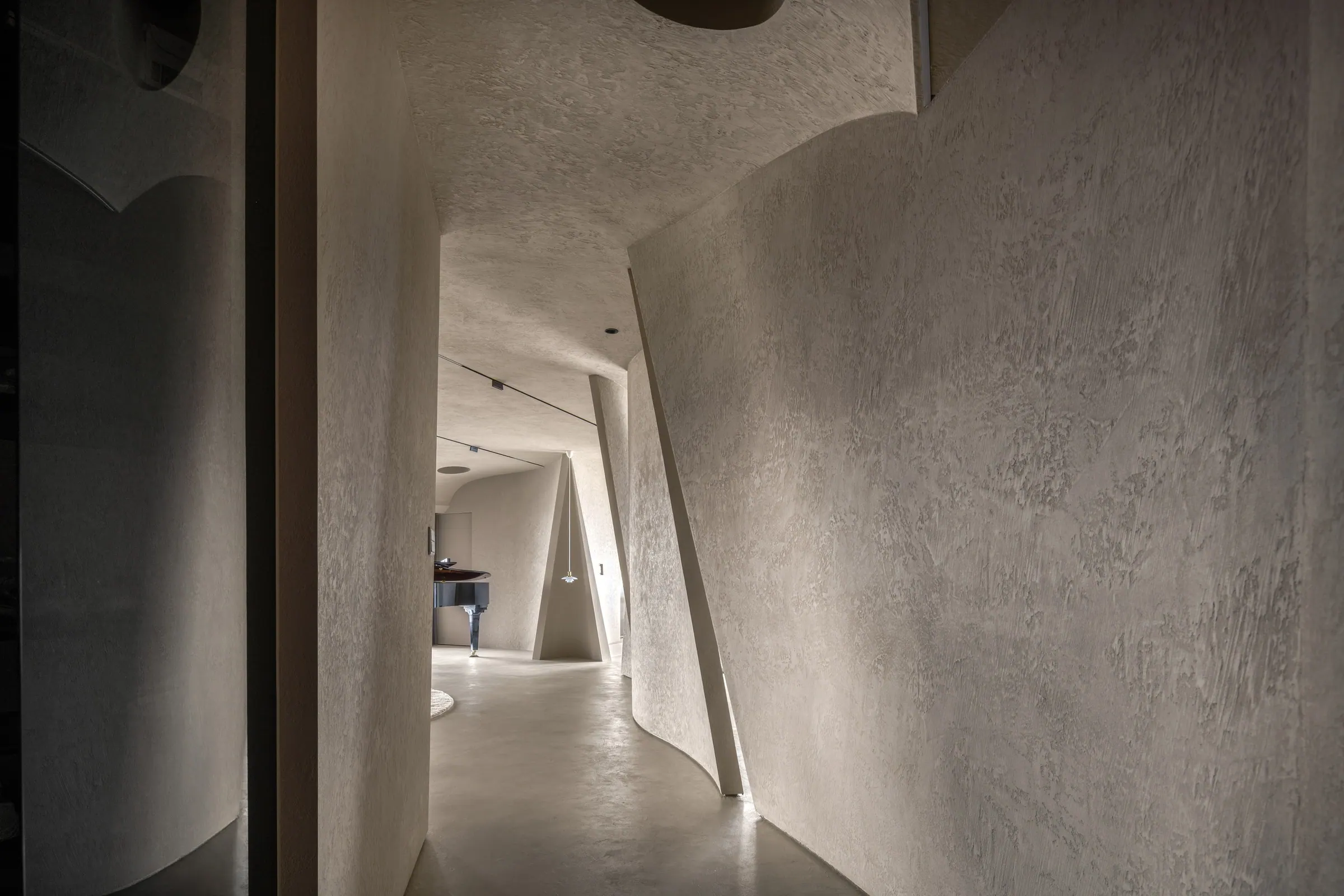
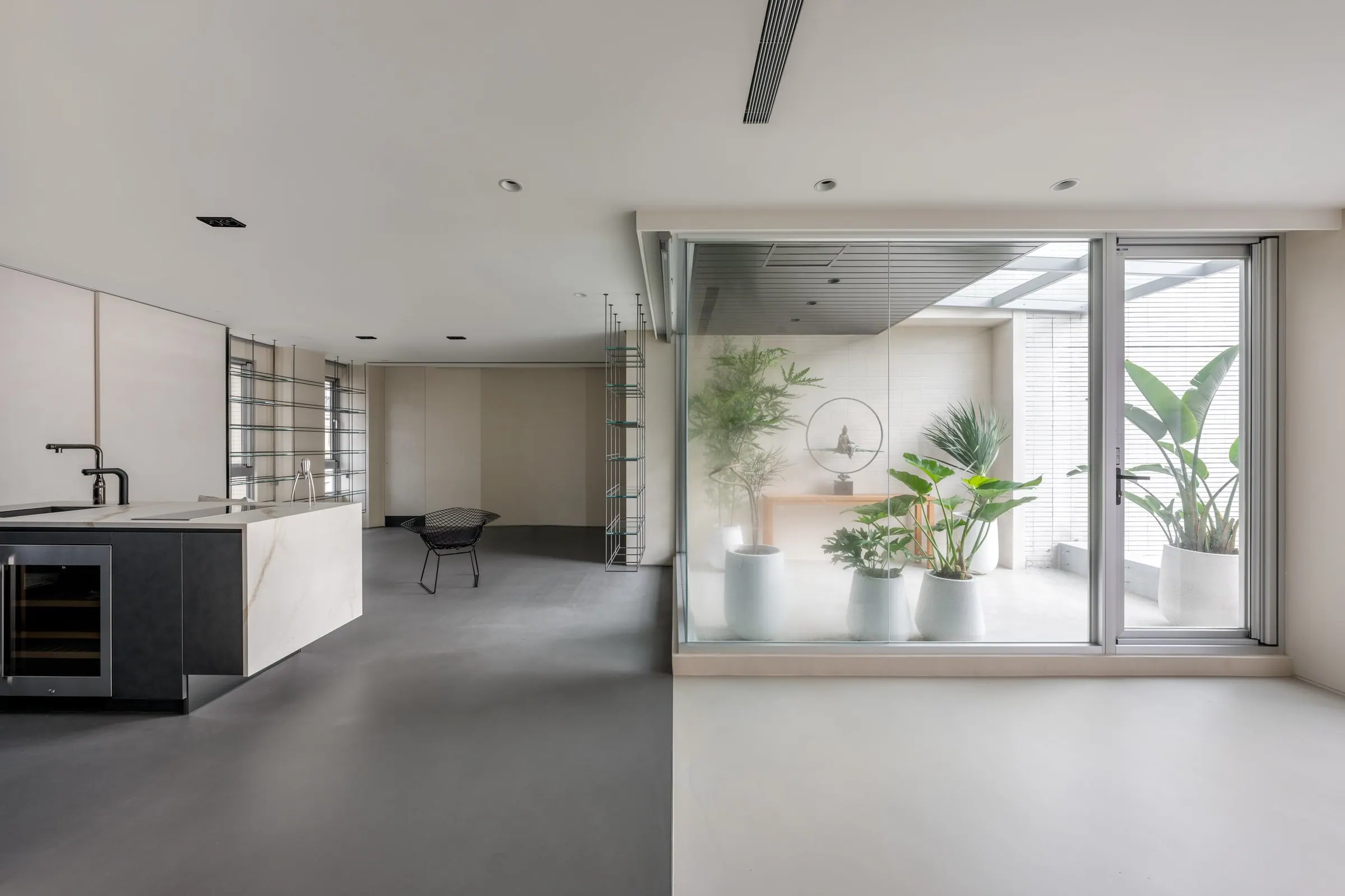
This former 1960s Taipower emergency repair center has been reimagined as an exhibition gallery. Preserving its architectural integrity, the intervention introduces a restrained material language that allows the space to recede — becoming a quiet canvas where art and architecture can coexist.
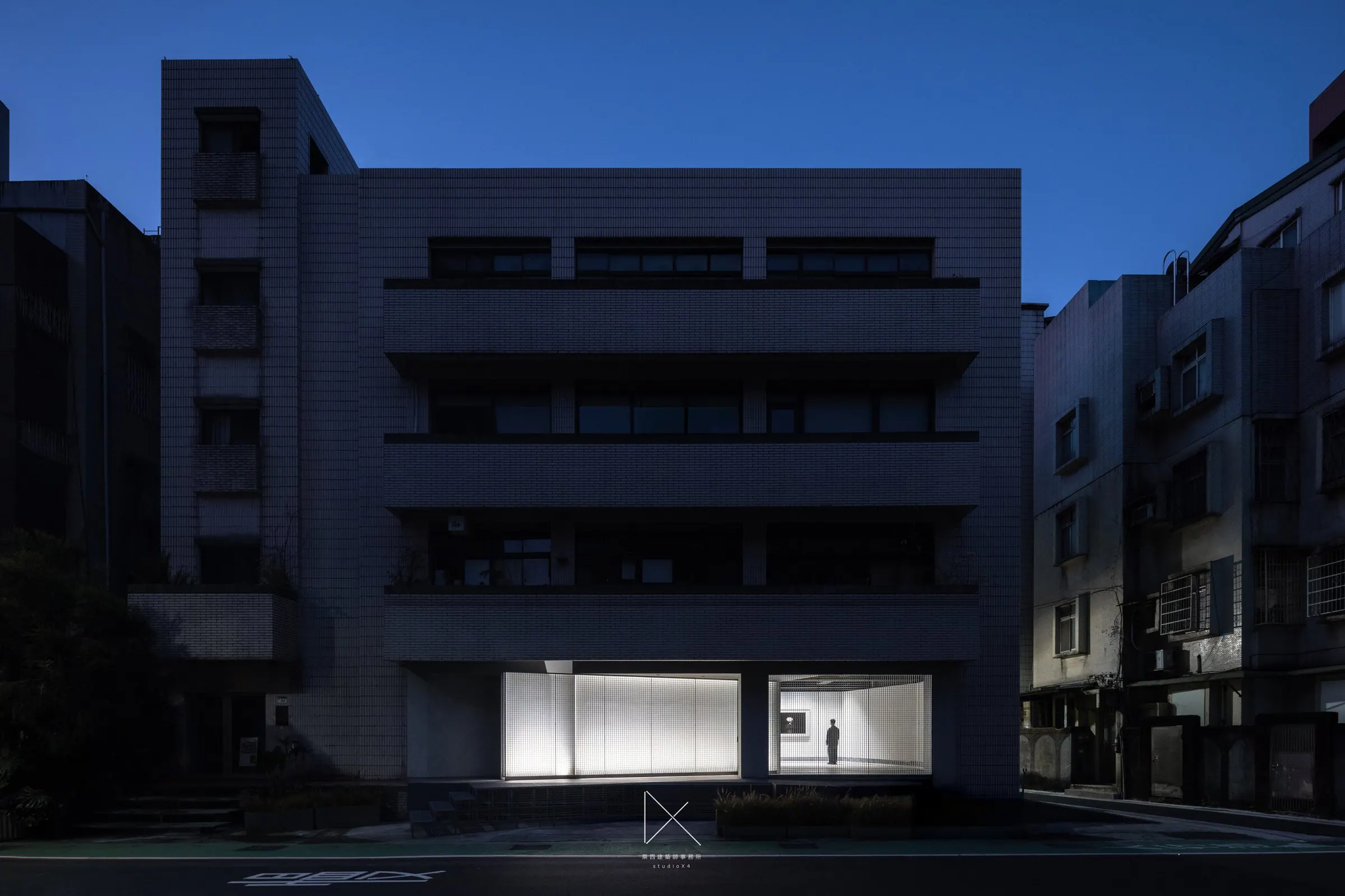
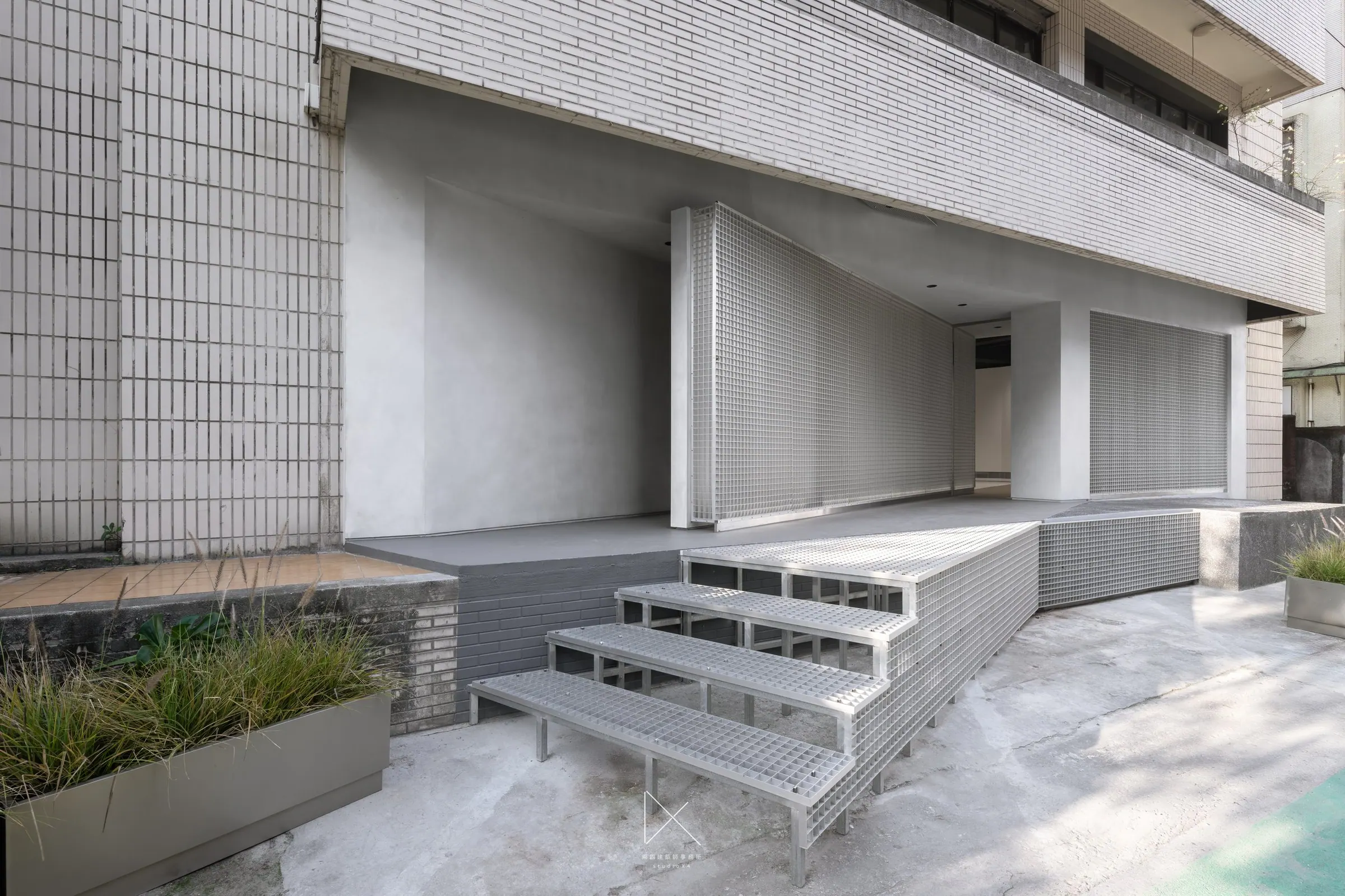
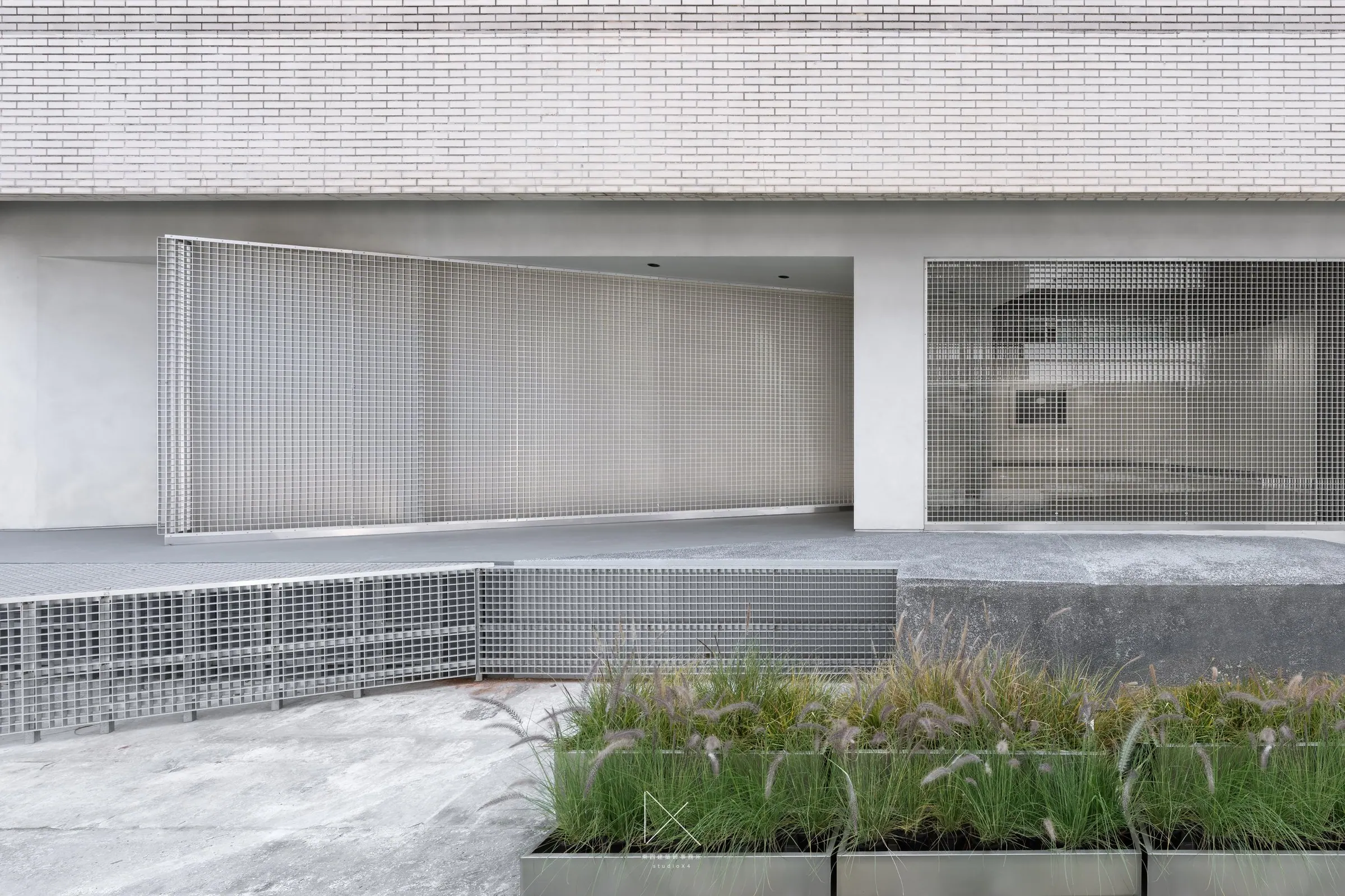
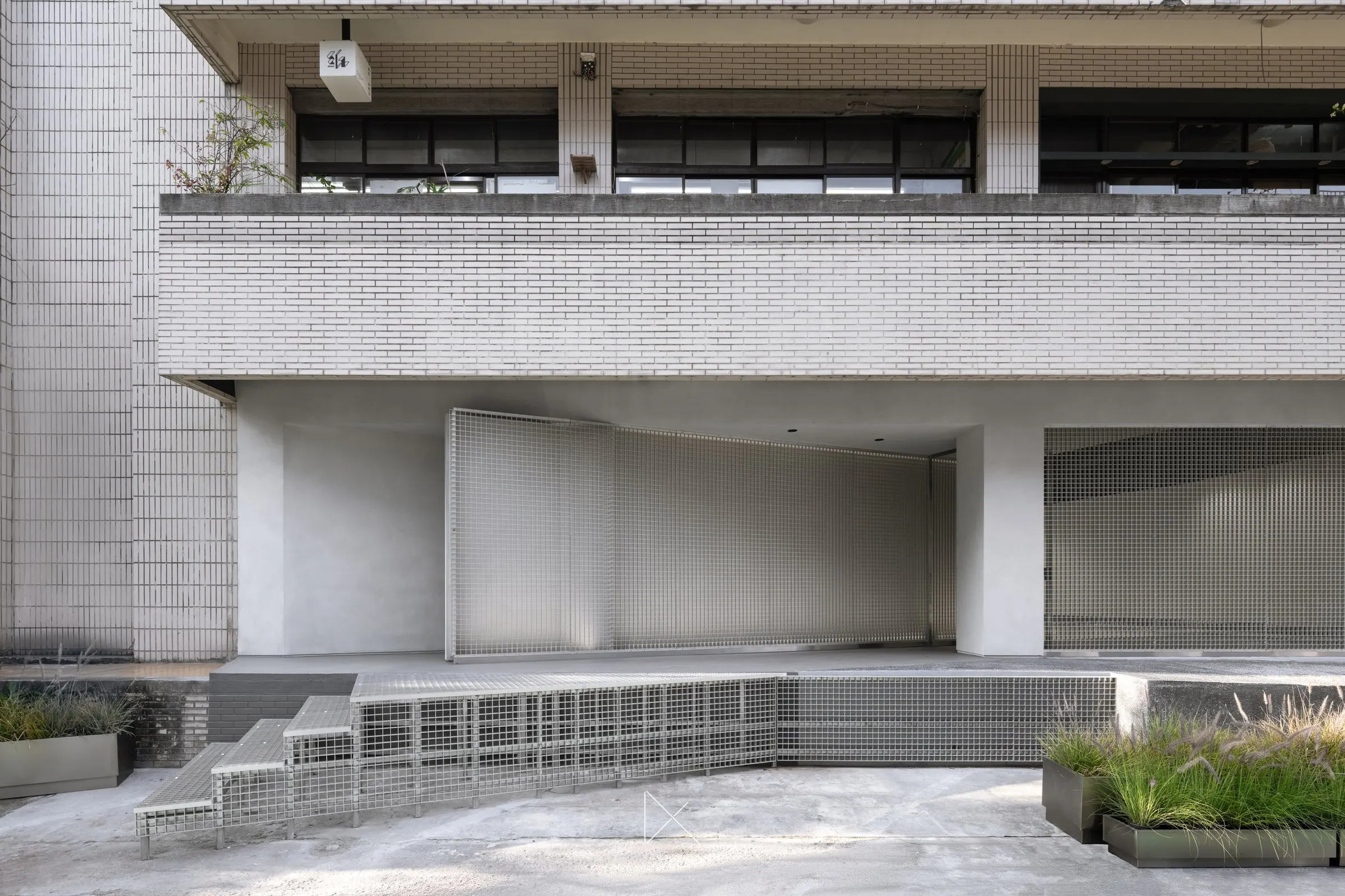
The original structure is a 1960s Taipower emergency-repair center — once a local symbol of progress: raised floors designed for container trucks, a reinforced-concrete skeleton, and a Japanese “two-Ding” tile facade echoing the masonry proportions of an earlier era. We kept its bones. We changed its language.
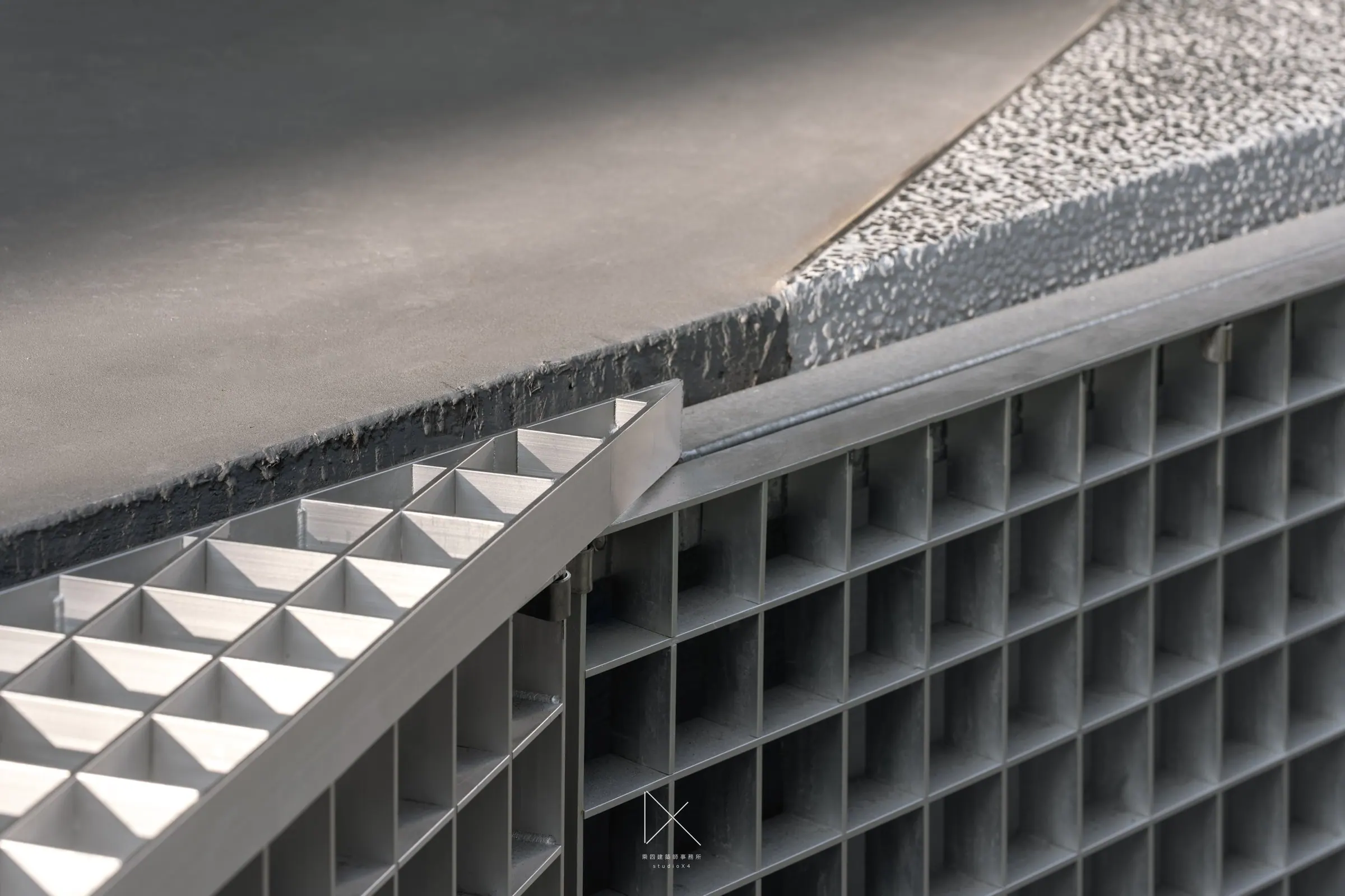
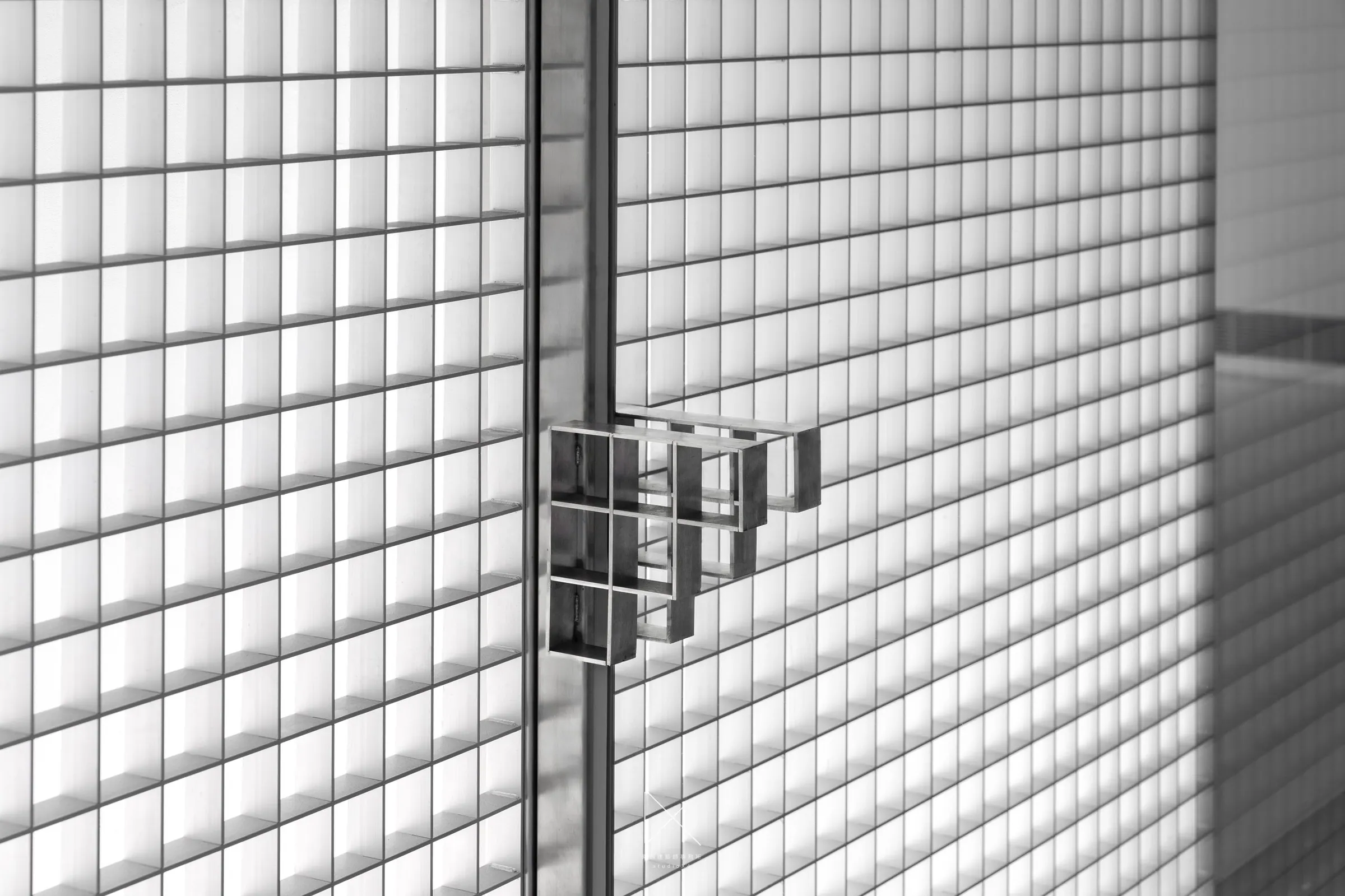
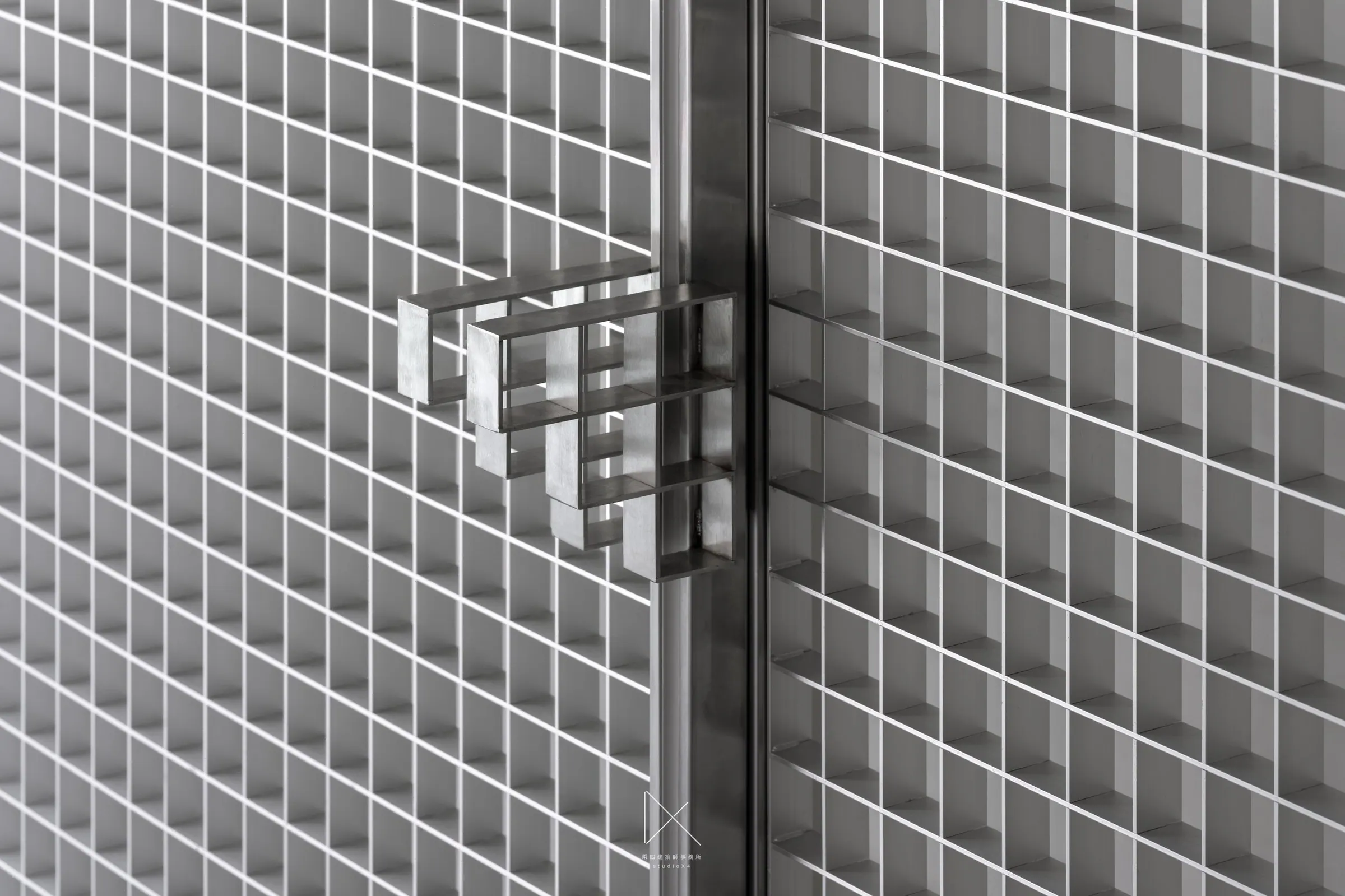
For an artist, the exhibition space is what the canvas is to paint — a background that enables expression. The aluminum intervention was chosen for its low reflectivity, forming an elemental grid that supports rather than competes with the artwork.
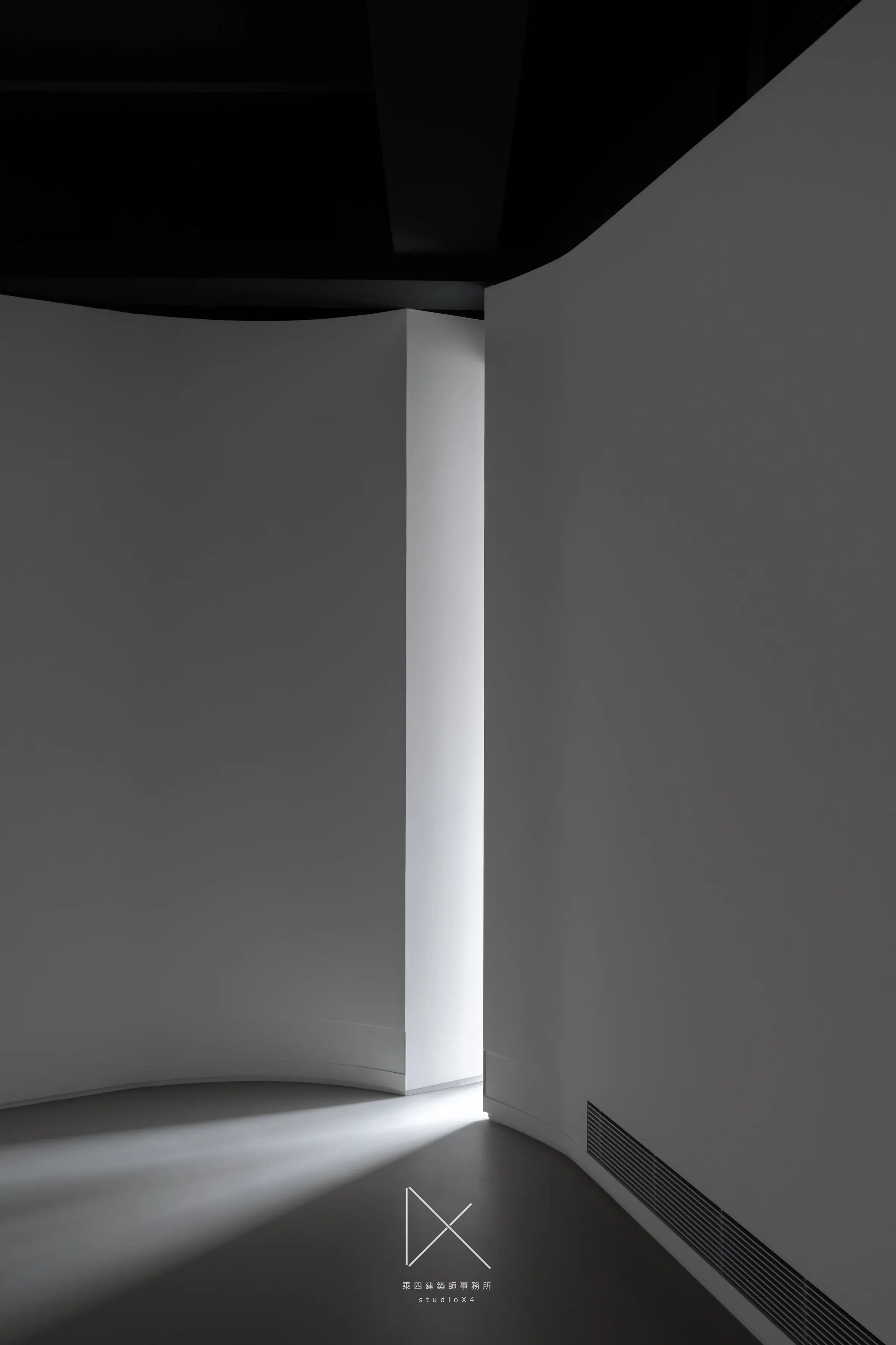
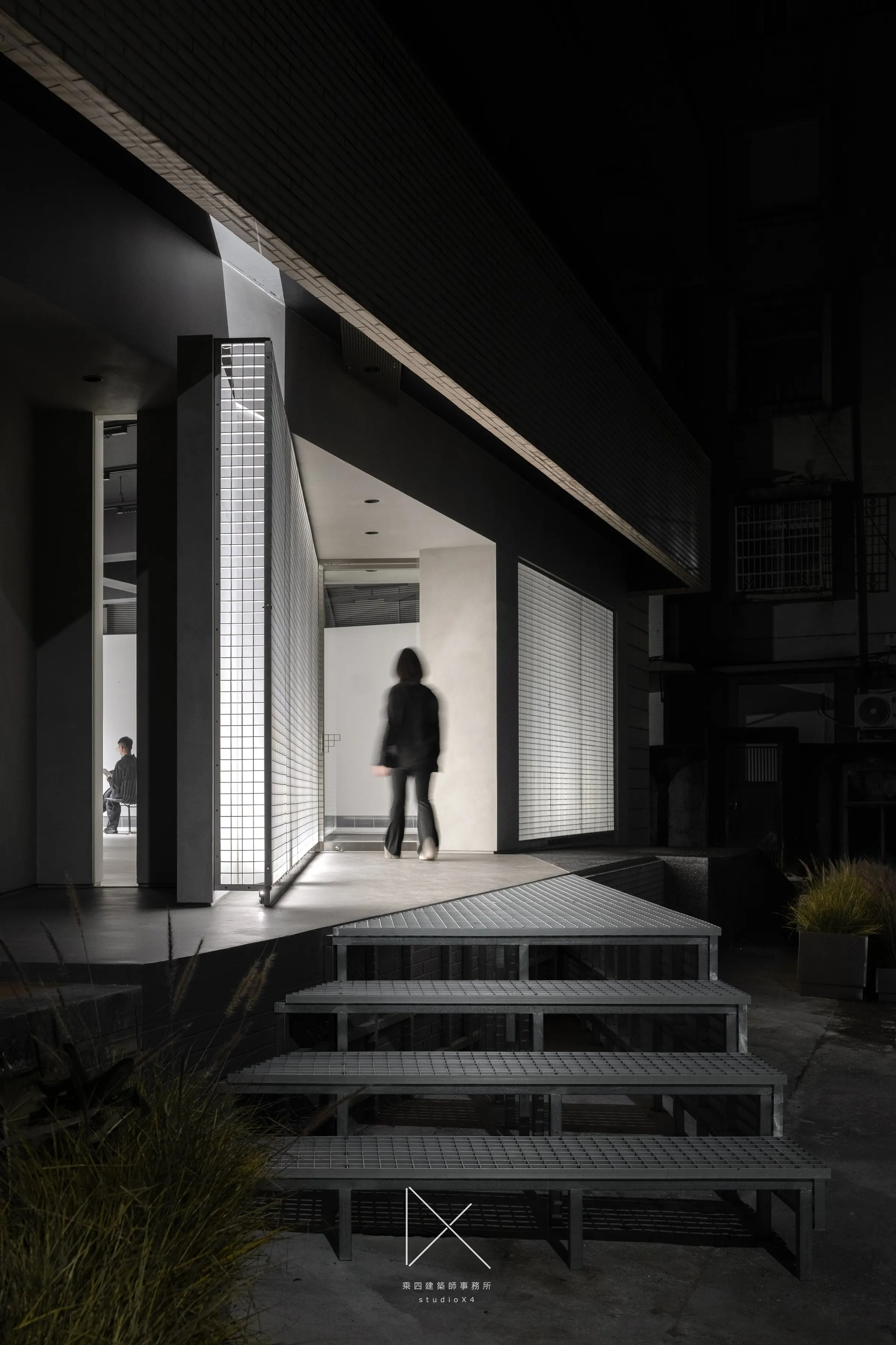
At the entrance, a subtle 21-degree axial pivot creates a shift in movement and perception.
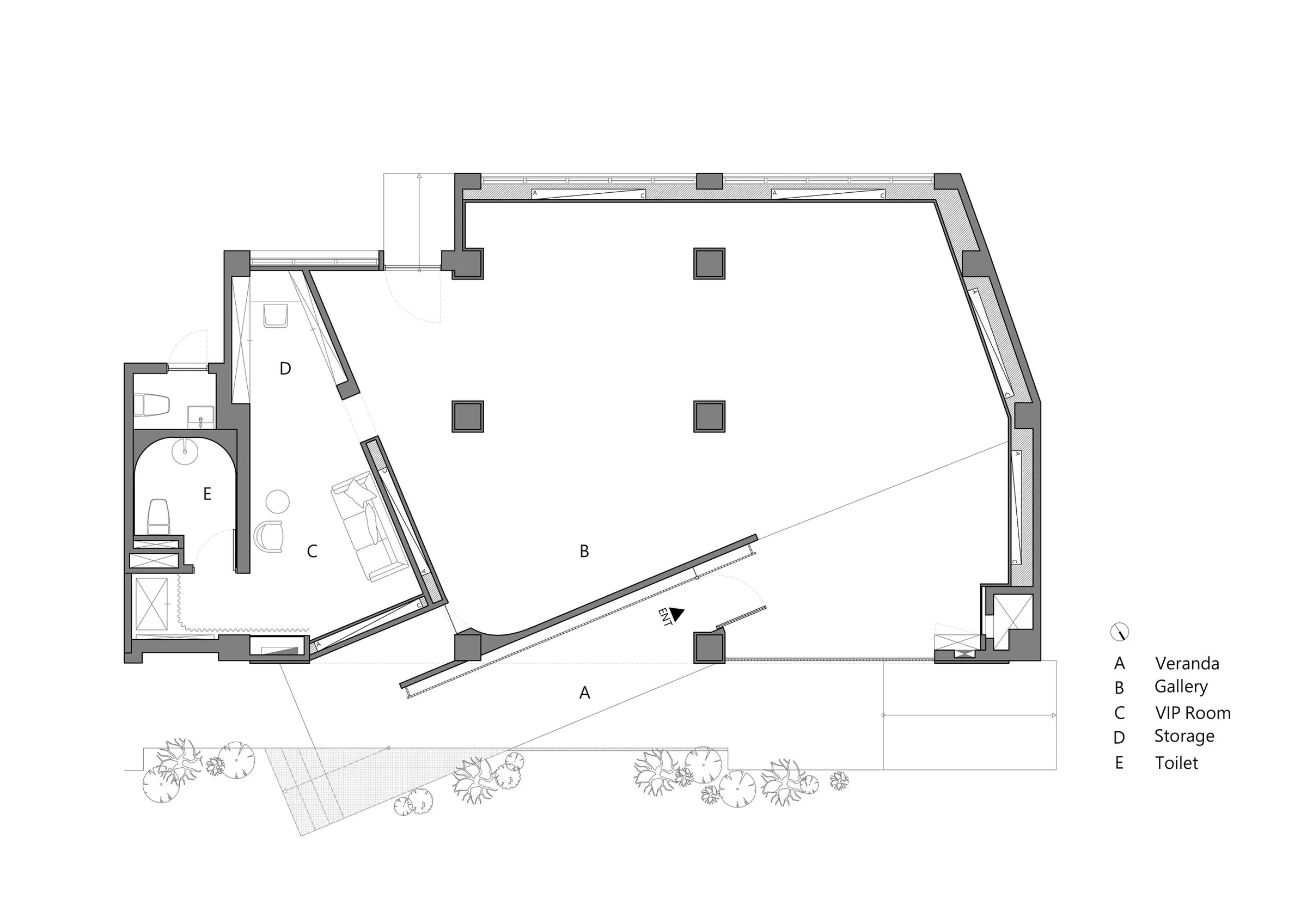
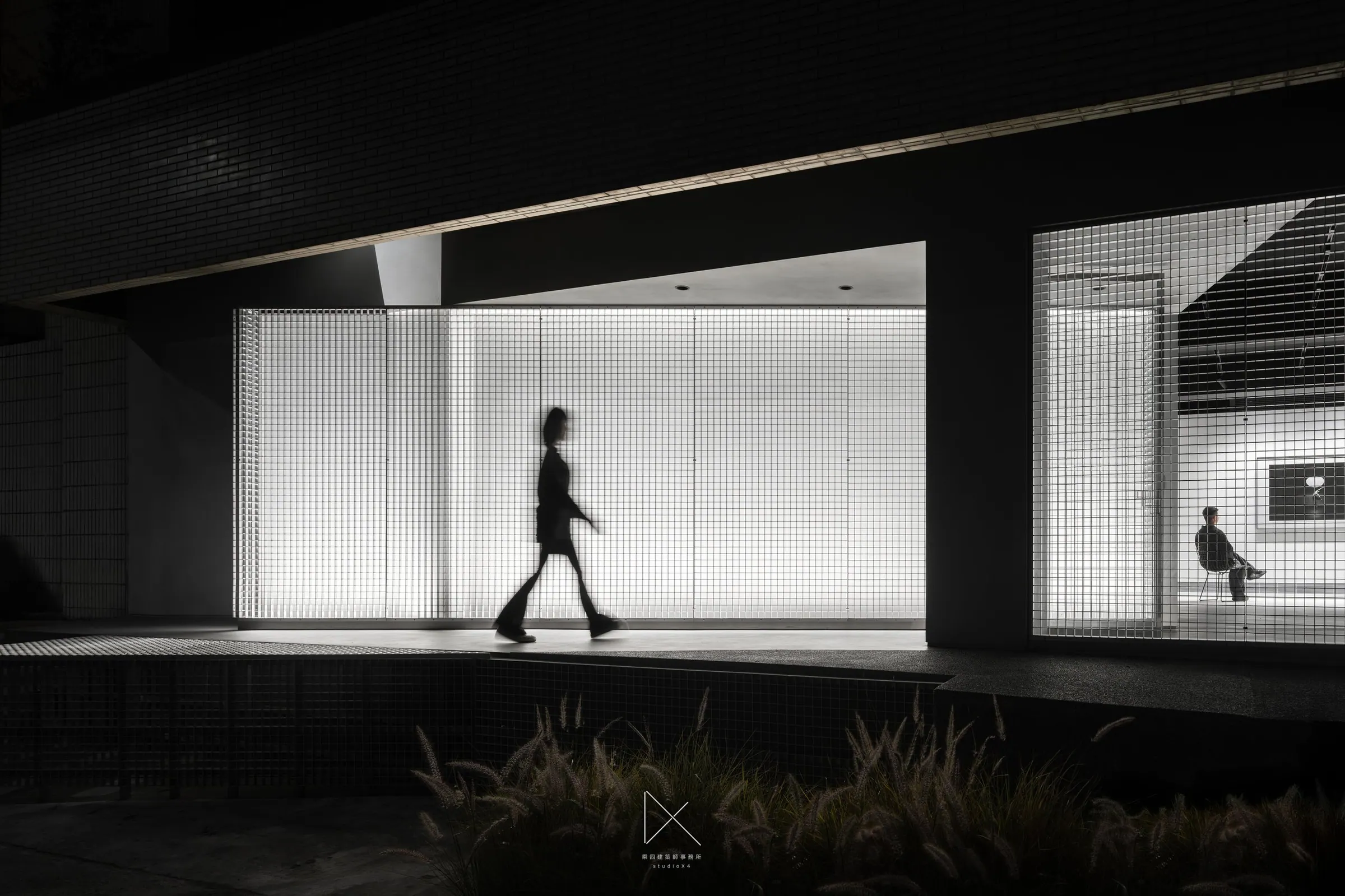
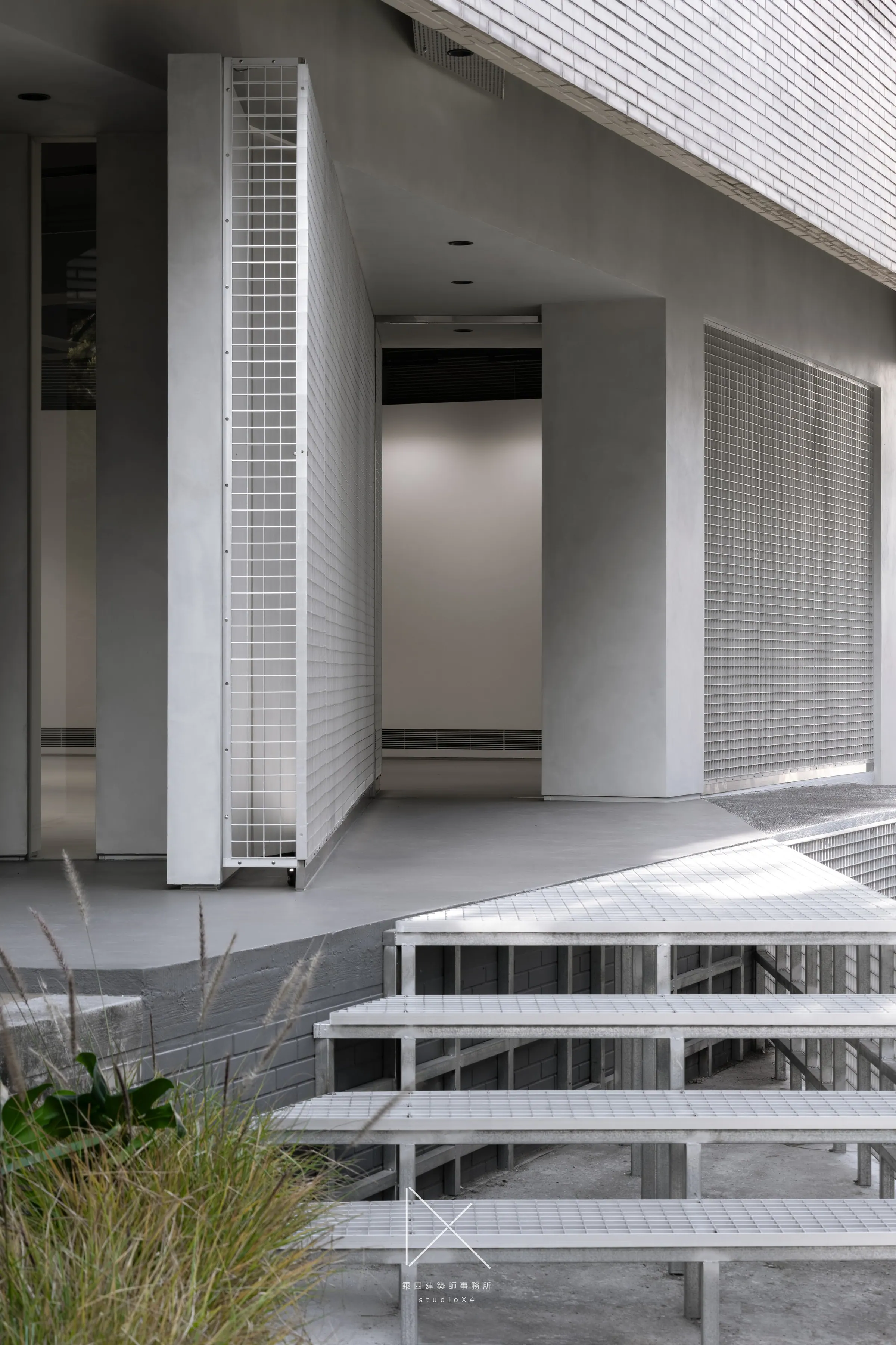
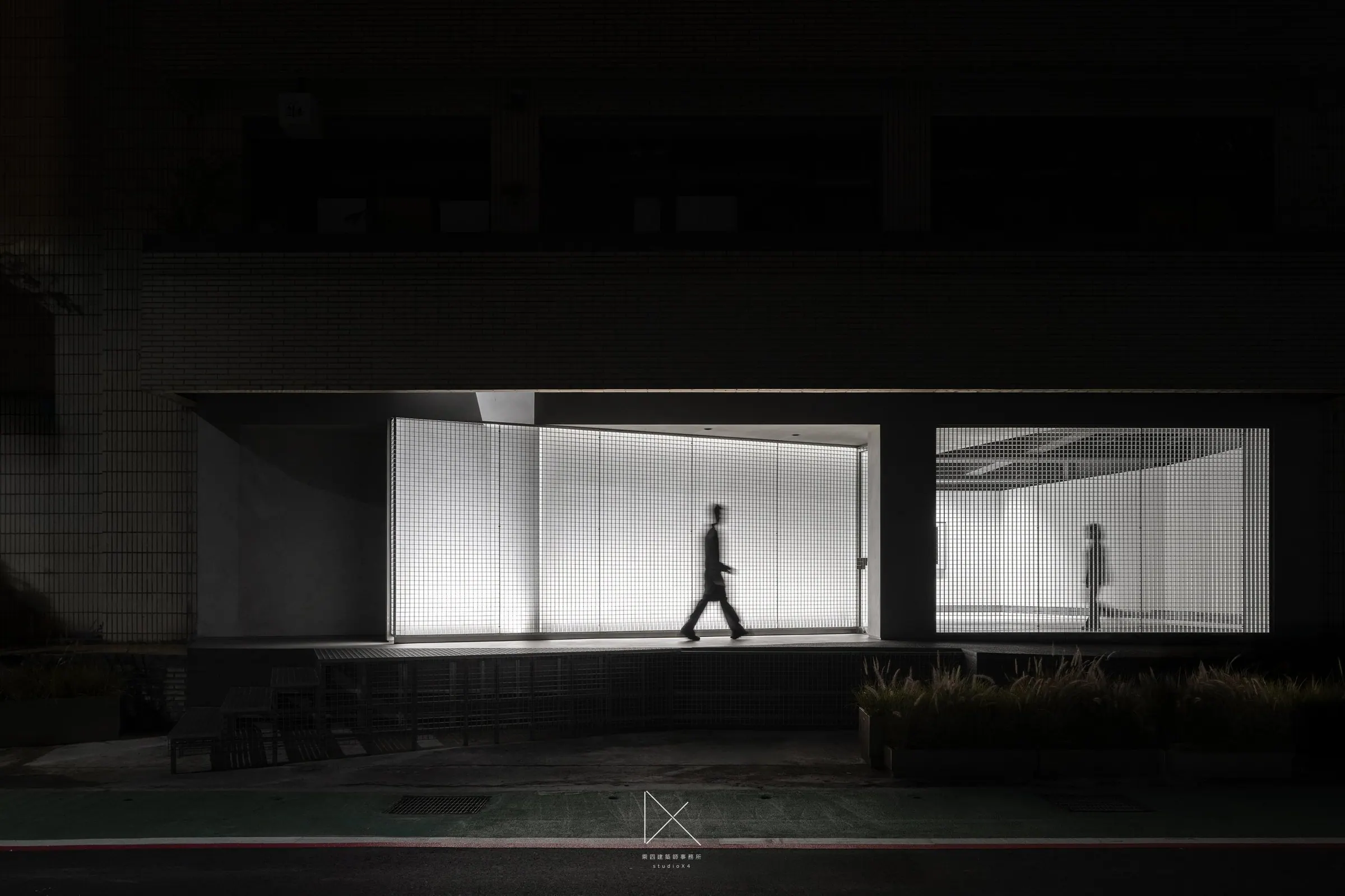
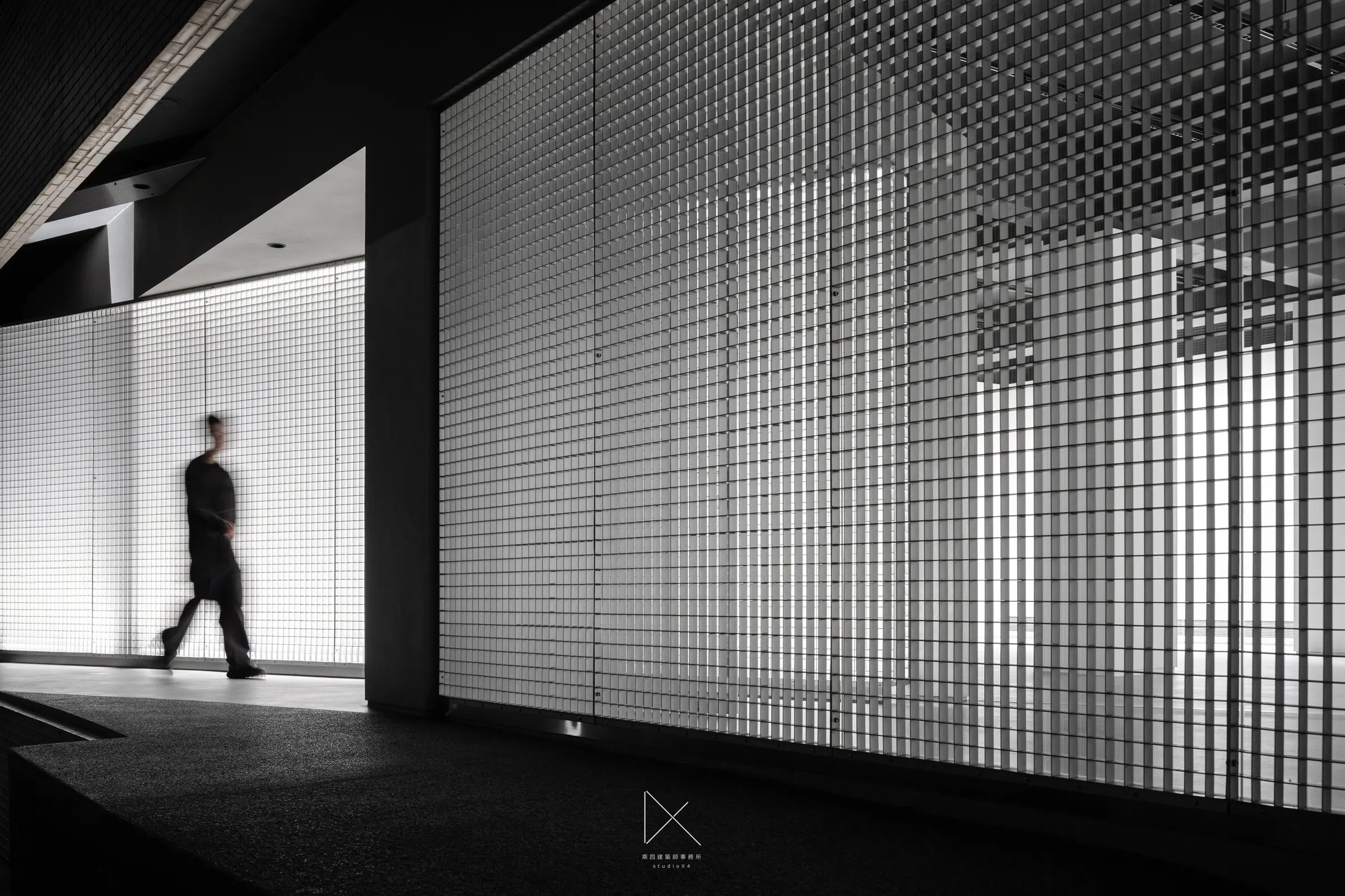
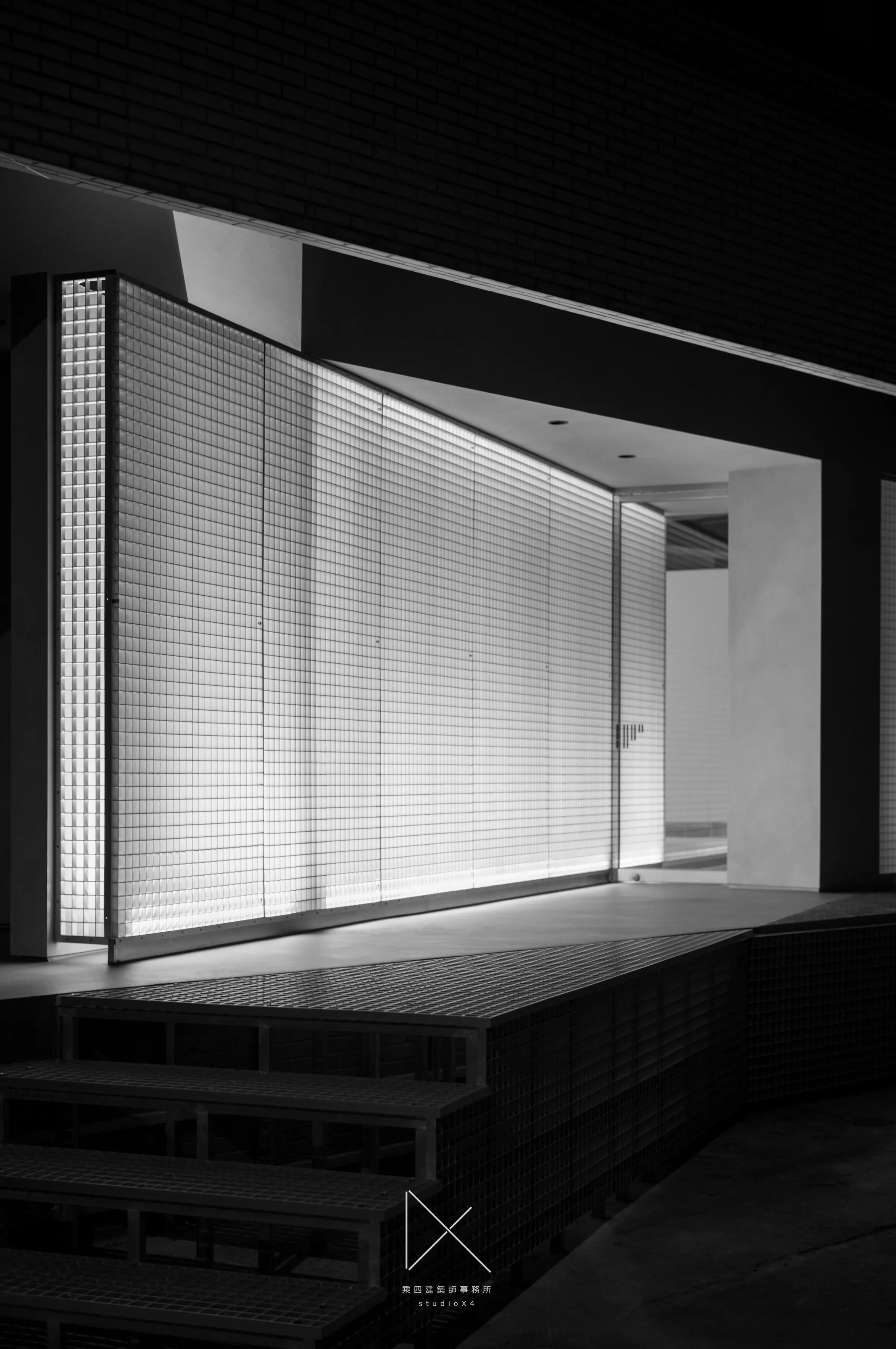
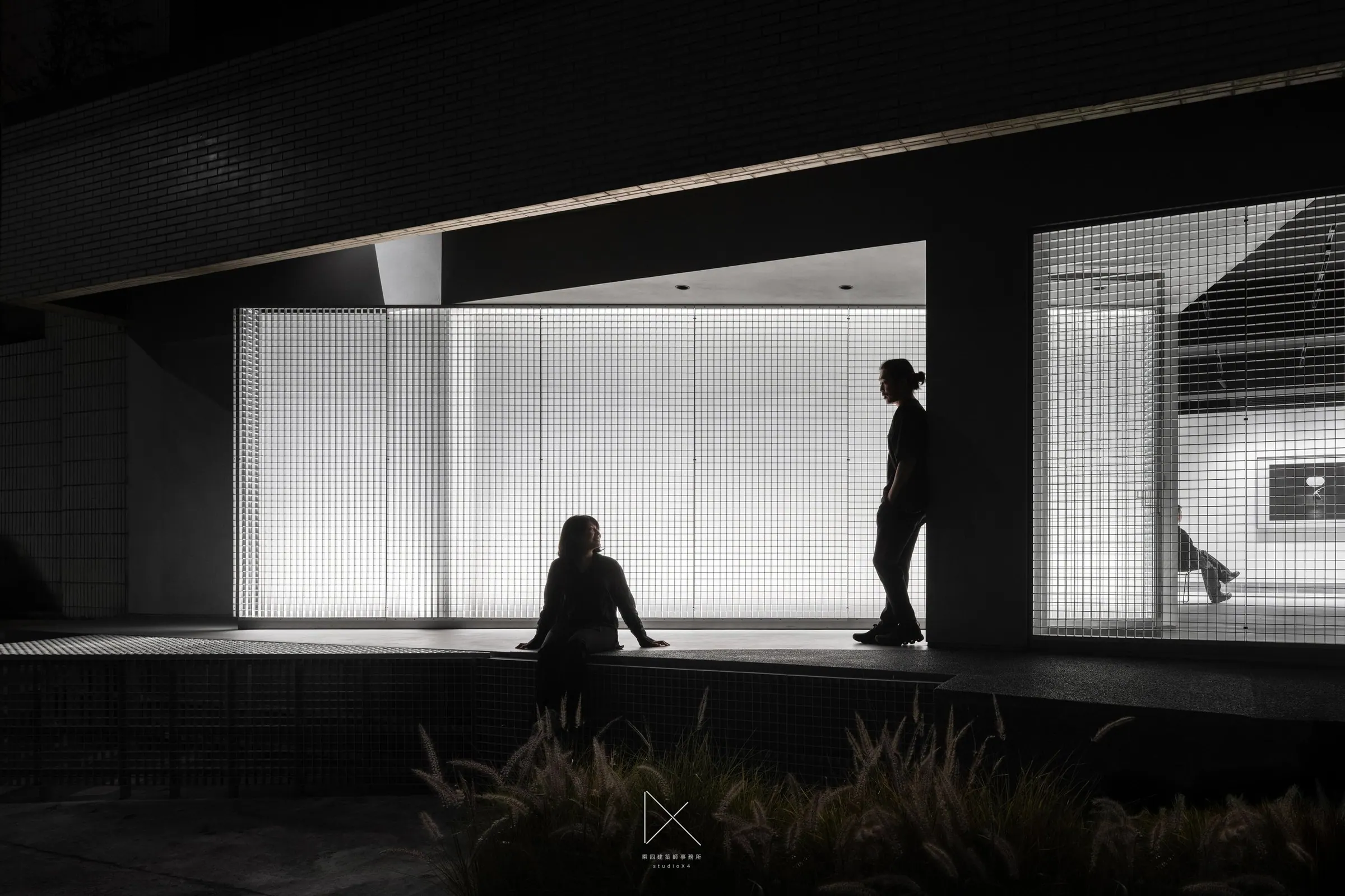
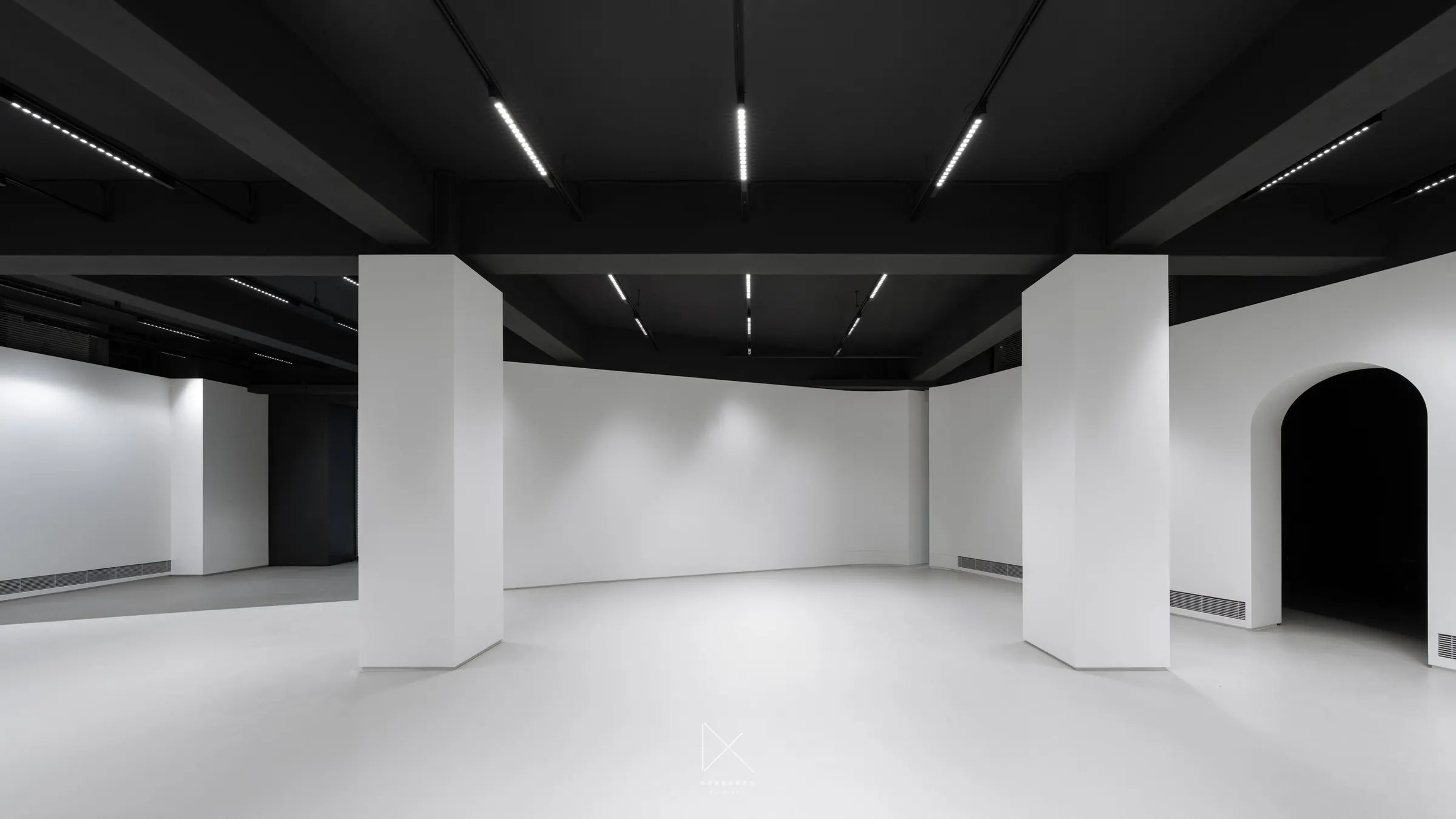
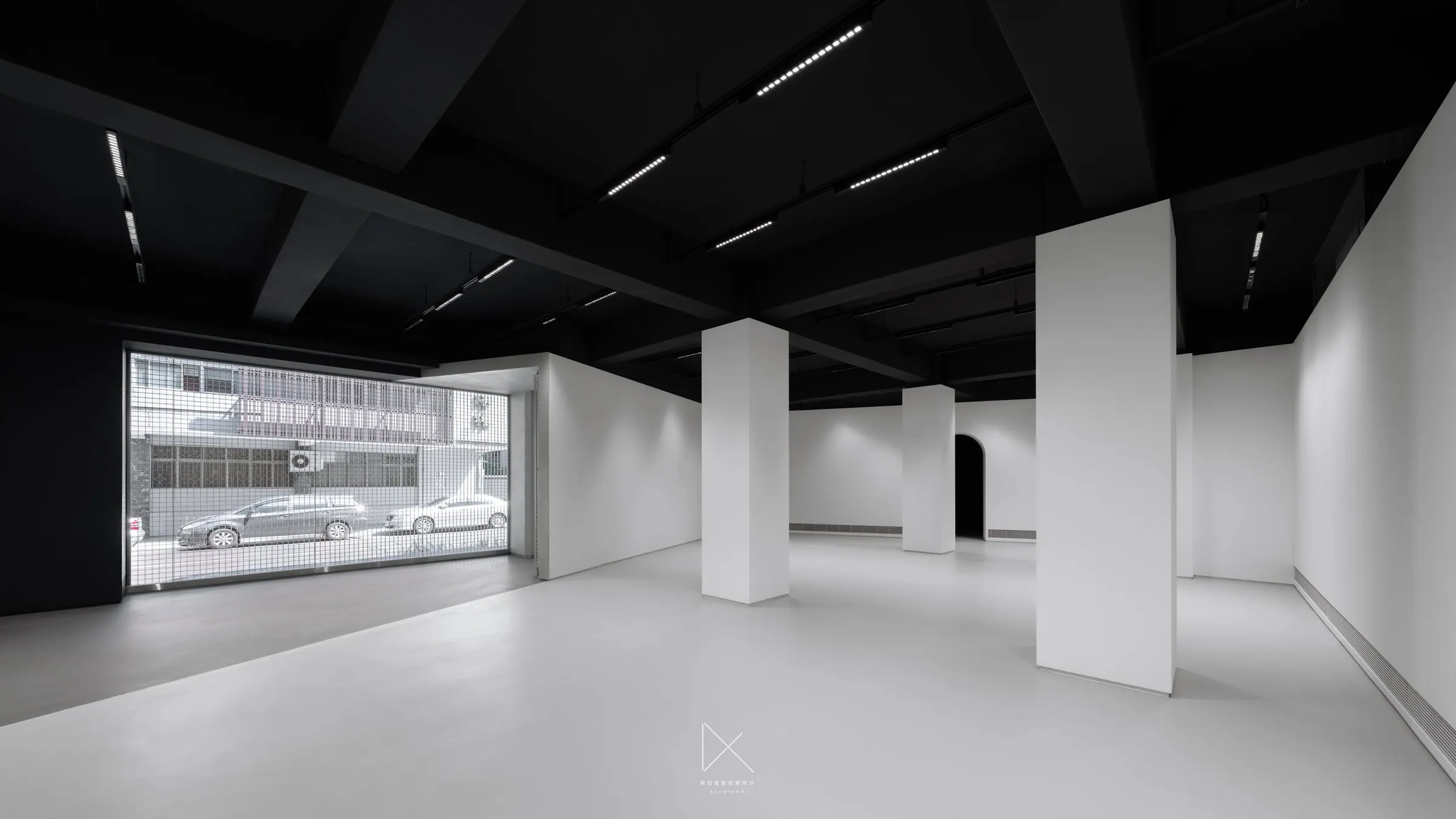
If the work is exuberant, the space must allow it to feel exuberant; if the artwork is restrained, the space must know when to remain quiet. White walls, a white floor, a dark ceiling, and a rhythm of columns establish a neutral framework, while the grid’s shifting light traces the rear wall. We lowered our own voice so the work could speak.
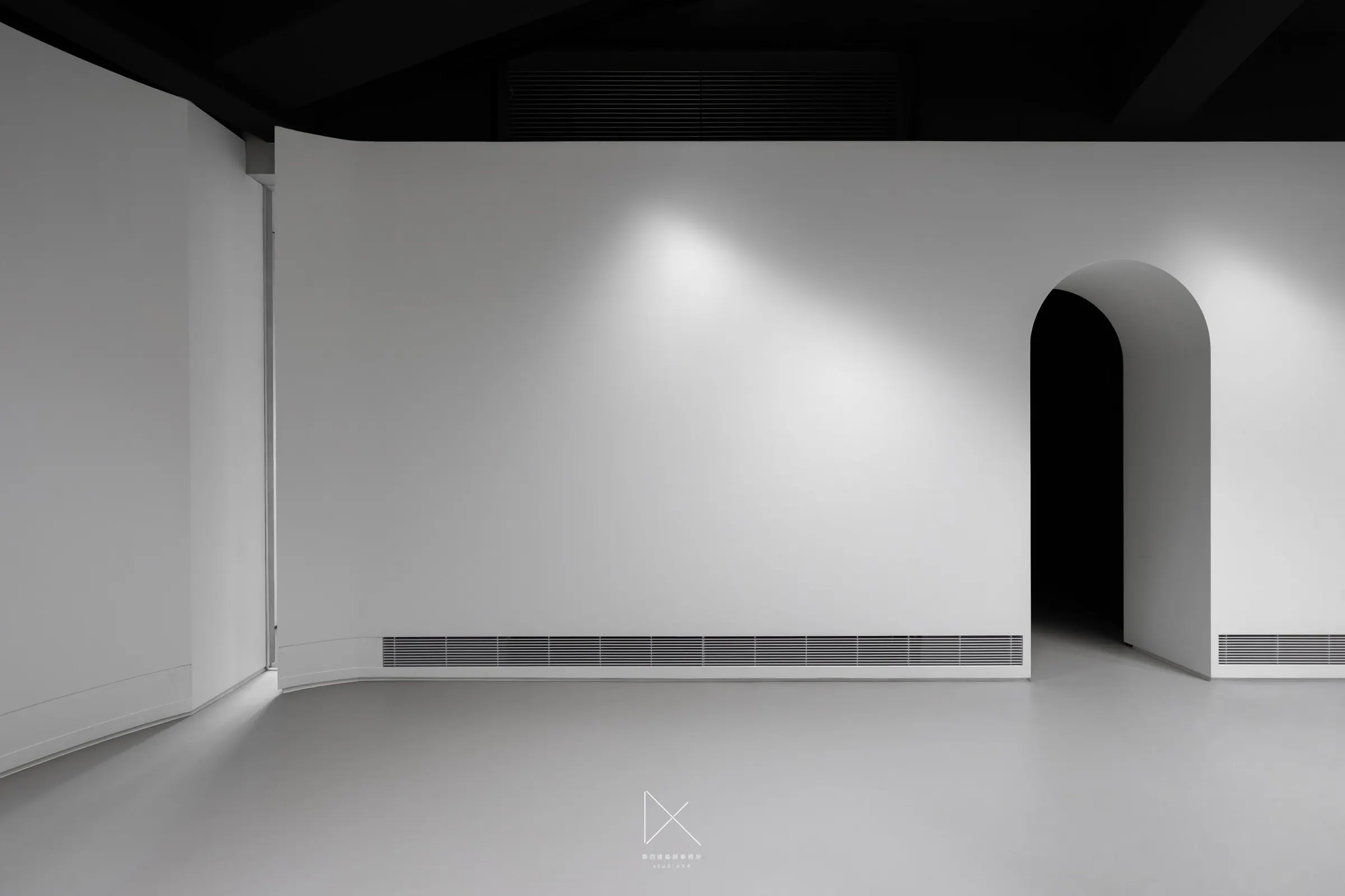
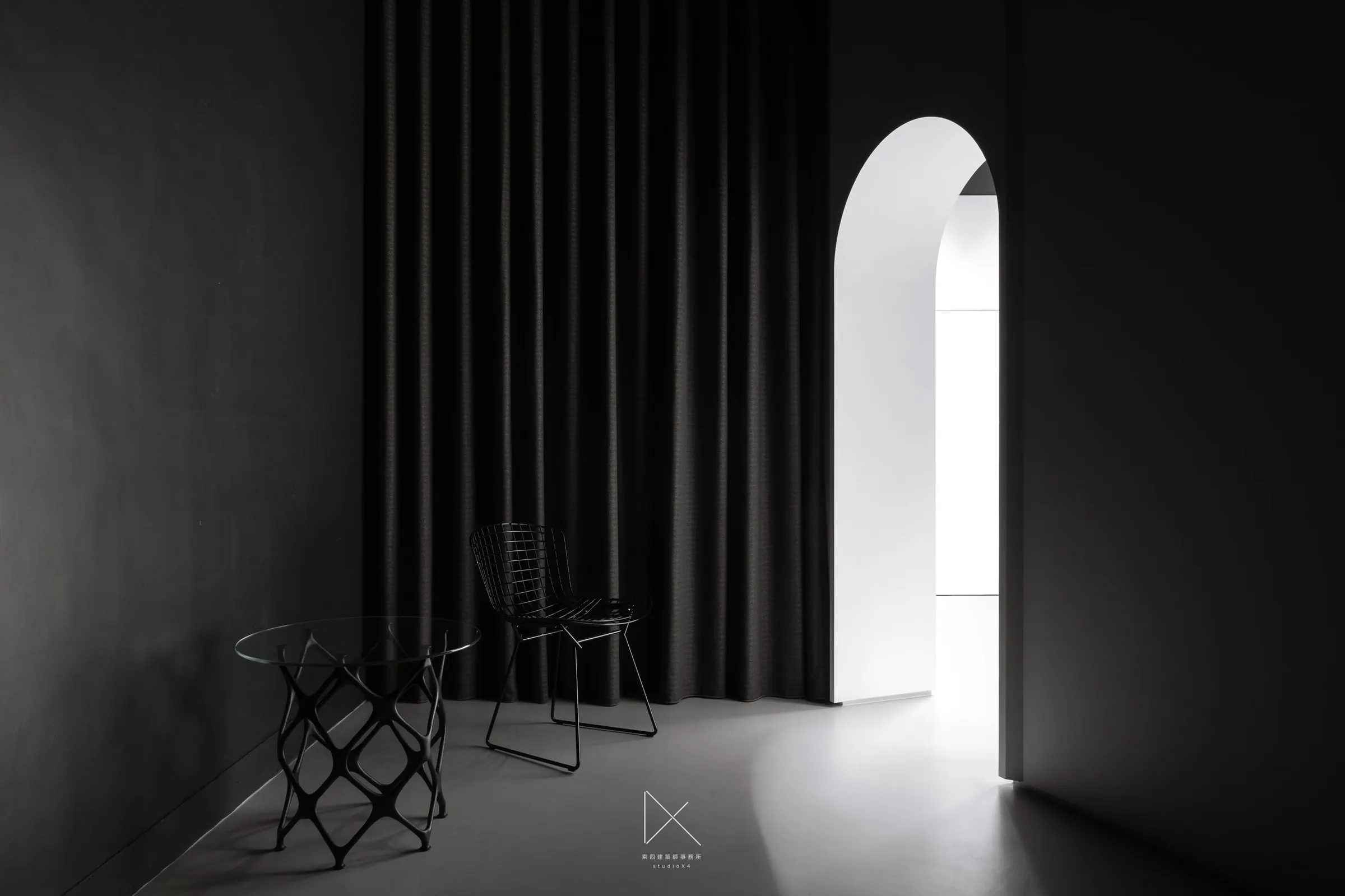
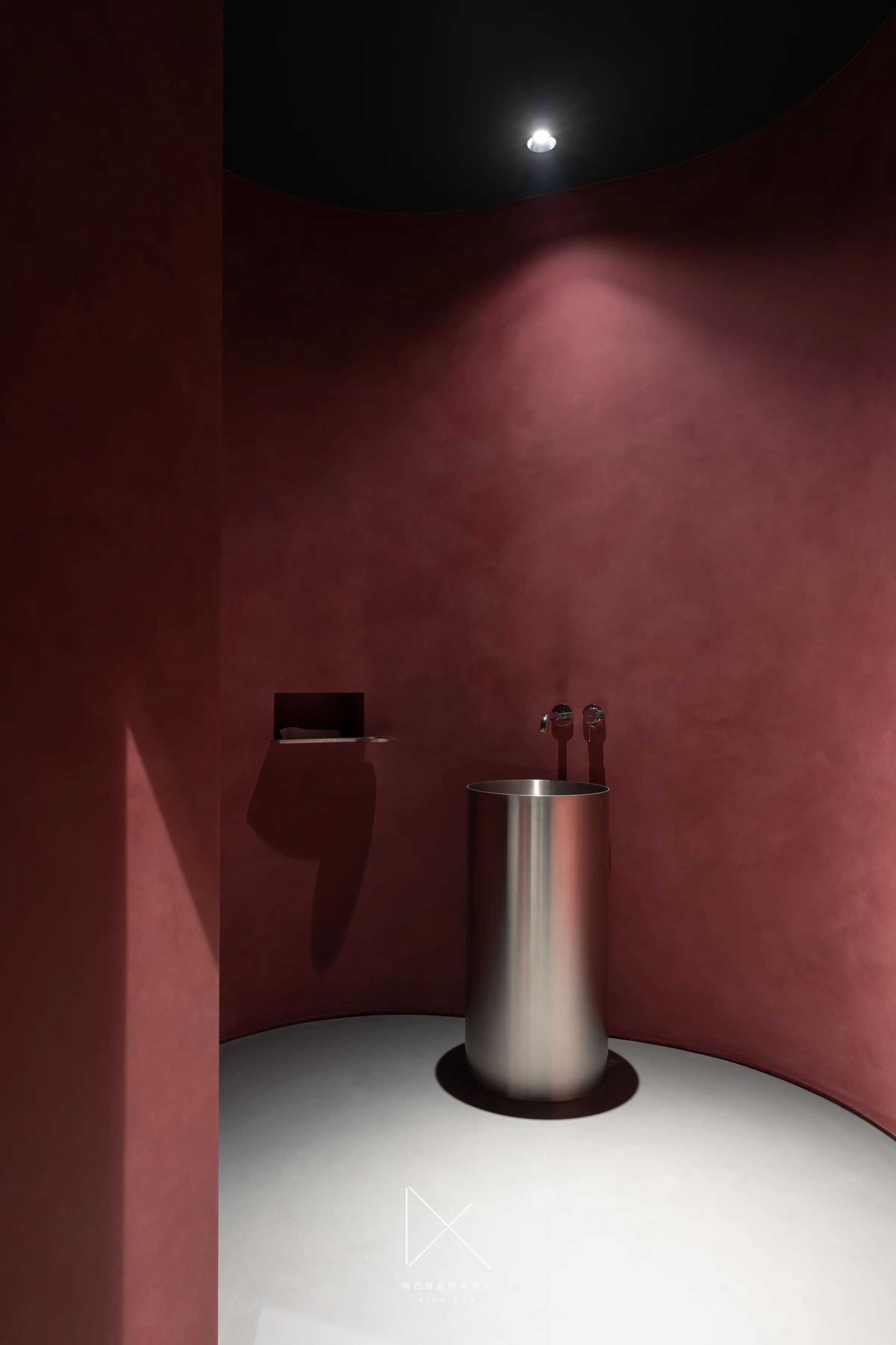
Minimalism is not emptiness. It is the creation of space for attention. A curved wall leads visitors toward an arch; beyond it lies a darkened room, and within that darkness, a single red element emerges.