SpringWater 4
NestingSeries · Residential · Taipei · 2026
設計面積 Area|142 m² / 43 坪
專案類型 Function|住宅 Residential
設計主持 Director|陳語蓁 Judith Chen
專案設計 PM|郭芸廷 Kay Kuo
現場執行 Site|郭芸廷 Kay Kuo
空間攝影 Photography|YHLAA, 李易暹 Ethan Lee
完工日期 Completion|2025
系列 Series|NestingSeries
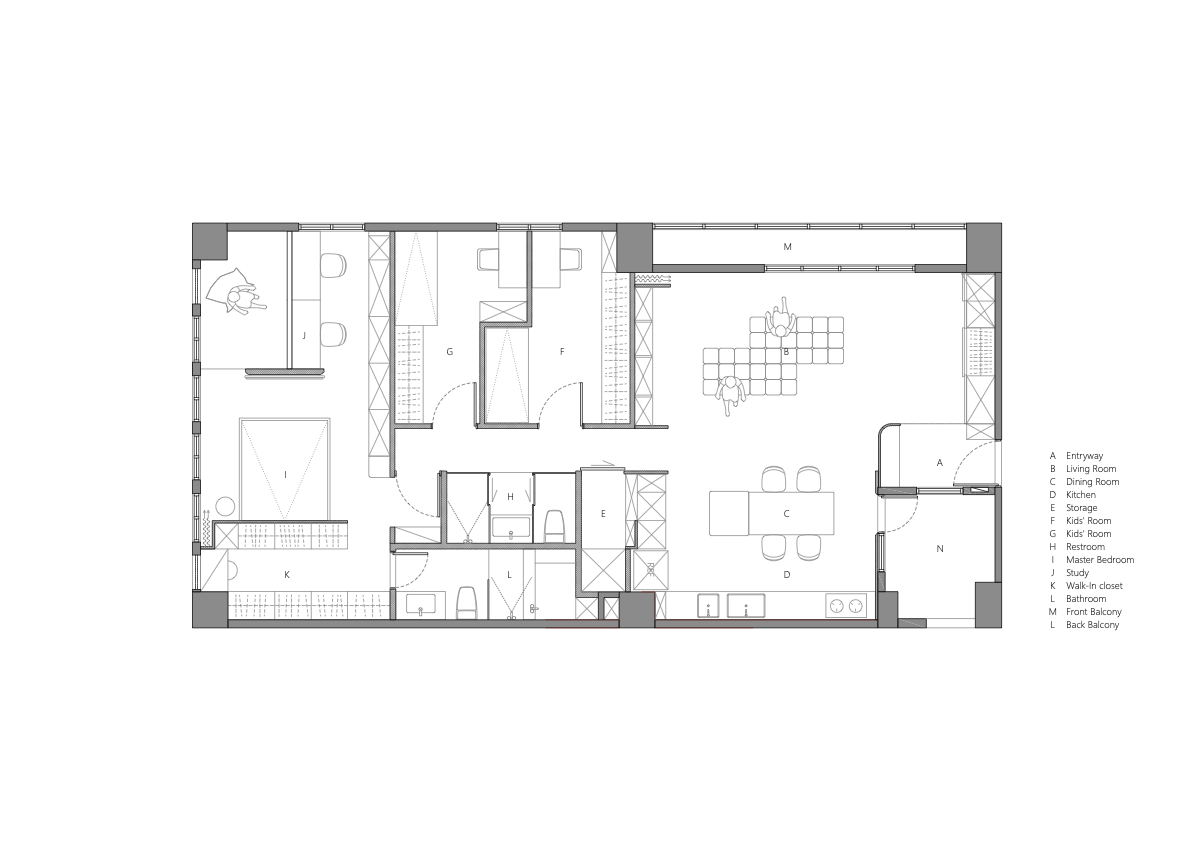
平面配置 / 空間標註版 · Floor Plan with Space Annotations
142 m² / 43 坪,坐落於台北市精華地段的老華厦。地段是這個案子的起點:街廓成熟、生活機能完整、綠帶與步行尺度都已長成——這些是新建案無法快速複製的條件。代價是建築年齡,樓板、樑柱、管線都需要重新評估。業主一家選擇承擔結構補強的成本,把建築先補回安全與耐久的基準線,再談設計。這個前期決定,定義了整個案子的精神:把資源花在看不見的地方,把舒適留給日常。
142 m², residential, Taipei. The design begins with the path of light. On the louvered-window side of the plan, diffused light enters and disperses across the ceiling-to-floor transition zone — neither pooling nor obstructed. “SpringWater” names a condition of movement: entering, sitting, cooking, reading — each action occurring within a single continuous public space without interruption.
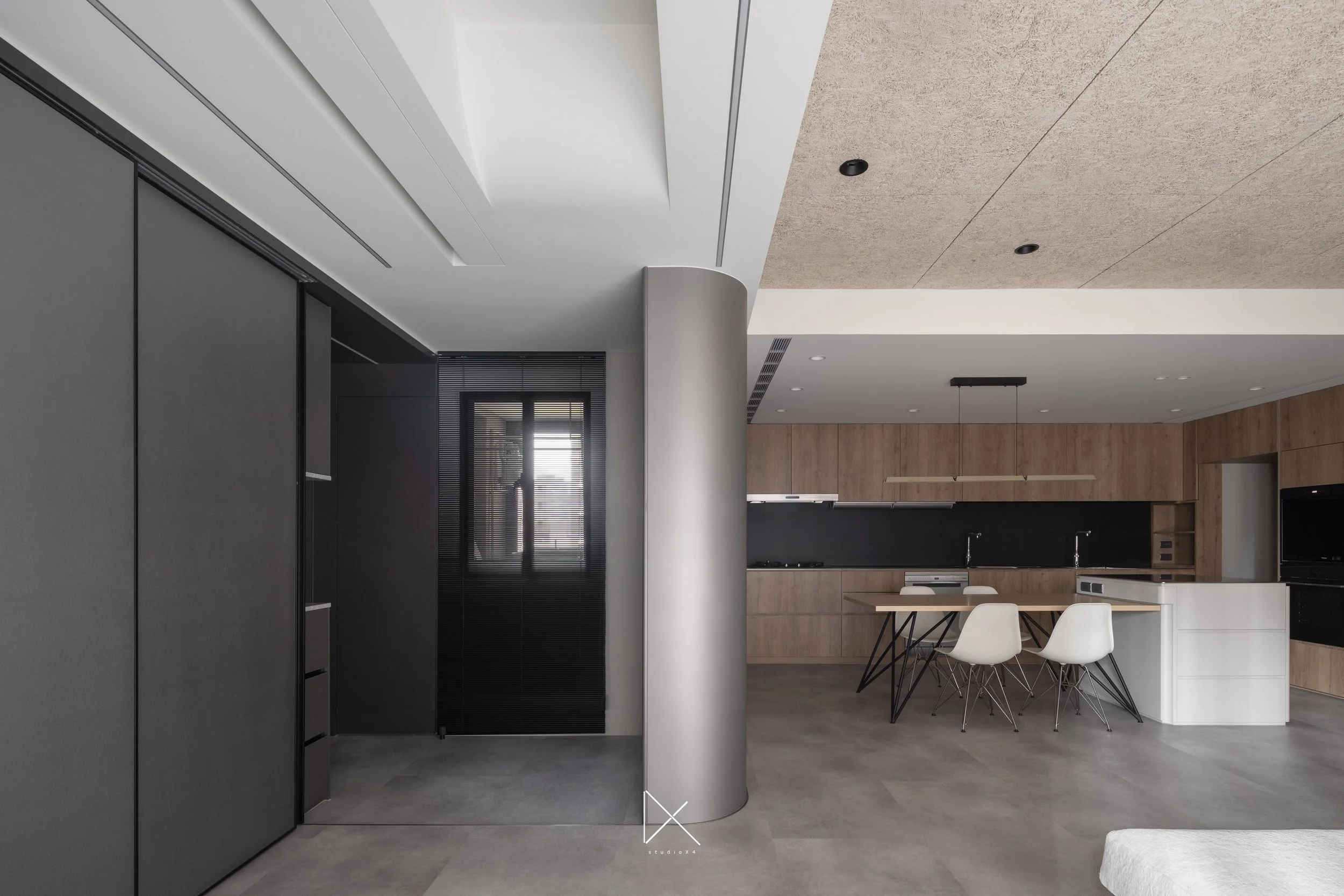
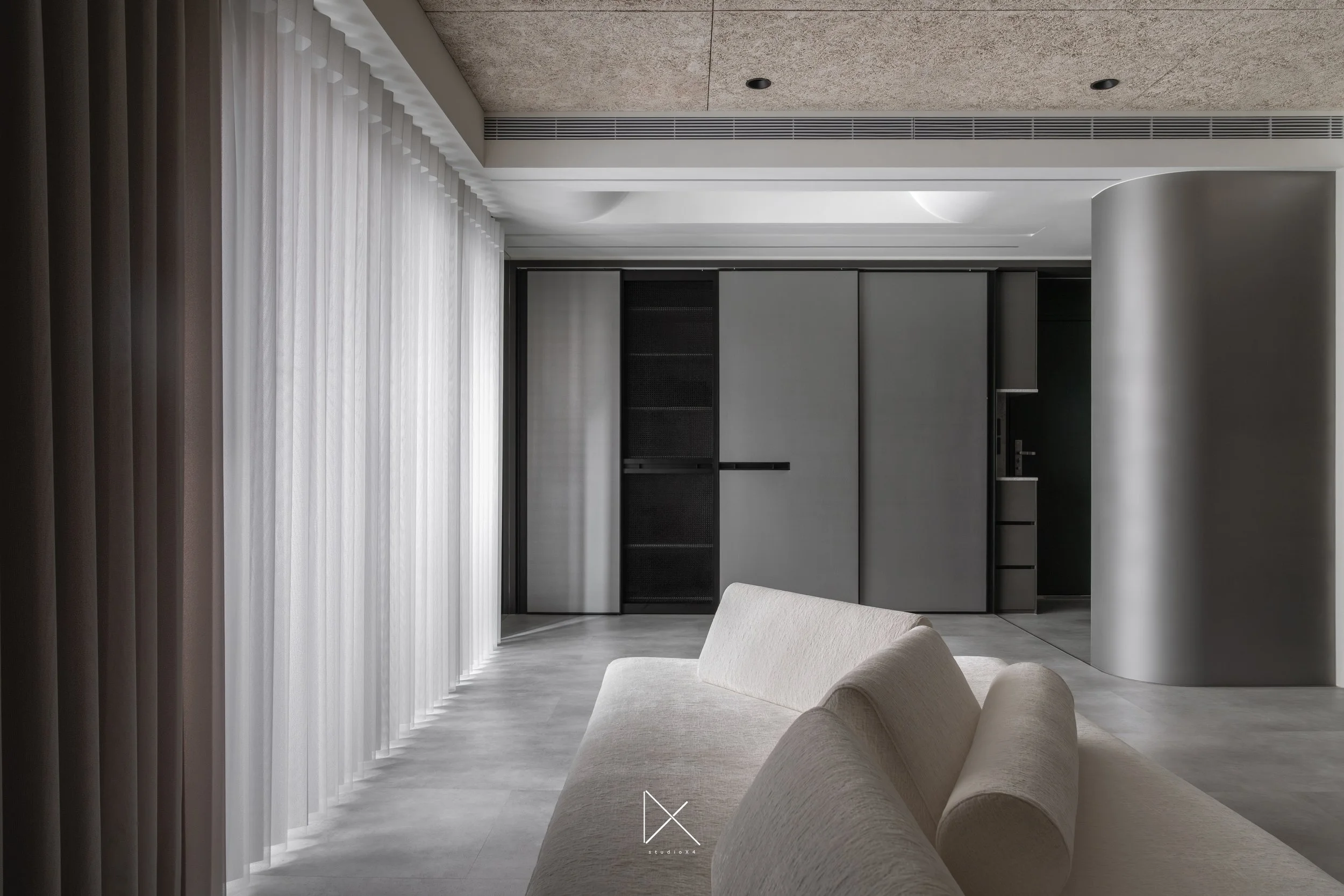
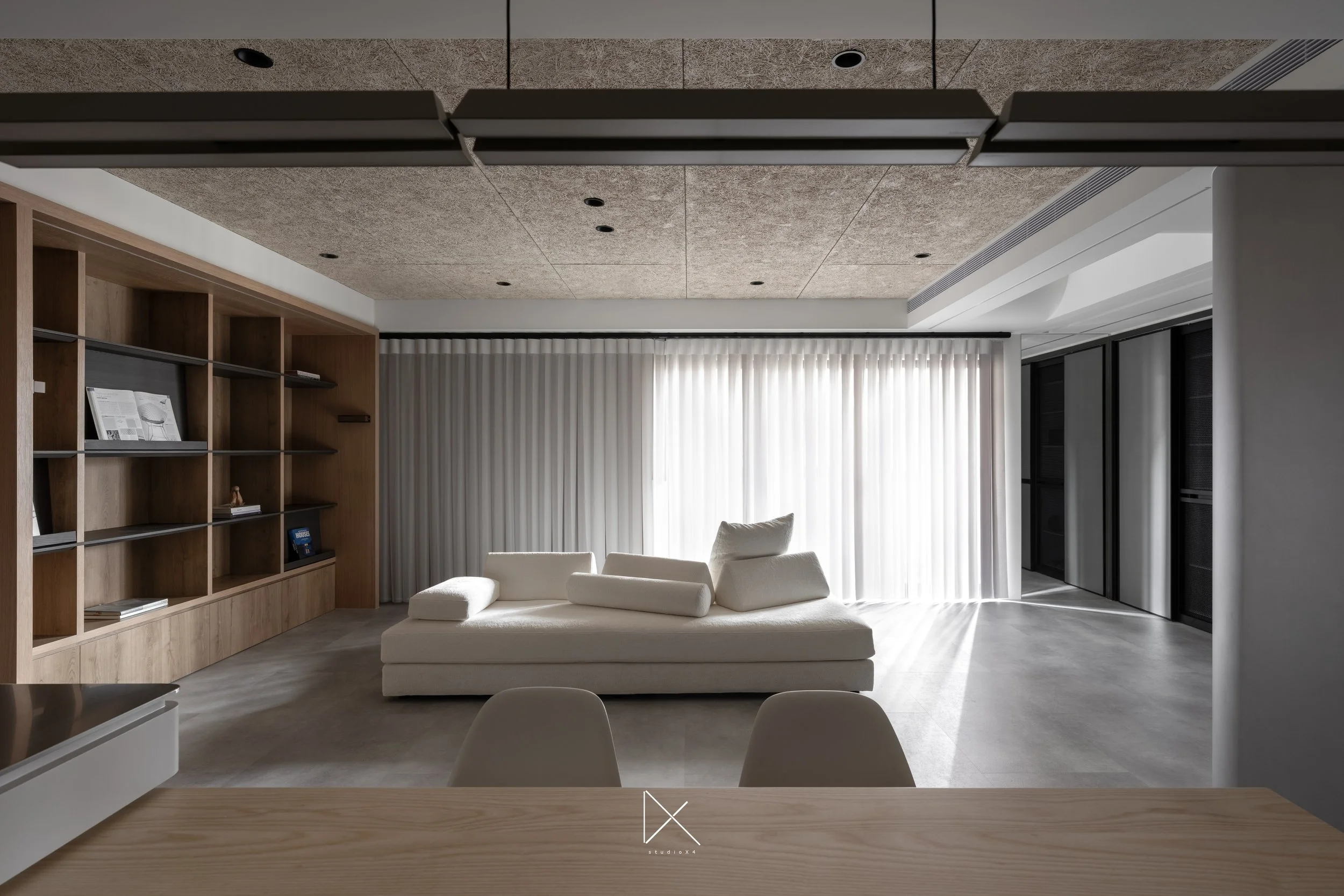
書牆格子系統:木格為底調,黑格為重音,收藏嵌入空間肌理而非覆加其上。百葉窗在灰色地板留下水平漫射的光影帶。 · Bookwall grid: timber cells as ground, black cells as accent — collection embedded in spatial fabric. Louvered light casts horizontal bands across the grey floor.
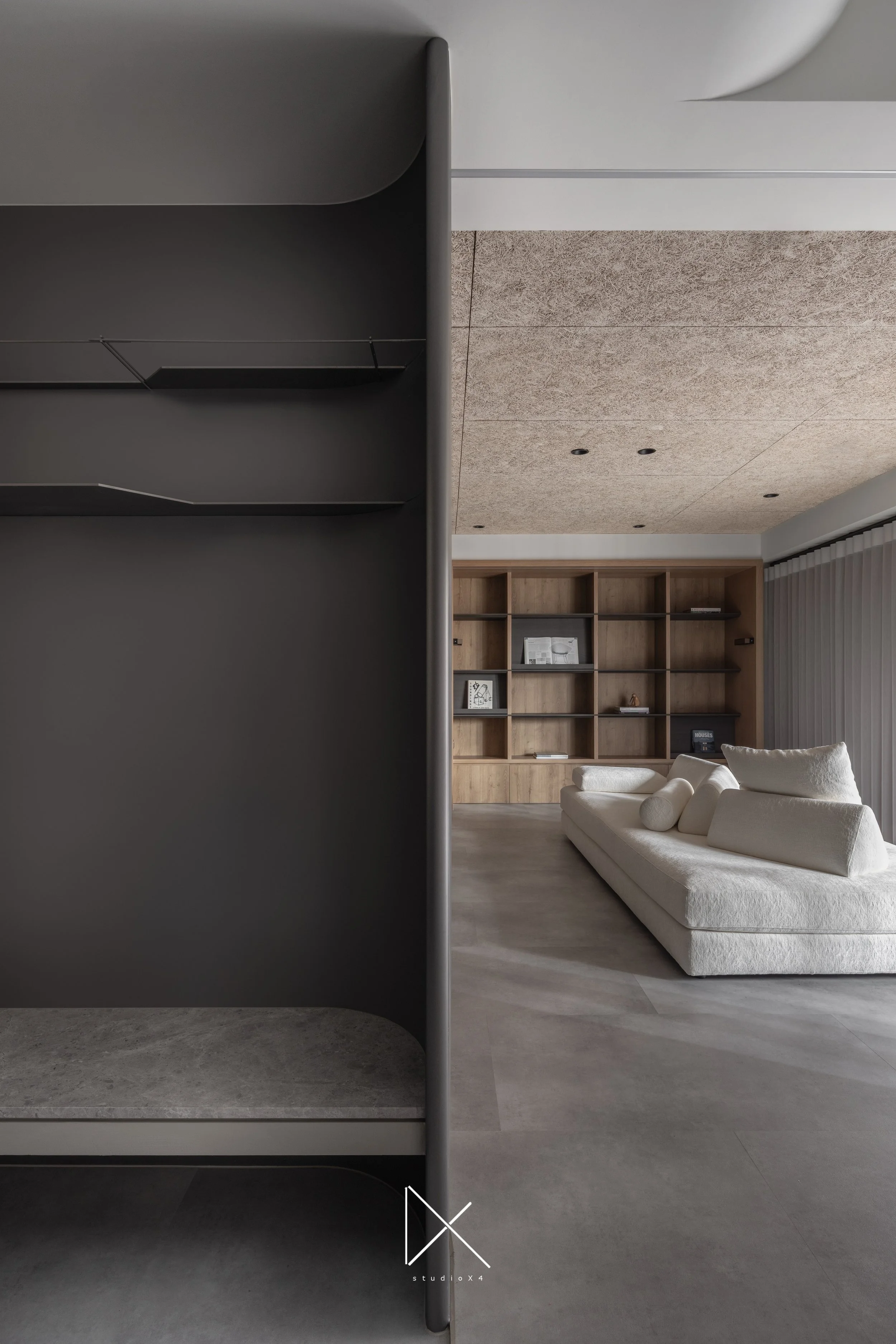
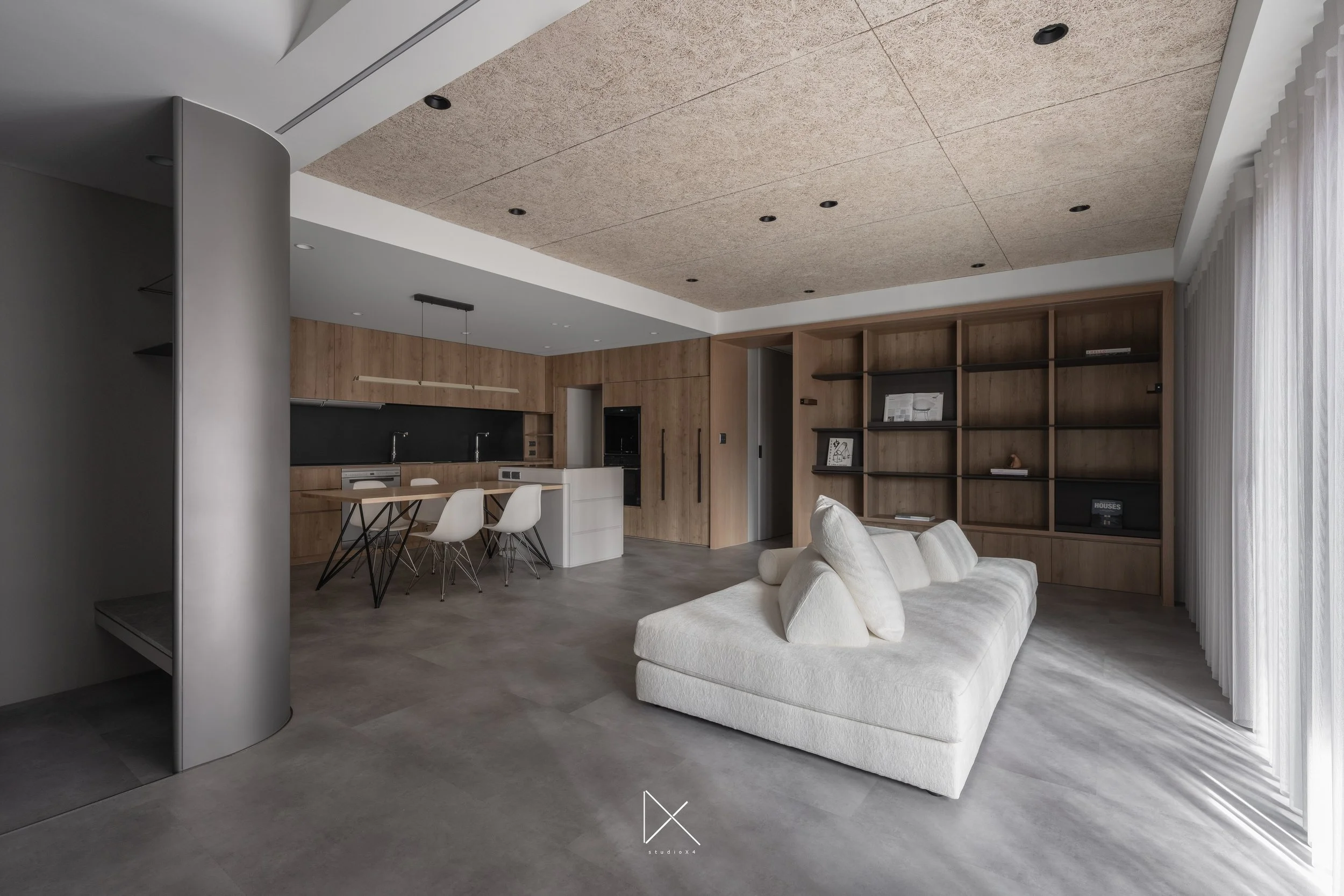
玄關圓柱與開放格收納。
Entry column, open-grid storage.
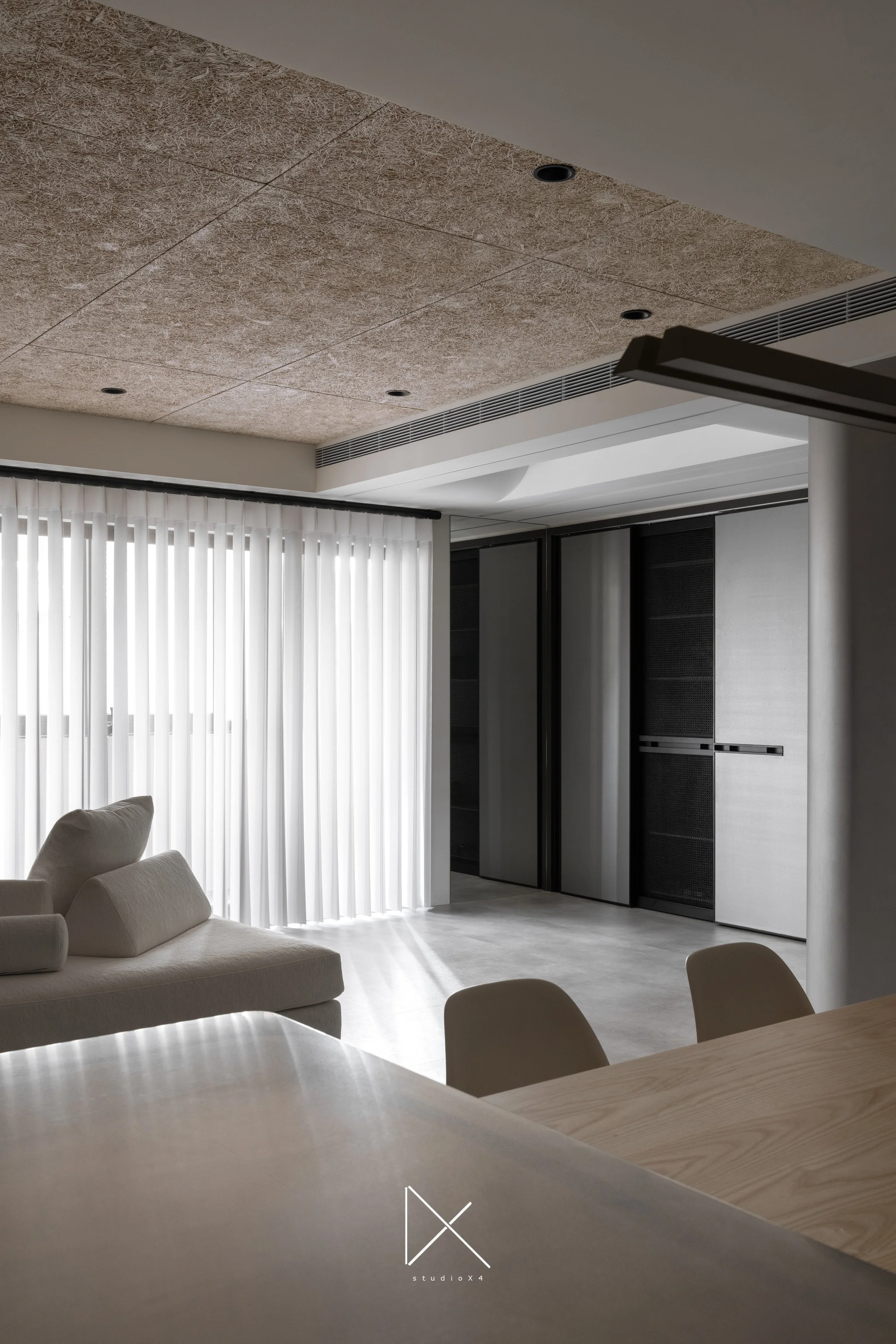
NestingSeries 是 StudioX4 對「家」的長期命題——住宅不是樣品,是一個家庭日復一日的容器。在活水宅,這個容器以「動」為核心。設計從光的路徑開始討論,公共空間裡沒有隔牆,廚房中島、餐桌、客廳沙發、書房書牆連成一條連續的動線:進門、落座、煮食、閱讀,一家人各做各的事,卻同處一室。「活水」就是這個狀態——流動、不淤積、彼此可見。
The freestanding column at the entry is the only volumetrically heavy element in the project — not structural, not wall-adjacent, but an anchor that defines the boundary between entry and living zone through spatial perception rather than physical partition. The kitchen and dining area share no dividing wall; the white island is their intersection.
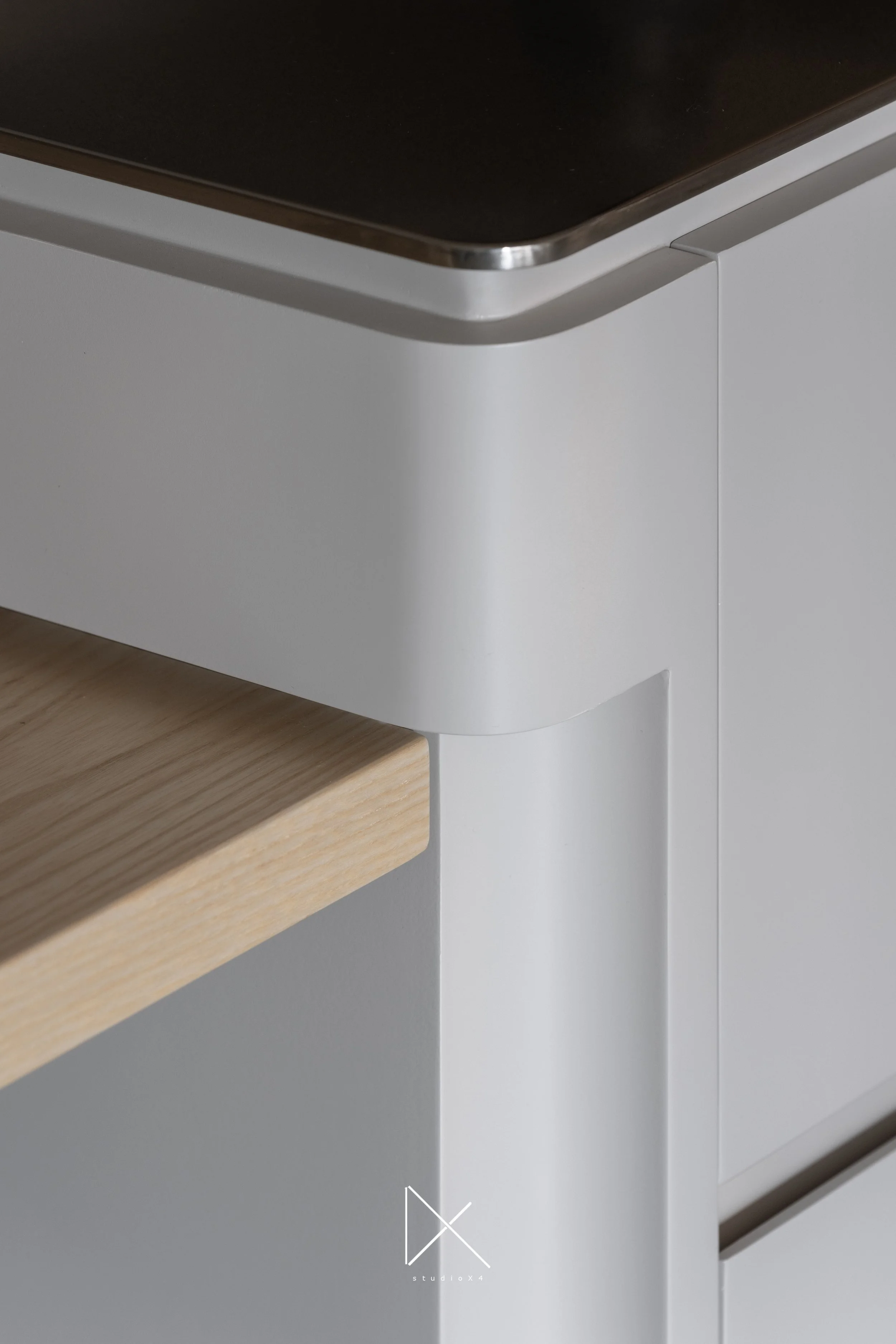
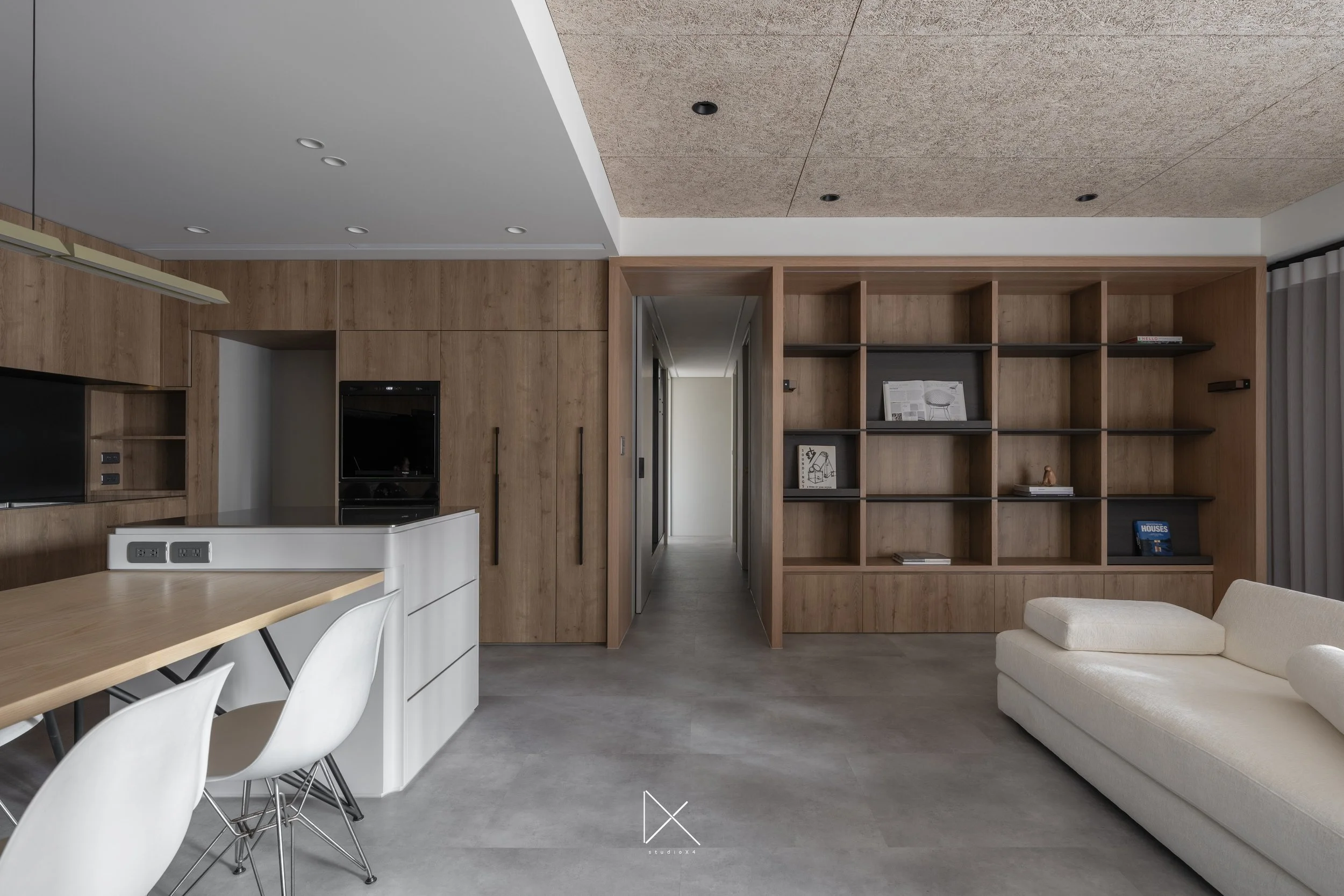
材料交界是細節的現場:書牆木紋肌理、中島白色檯面與金屬收邊三者在轉角交會。 · Material junctions are where precision matters: timber grain, white countertop, and metal edge trim converge at the corner. Craft as foundation.
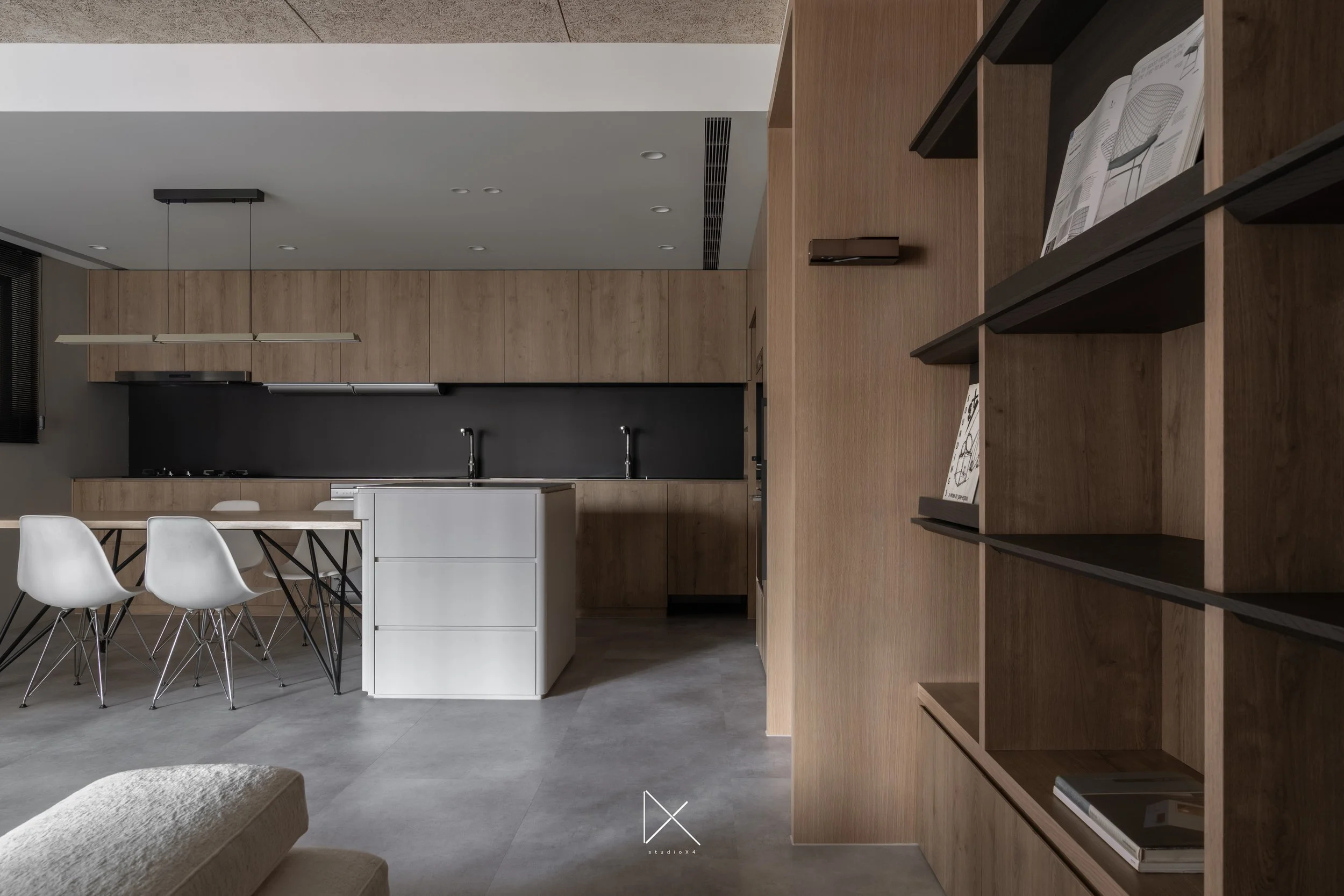
中島的回字形動線連結餐桌、餐廳與客廳
The island's loop layout bridges the dining and living areas, enhancing spatial connectivity.
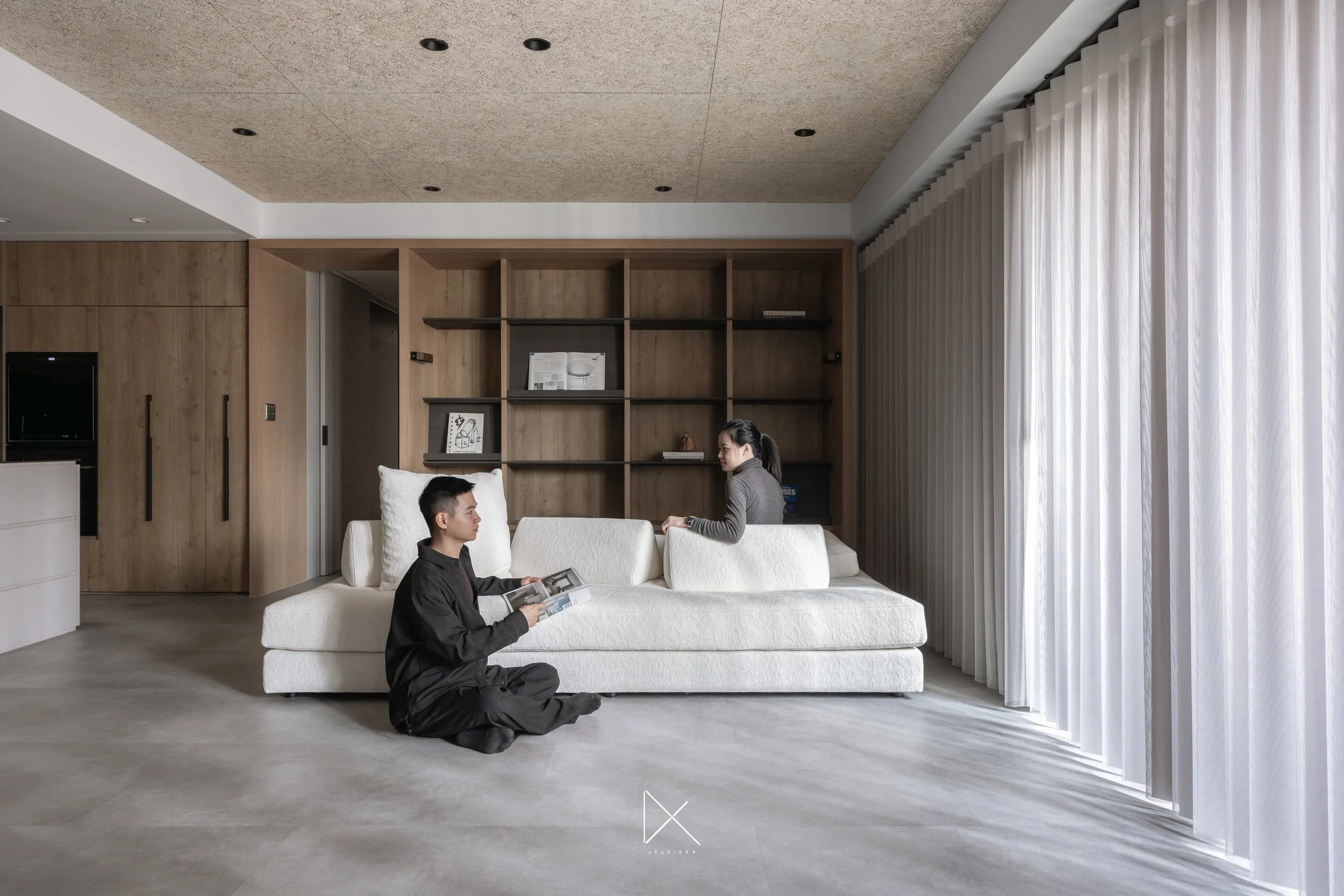
百葉光在灰色地板上水平延伸。
Louvered light across the grey floor.
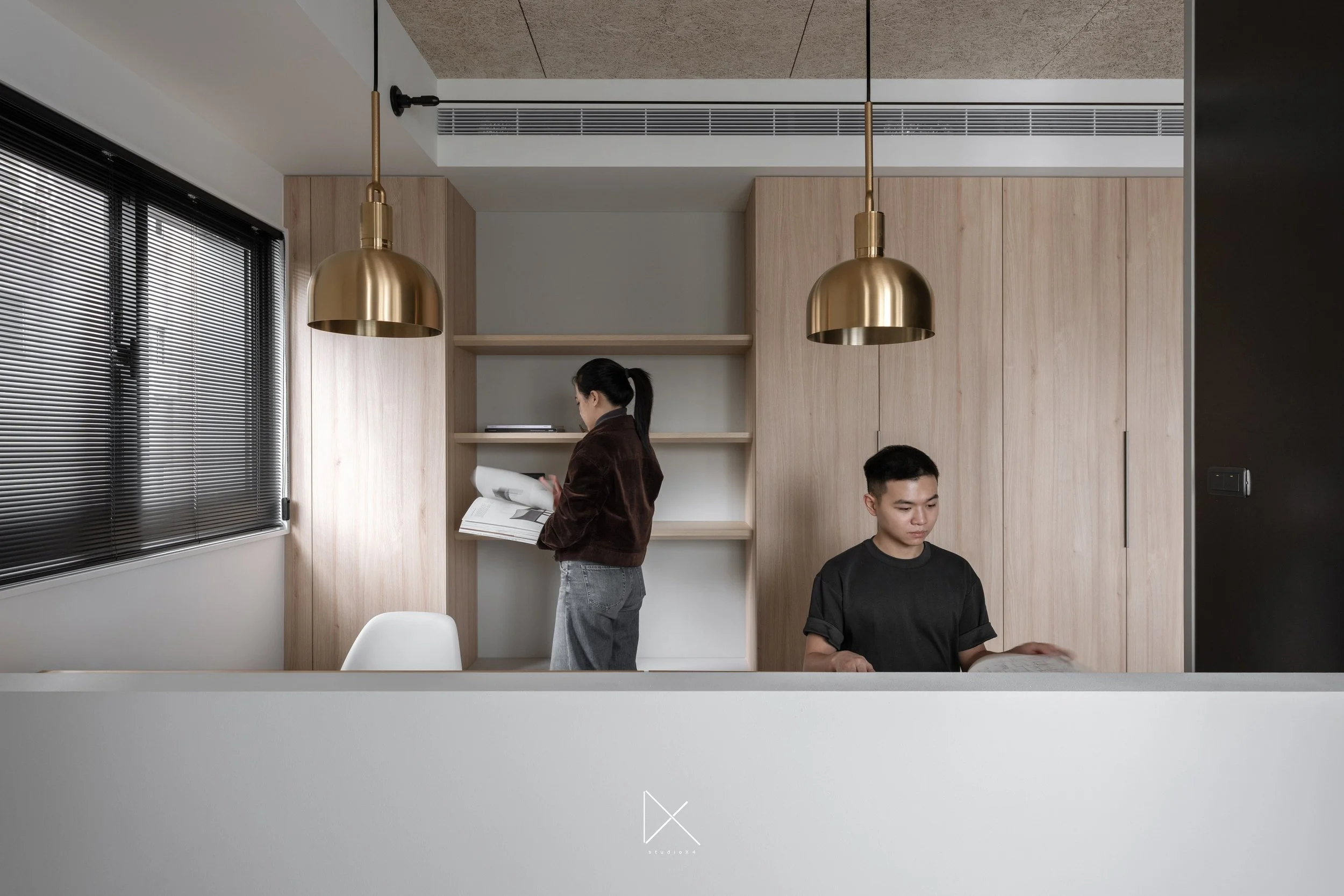
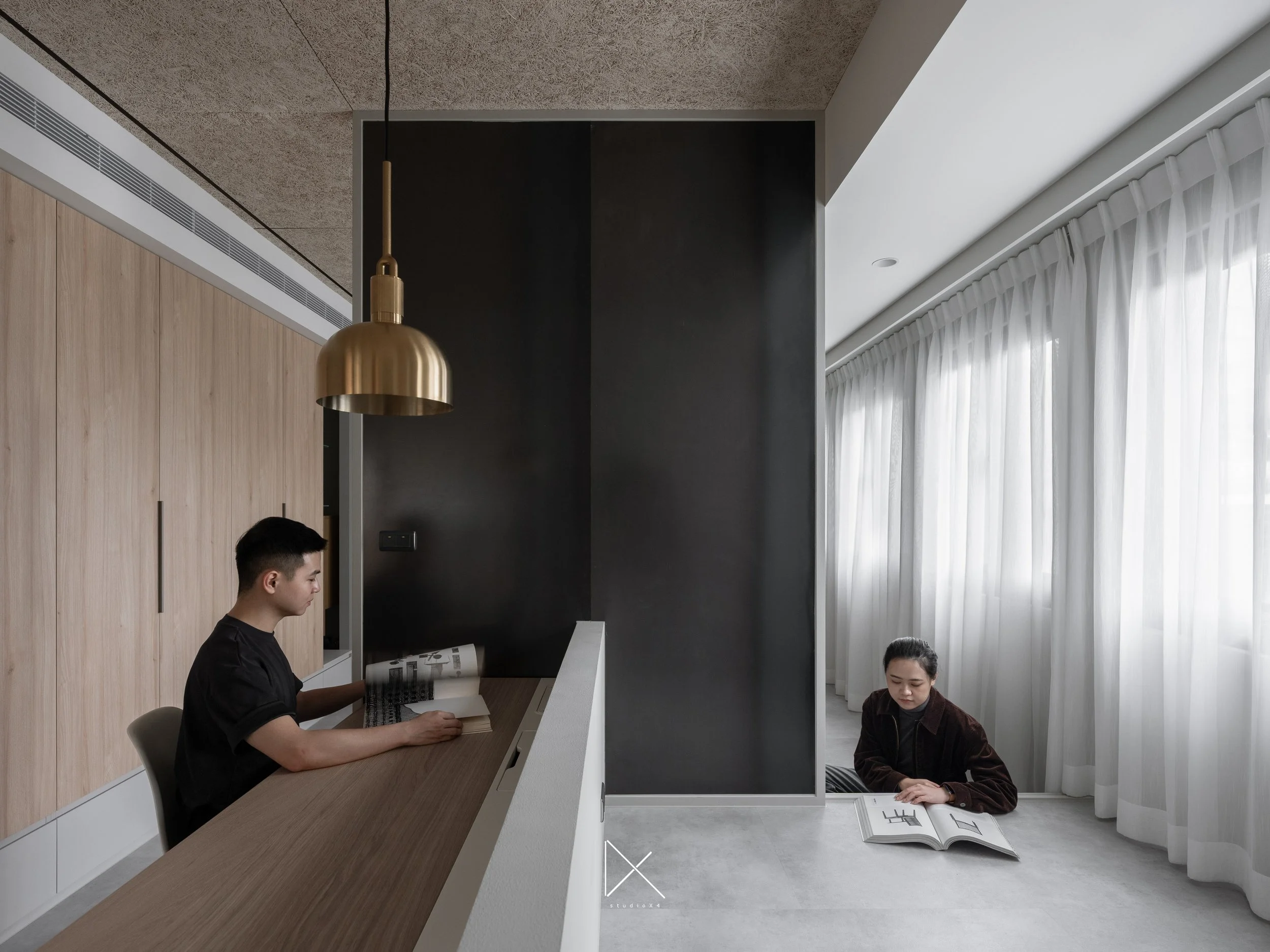
書房金色燈光下,兩個人各自讀著——這是全案最暖的一個角落。
Brass pendants in the study; two people reading — the warmest corner in the project.
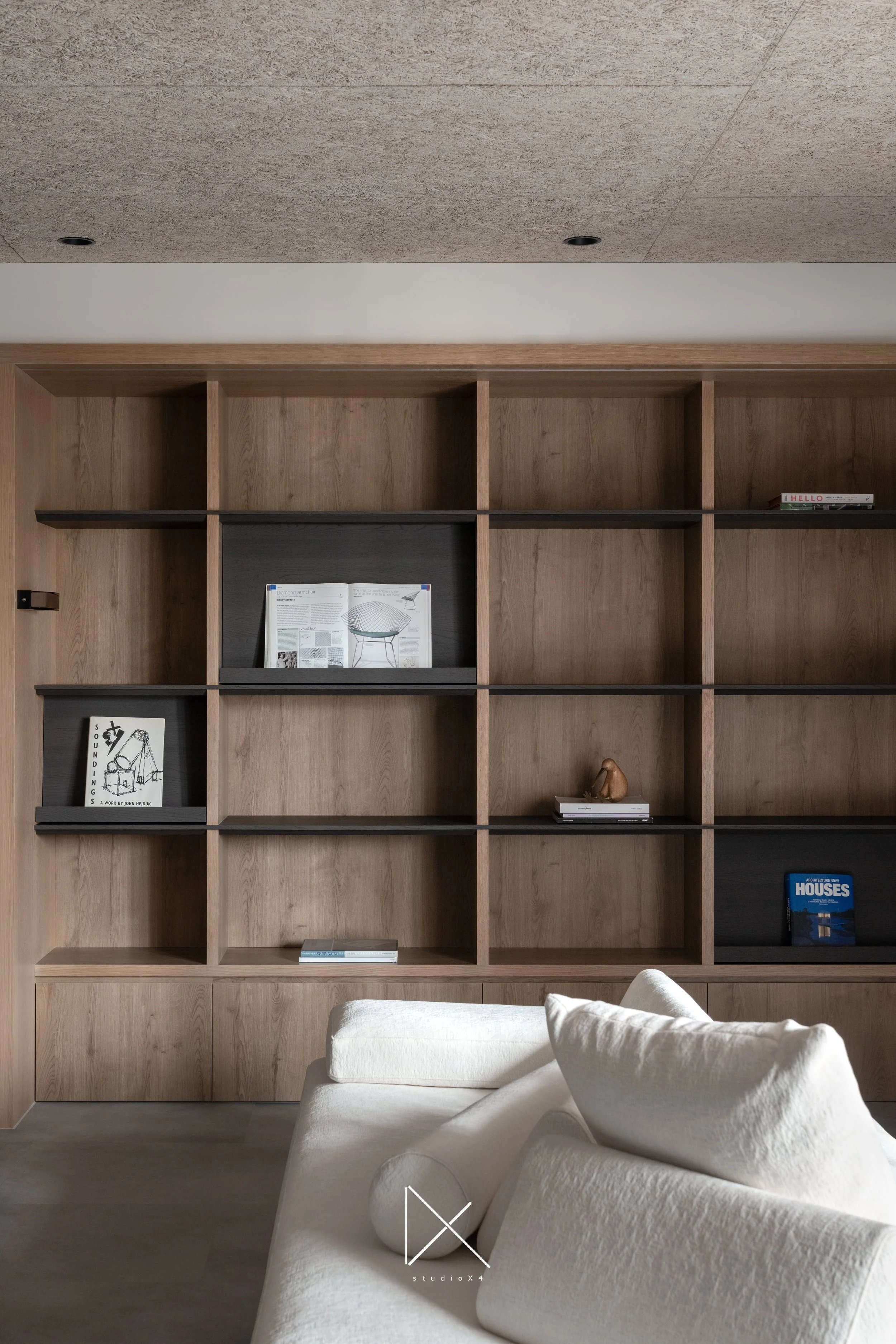
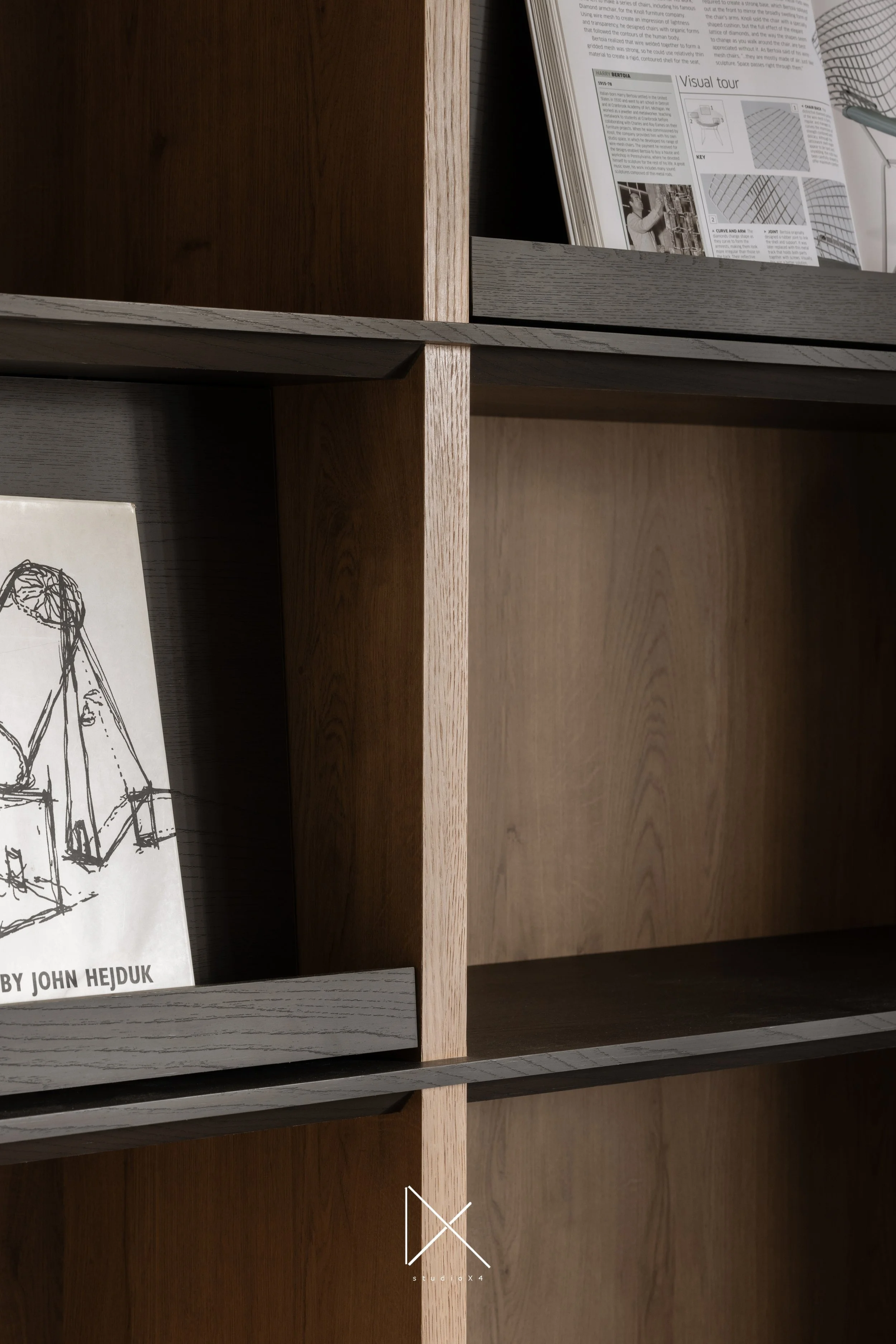
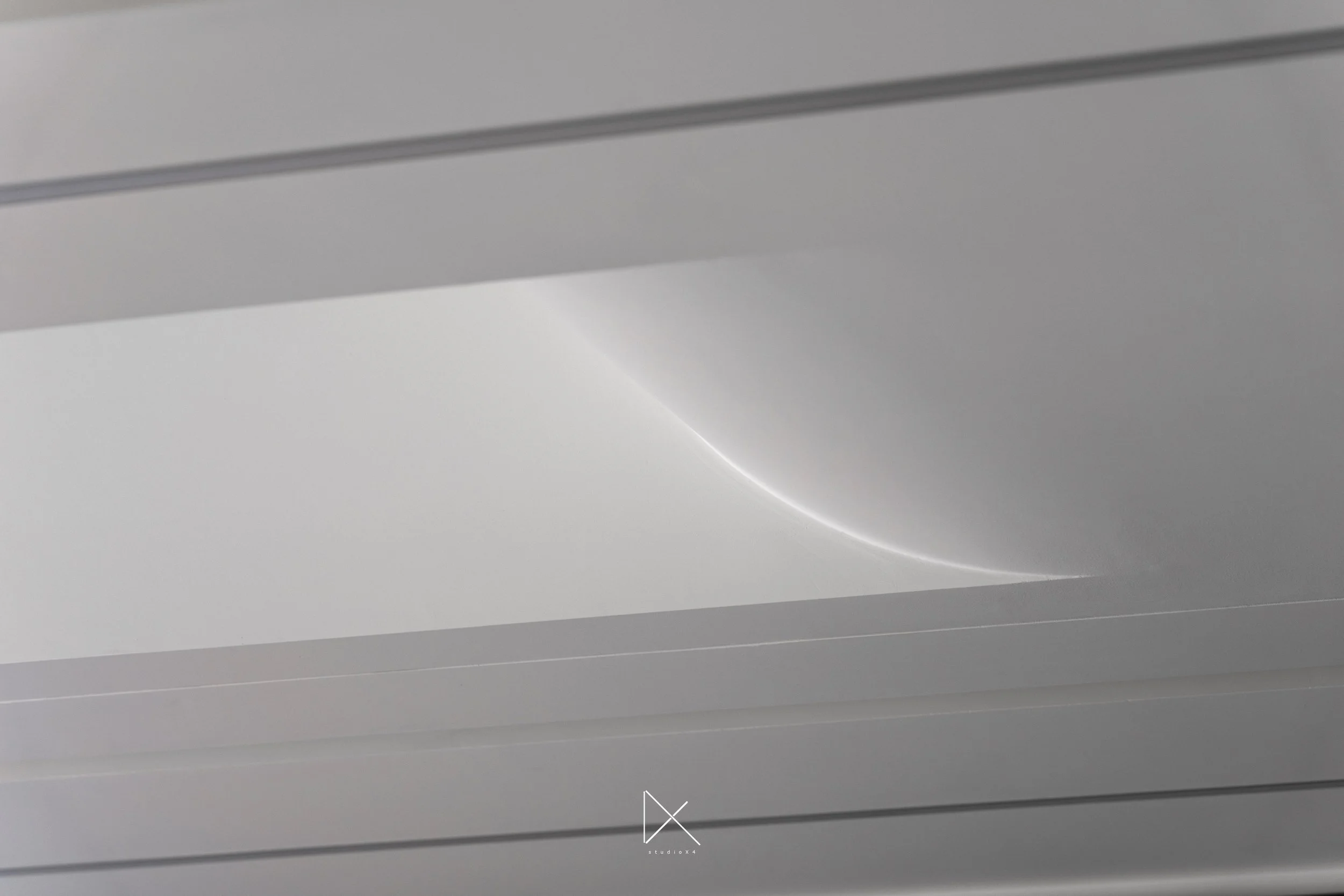
書牆水平木紋,天花弧面。
Horizontal grain, ceiling curve.
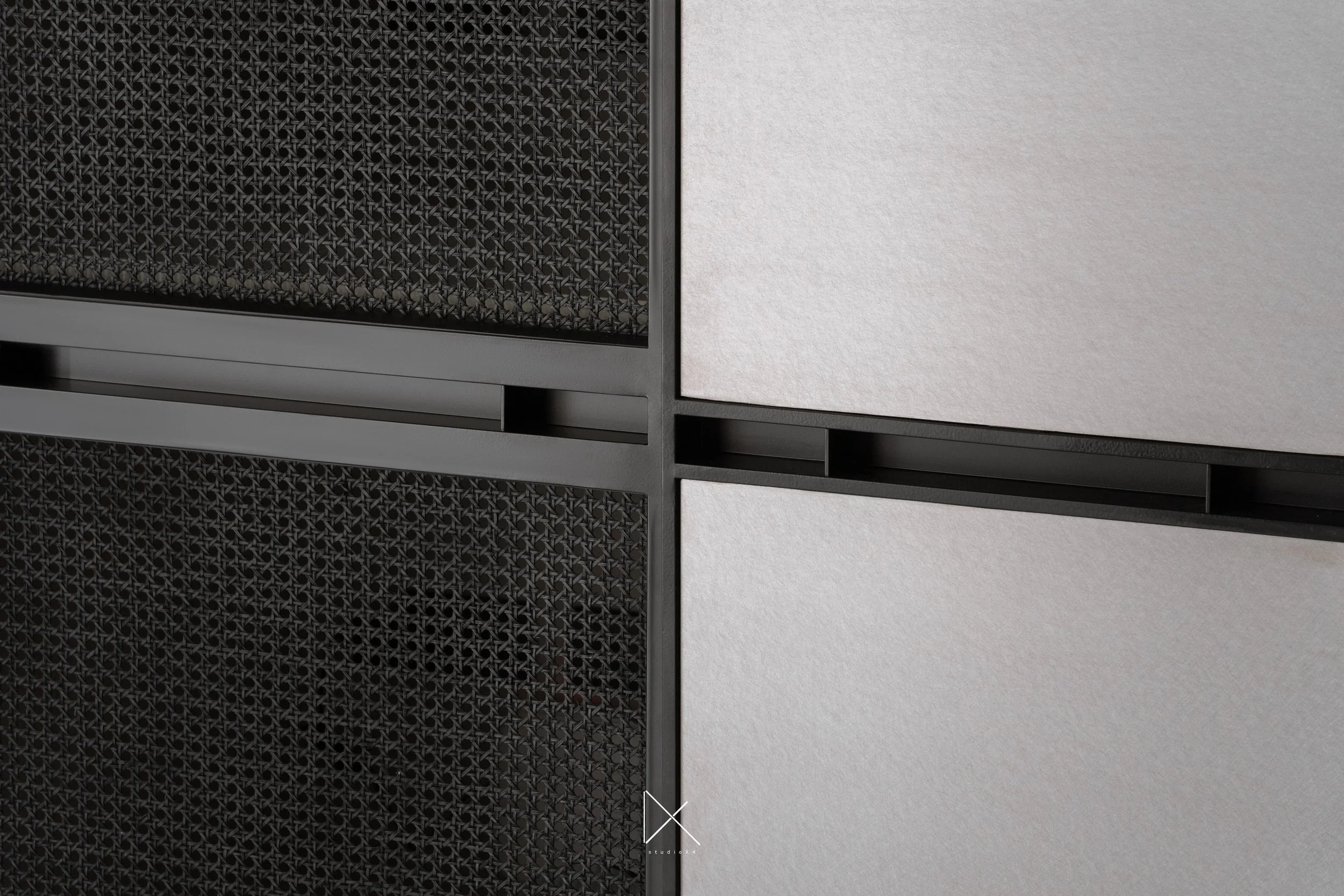
中島與門片,材料交界的細節。
Island corner, door panel — material junctions.
材料語言以 reduction 為原則:OSB 天花保留壓合木屑的粗糲質感與紋理方向,木格書牆以格子系統收納家庭的日常累積,灰色 SPC 長條地坪以平整鋪設統一視覺基調,讓光在地面上連續行走。入口的獨立圓柱是全案唯一的「重」,作為玄關與公共區的感知錨點。書房的金色吊燈,是兩個人在燈下共讀的場景——空間真正的說明。把結構補強、動線整合、材料節制都做到位,讓居住的舒適性回到日常本身。這就是 NestingSeries 想要說的事。
Material choices follow a logic of reduction. The ceiling uses OSB panels, retaining the raw density of compressed wood strands and their directional grain. The timber bookwall is organized on a grid system — black cells as accent, wood cells as ground tone — embedding the residents' collection into the spatial fabric rather than layering it on top. A grey SPC plank floor, laid flush, unifies the ground tone and lets light travel continuously across the plane. The brass pendant lamps in the study are among the few emotionally warm moves. Two people reading under the light — that scene is the project's real description. The bedroom and bathroom close quietly: vertical light from a skylight falls on the tub; the grey corridor lets the eye come to rest.
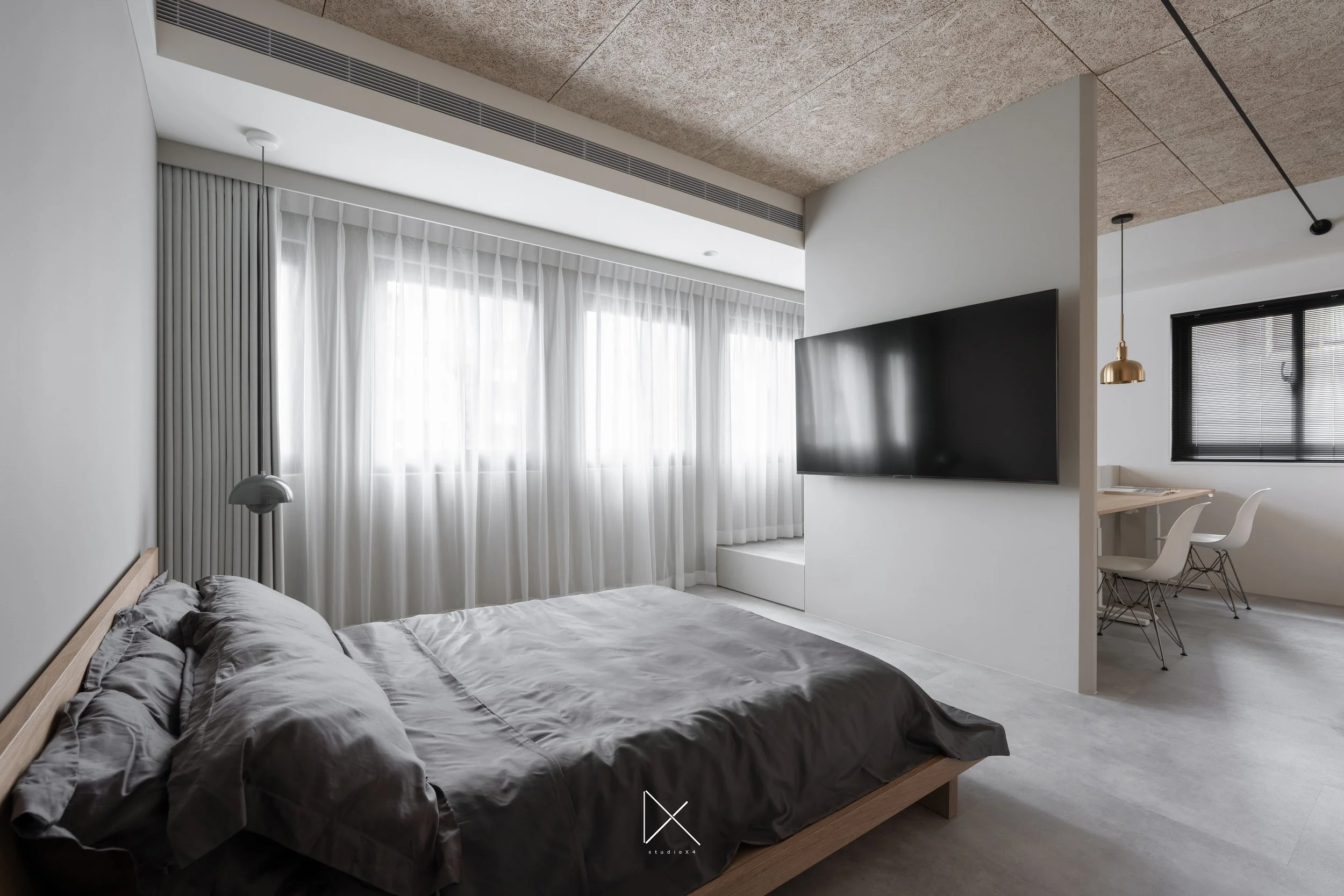
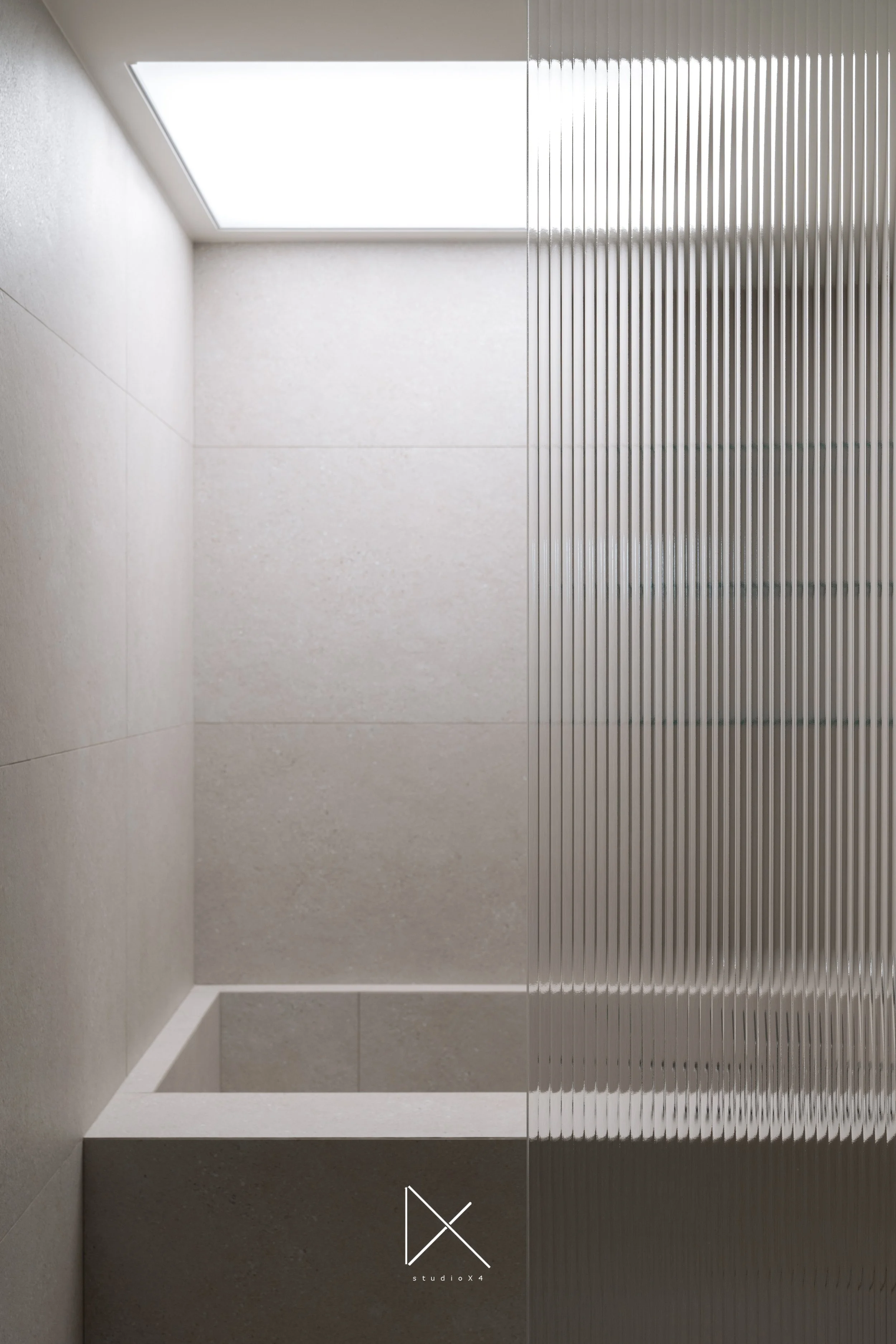
主臥到浴缸,靜。
Bedroom to bath. Stillness.
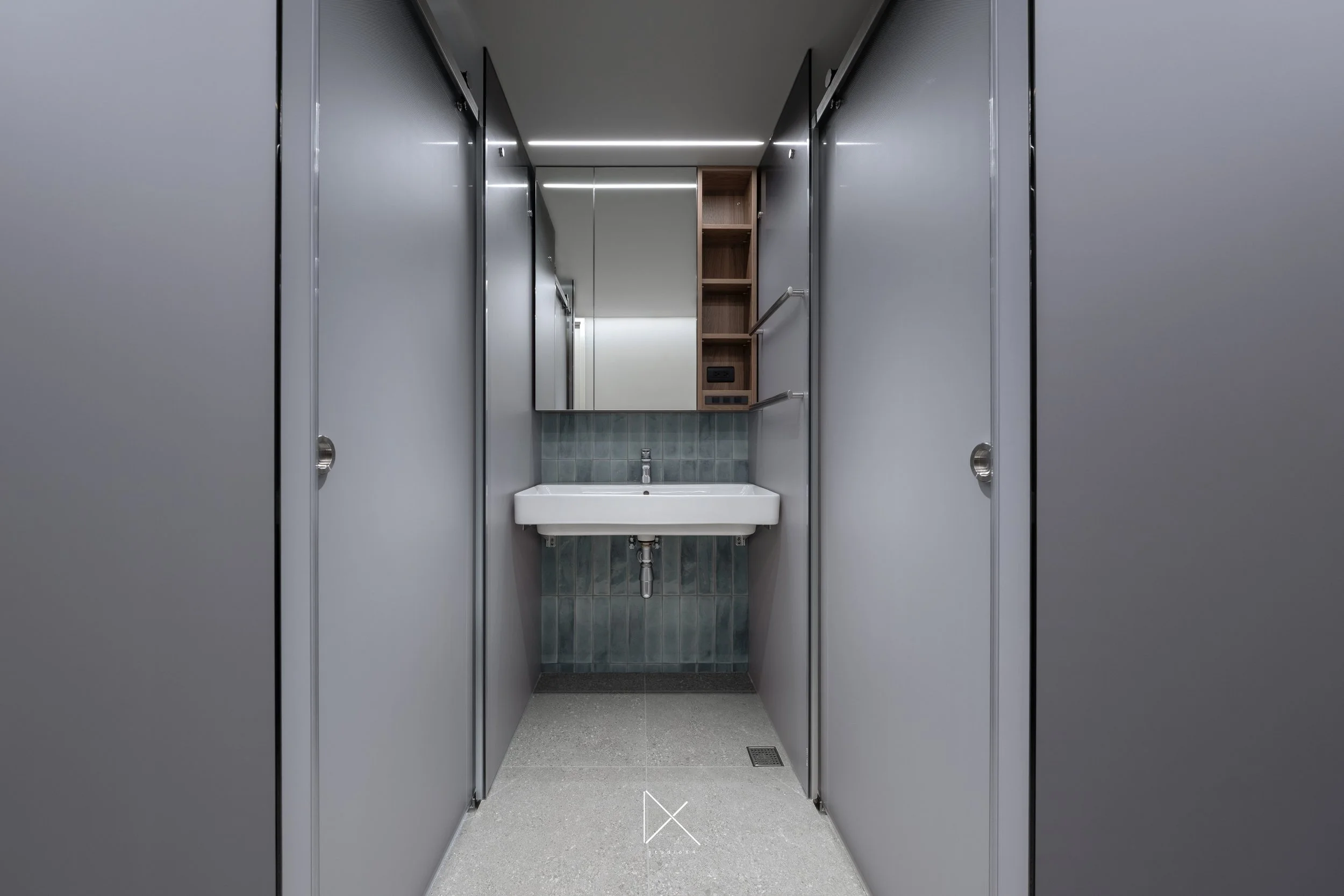
客浴室採用三件獨立式設計,以因應不同家庭人員使用時,分開使用的便利性。
A tri-segmented design in the guest bathroom allows for simultaneous use, enhancing daily efficiency and convenience for the whole family.
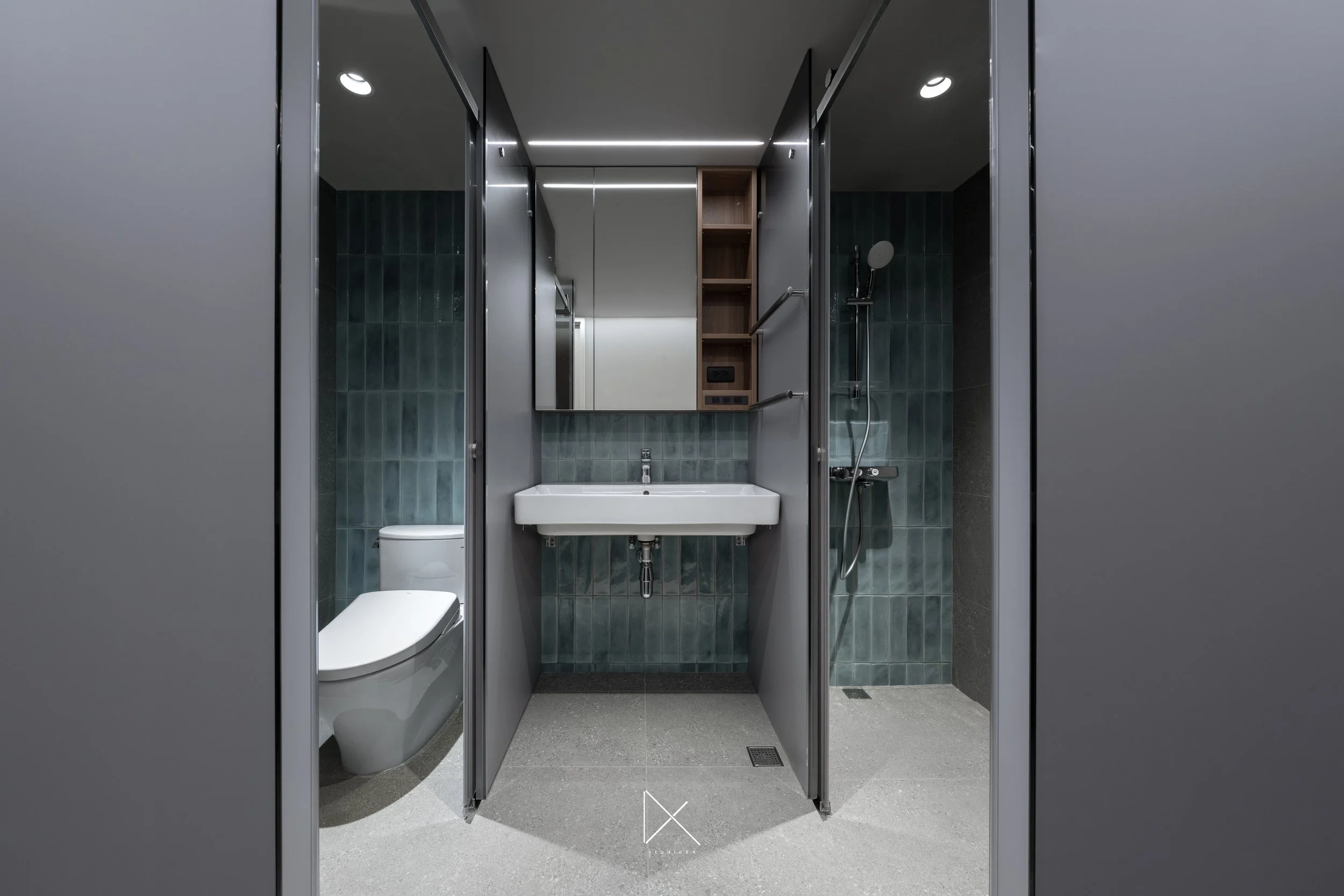
灰色廊道走到盡頭,藍綠磁磚是全案唯一的色彩出口。
The grey corridor ends in blue-green tile — the project's only chromatic release.