TanResidence
NestingSeries · Residential · Taipei · 2025
設計面積 Area|139 m² / 42 坪
專案類型 Function|住宅 Residential
設計主持 Director|陳語蓁 Judith Chen
專案設計 PM|張耀文
設計協力 Design Collaborator|楊捷新
空間攝影 Photography|YHLAA, 李易暹 Ethan Lee
完工日期 Completion|2025
系列 Series|NestingSeries
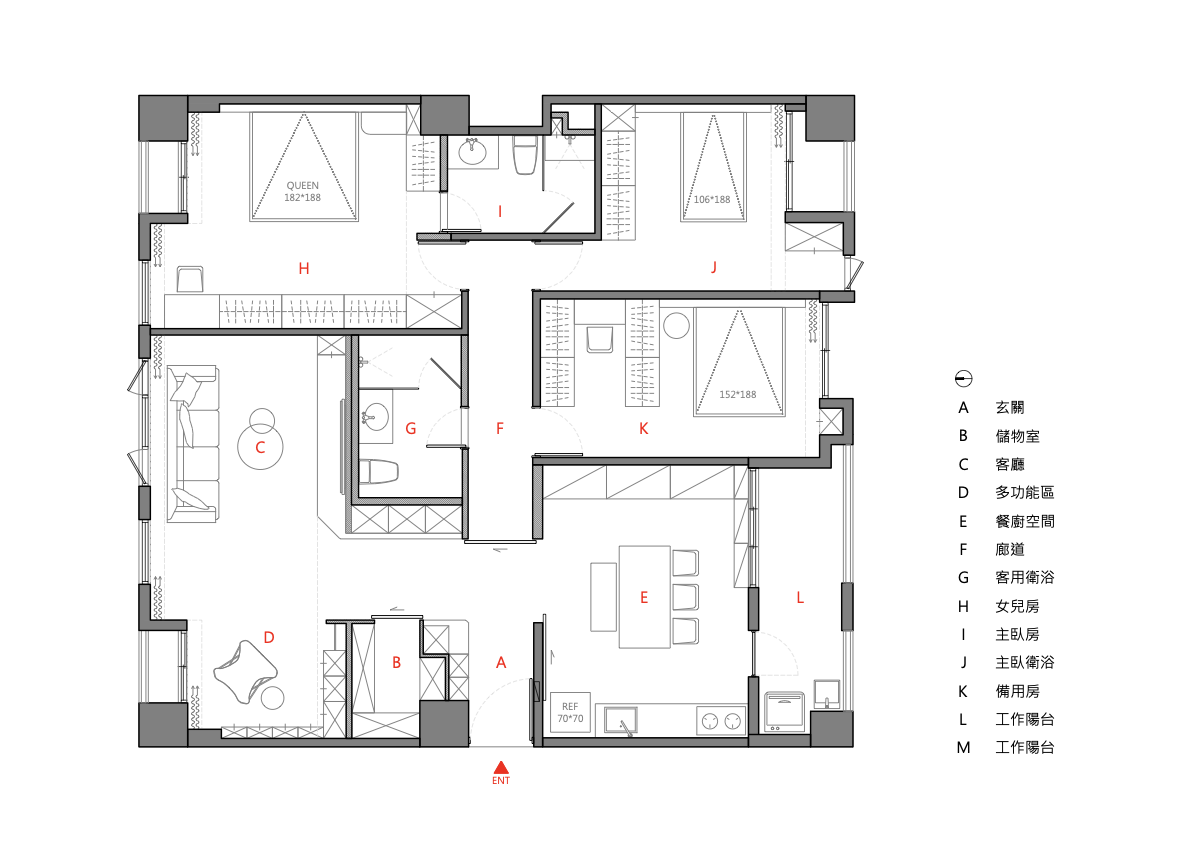
平面配置 / 空間標註版 · Floor Plan with Space Annotations
139 m² / 42 坪,位於台北市松山區的一棟老華廈。整修開始之前,譚家先做了一個前提決定:把建築本身回填到當代住宅該有的耐久與安全條件——結構、管線、隔熱、收納系統都重做一次。這個前期決定,定義了整個案子的精神:把老華廈的居住品質拉回到符合現代生活的樣貌。
139 m², a residential renovation in Songshan, Taipei — set inside an aging mid-rise building. Before any design work began, the Tan family made a single upfront commitment: bring the structural shell, plumbing, insulation and storage systems back to contemporary baseline. That early decision defined the project's intent: lift the daily quality of an aging apartment to match how a family actually lives today.
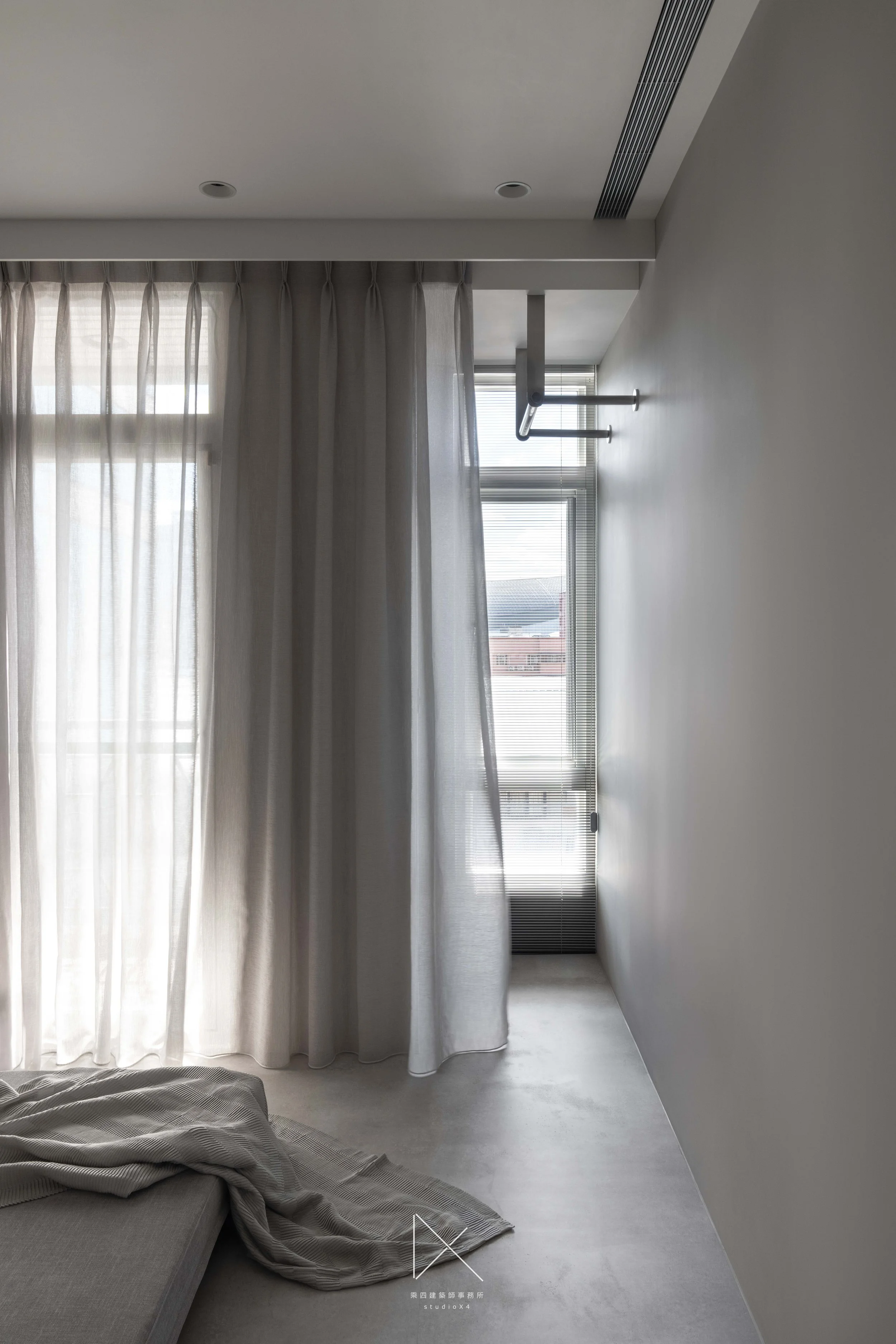
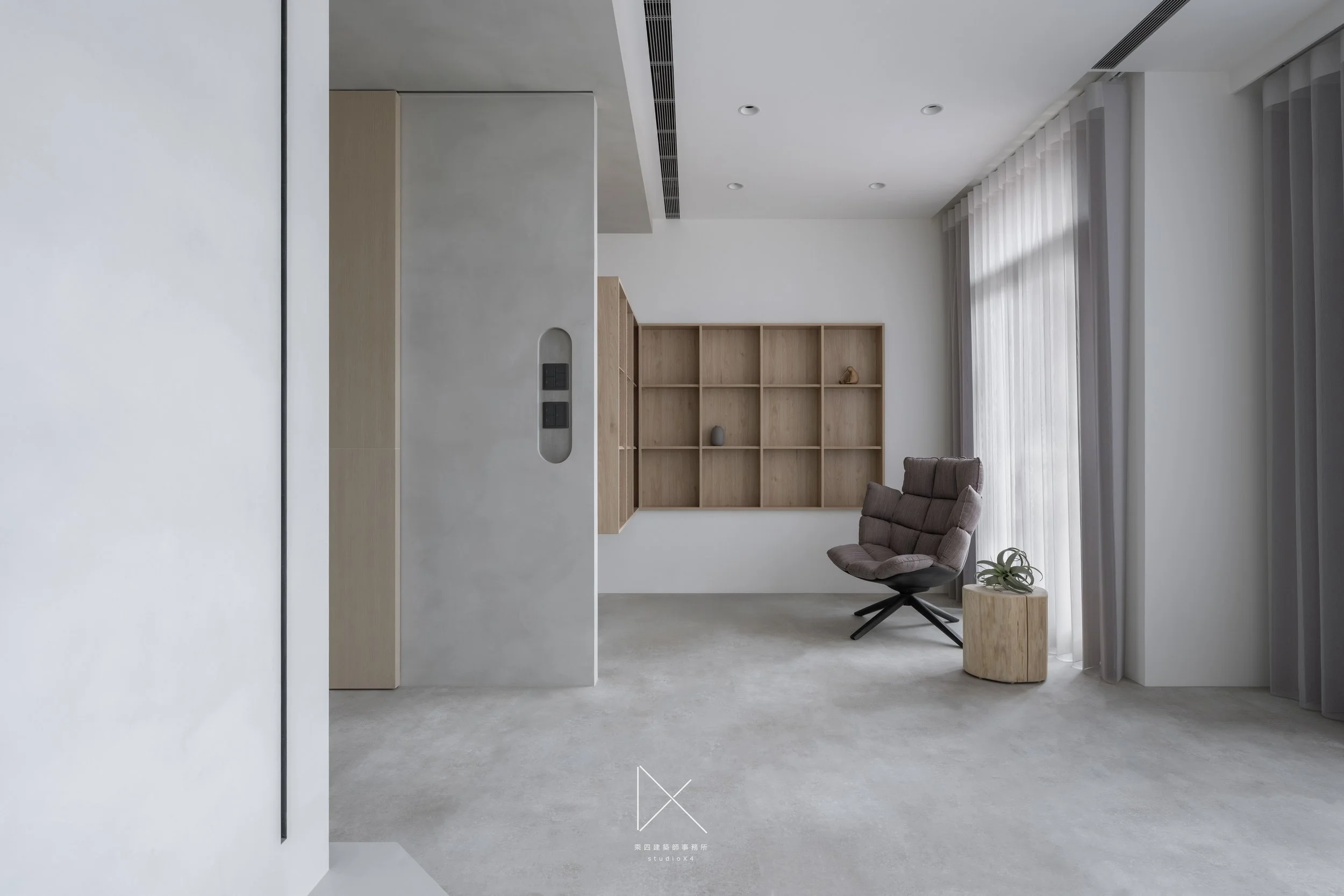
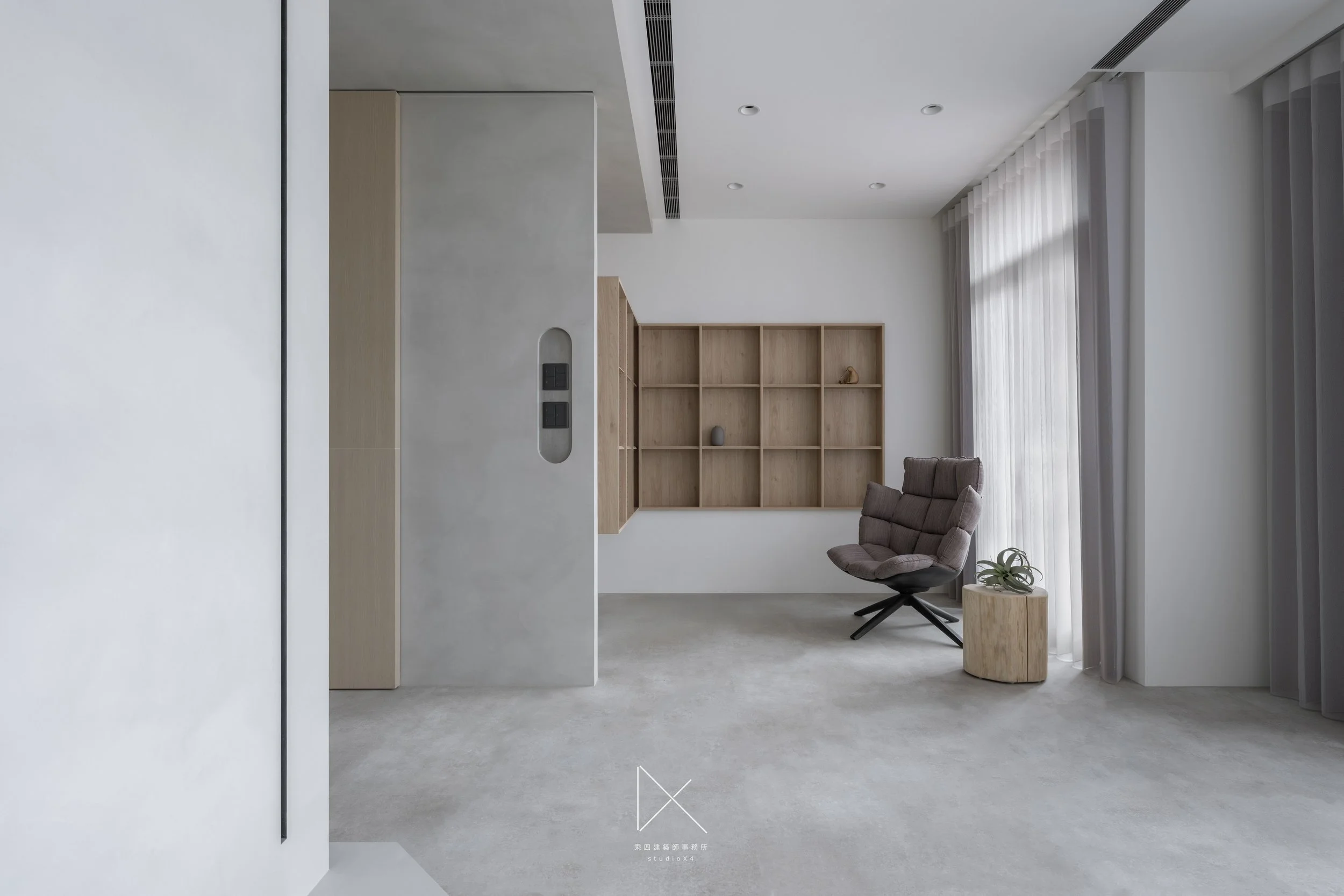
工作陽台的窗光與多功能區的木格牆,都是日常裡會被反覆使用的安靜角落。 · Service balcony light and the multi-function zone's timber grid — both are quiet corners that get used every day.
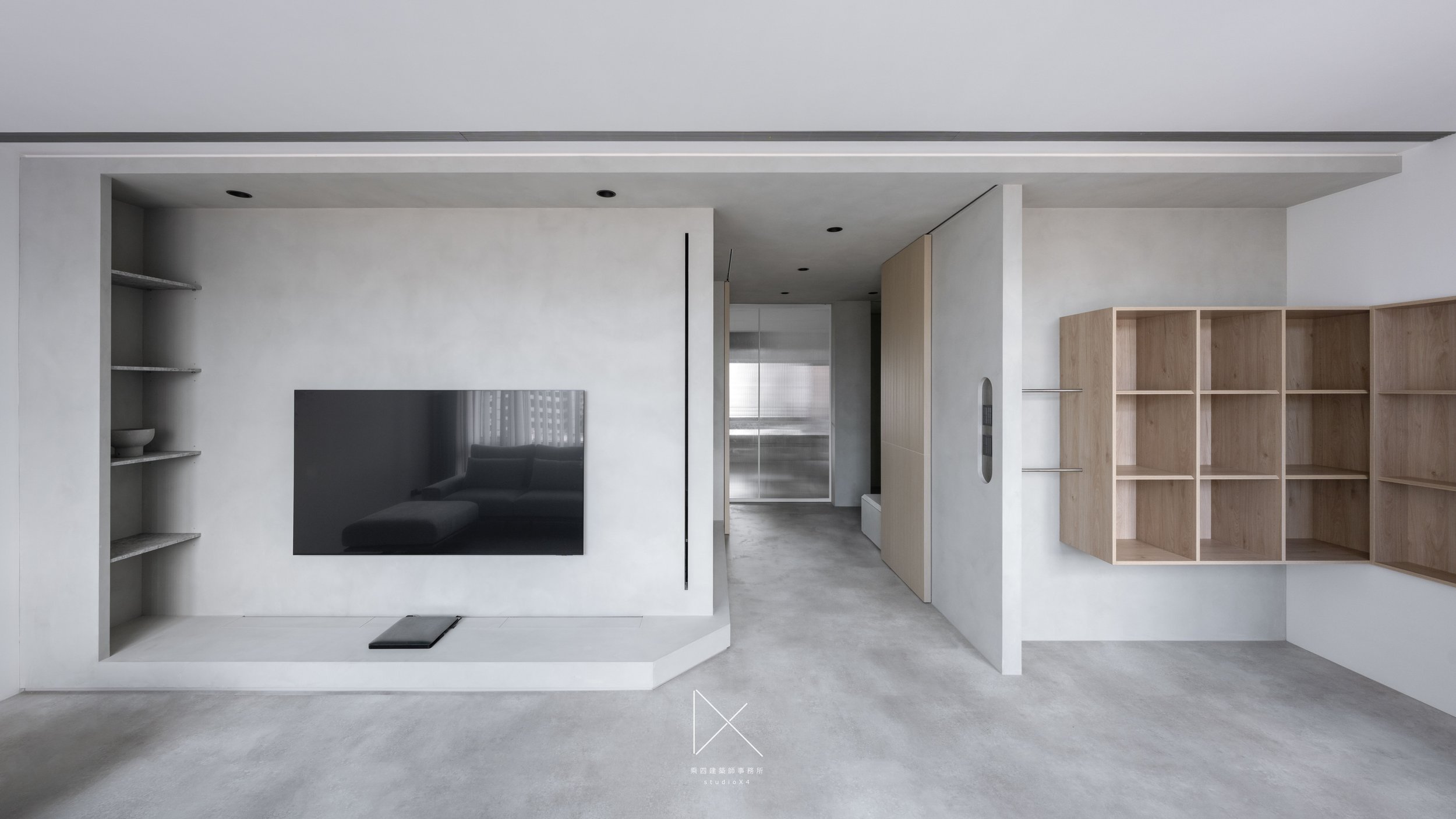
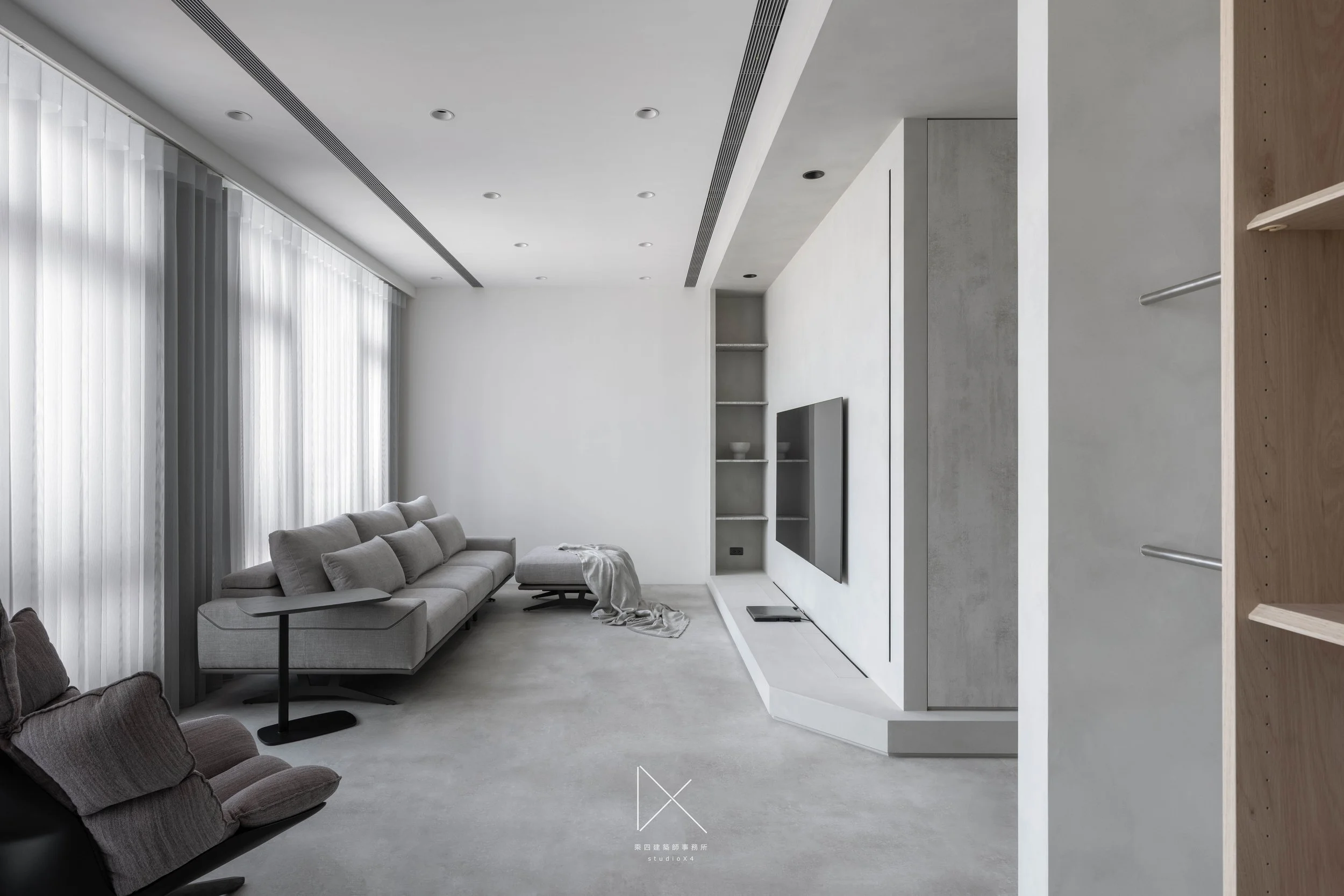
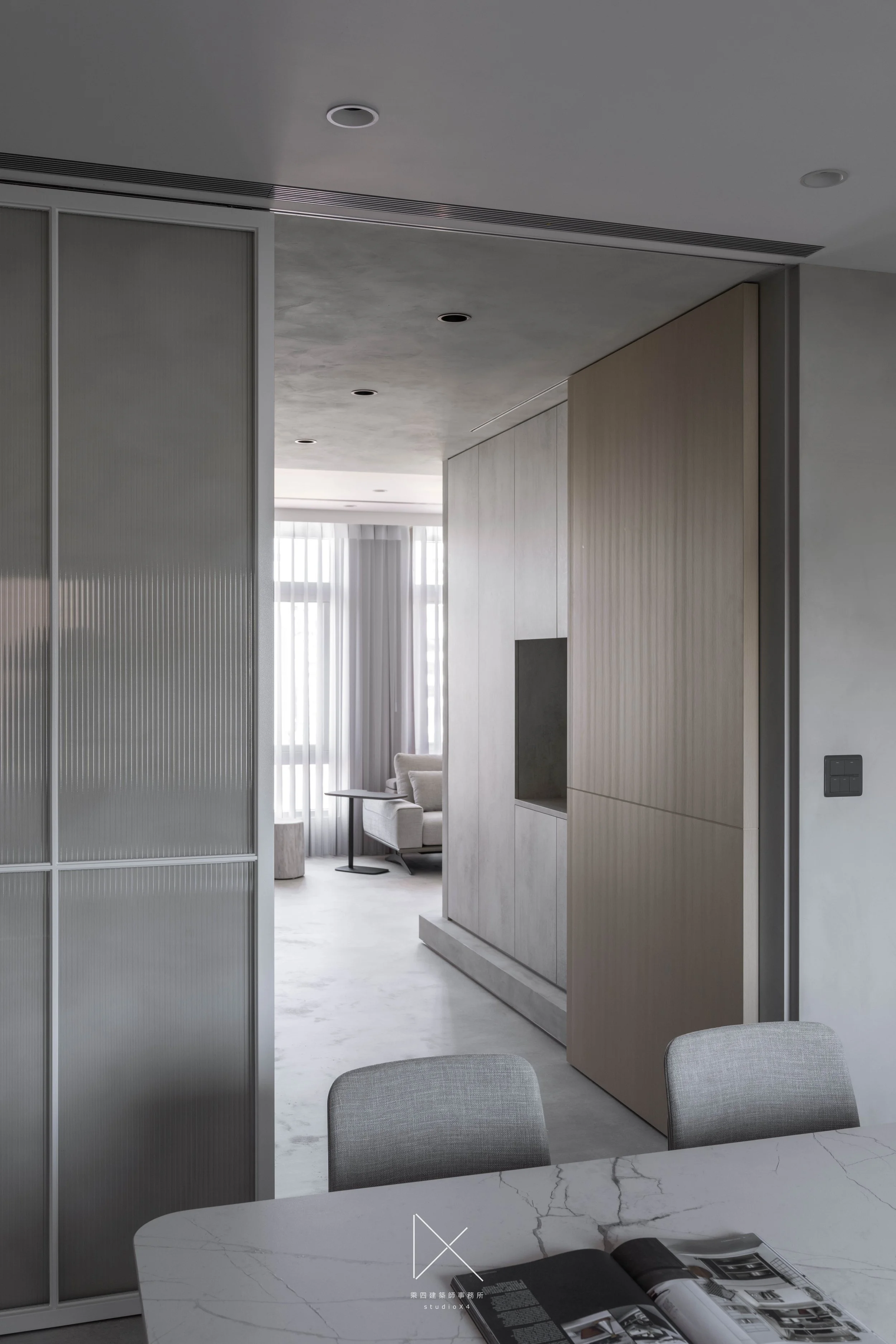
在 NestingSeries 的脈絡裡,譚宅問的是另一個版本的問題:當公共空間原本被實牆切成幾個房間,一家人要怎麼把它重新組織成可以彈性使用的整體?答案是把硬邊界換成軟邊界——客廳、多功能區、餐廚之間用長虹玻璃推拉門半穿透分界,要開時是一片完整的公共區,要收時各自獨立。廊道盡頭做成一個拱形開口收住動線。家裡幾乎所有的門都消失在立面裡:隱形門、嵌入式收納、無把手系統,讓老華廈原本厚重的隔間感被換成一種輕盈、可調整的當代格局。
Within NestingSeries, TanResidence asks a different version of the family question: when a public zone has been carved up by load-bearing walls, how does a household reorganize it into something it can actually adjust? The answer was to swap hard edges for soft ones — living room, multi-function zone, and dining-kitchen are now separated by reeded-glass sliding panels that open into one continuous public space and close into three. The corridor resolves into a single arched threshold at its far end. Almost every door in the home disappears into its elevation: hidden doors, integrated storage, handleless cabinetry — trading the heavy partitioning of the original apartment for a lighter, more adjustable contemporary plan.
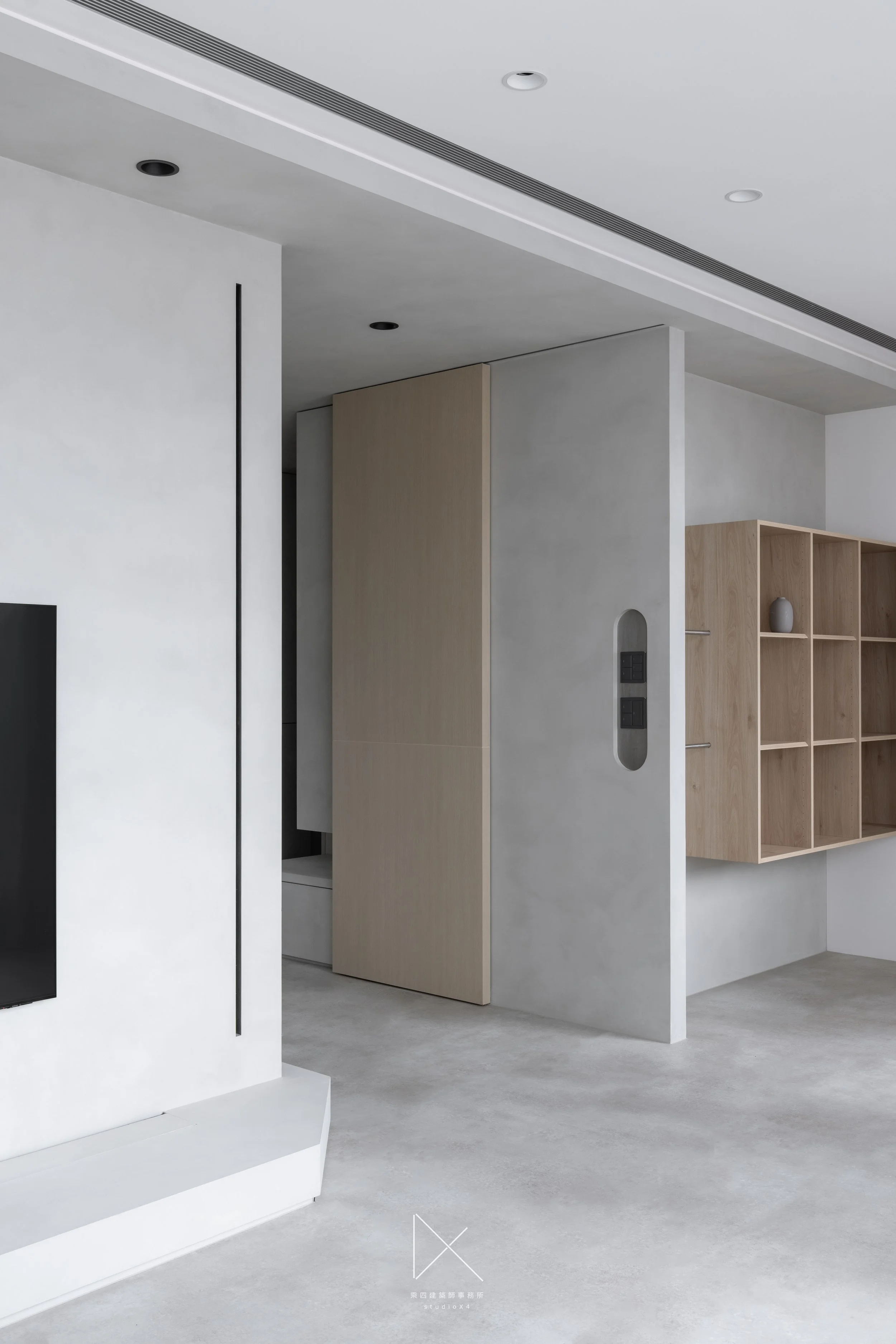
玄關以圓孔把手與隱形門收尾,立面藏起所有出入口。 · The entry resolves into a circular pull and a hidden door — the elevation absorbs every threshold.
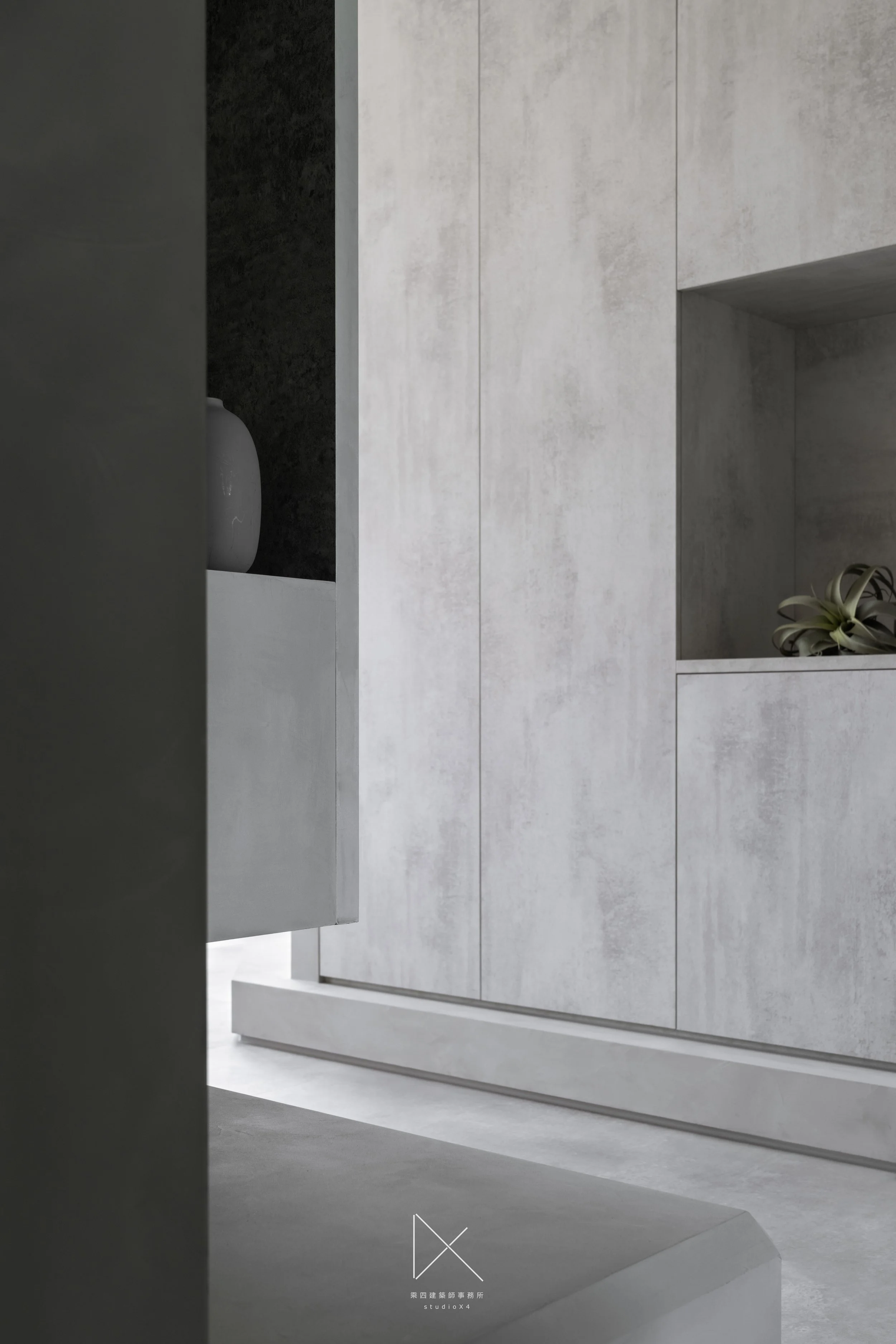
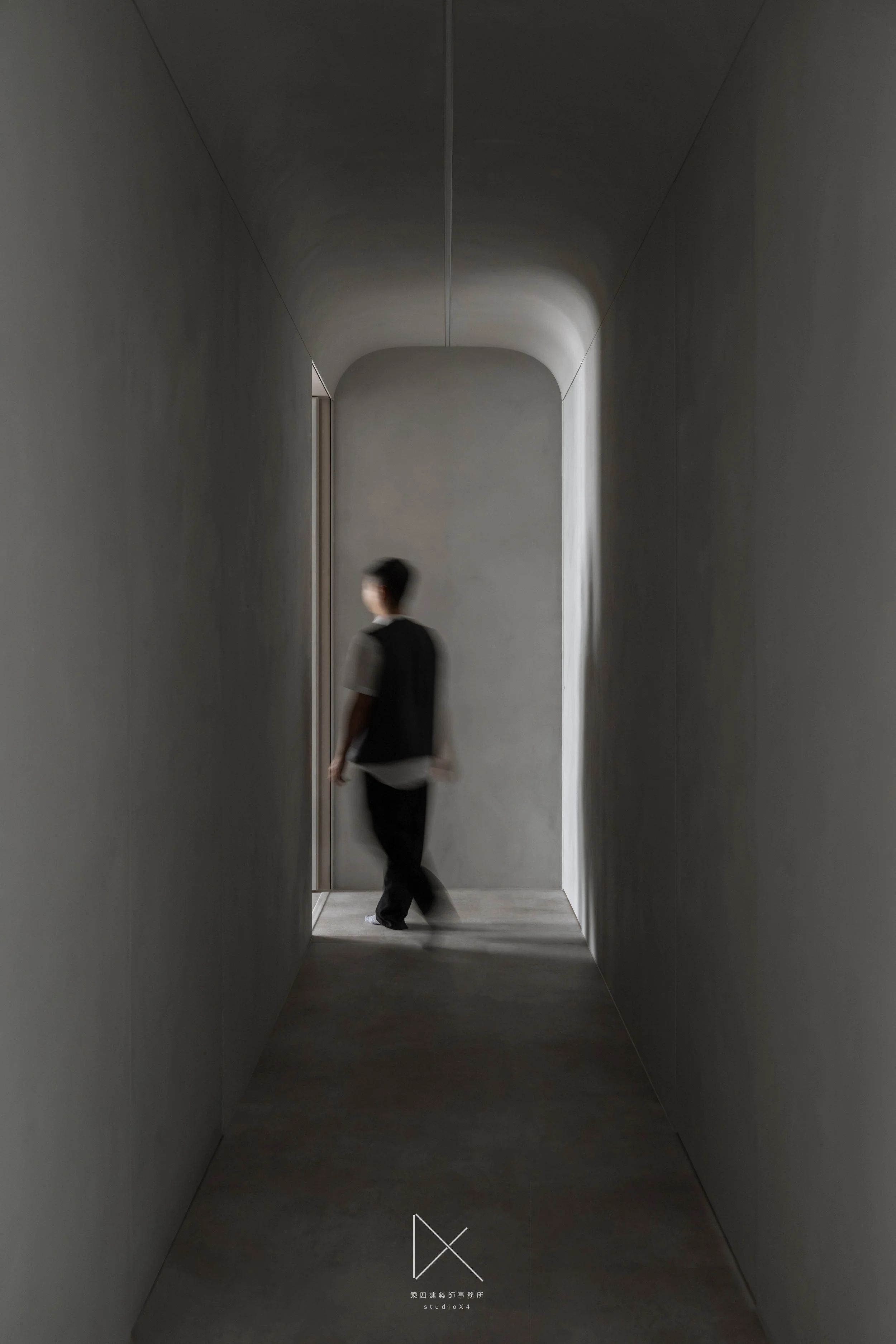
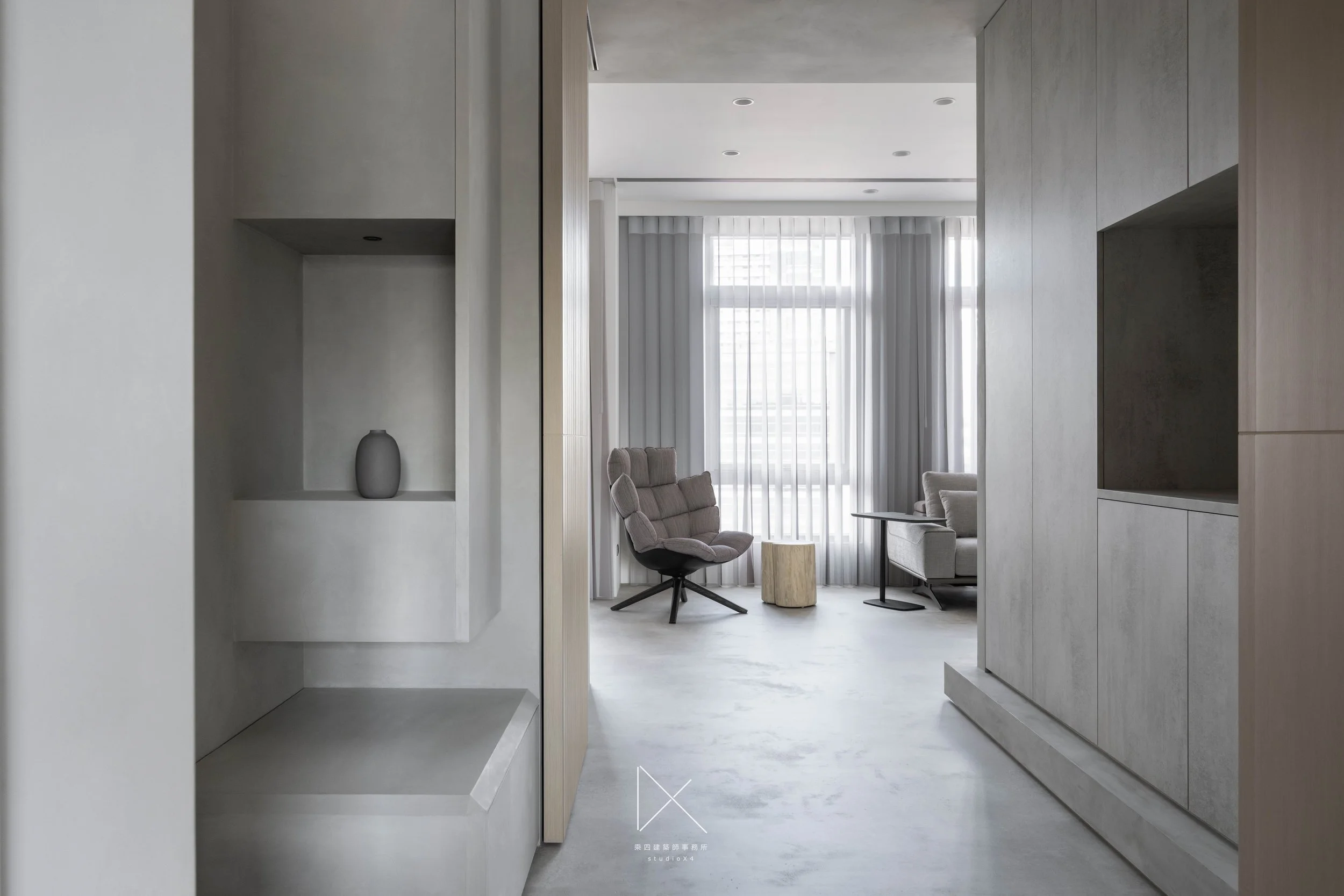
拱形廊道把動線的盡頭做成一個儀式——人走過去,光跟在身後落下;微水泥的牆面不發聲,留給人一個安靜的回家動作。 · The arched threshold turns the end of the corridor into a small ritual — light follows the body across the floor; the micro-cement wall stays silent, leaving the act of coming home with nothing in its way.
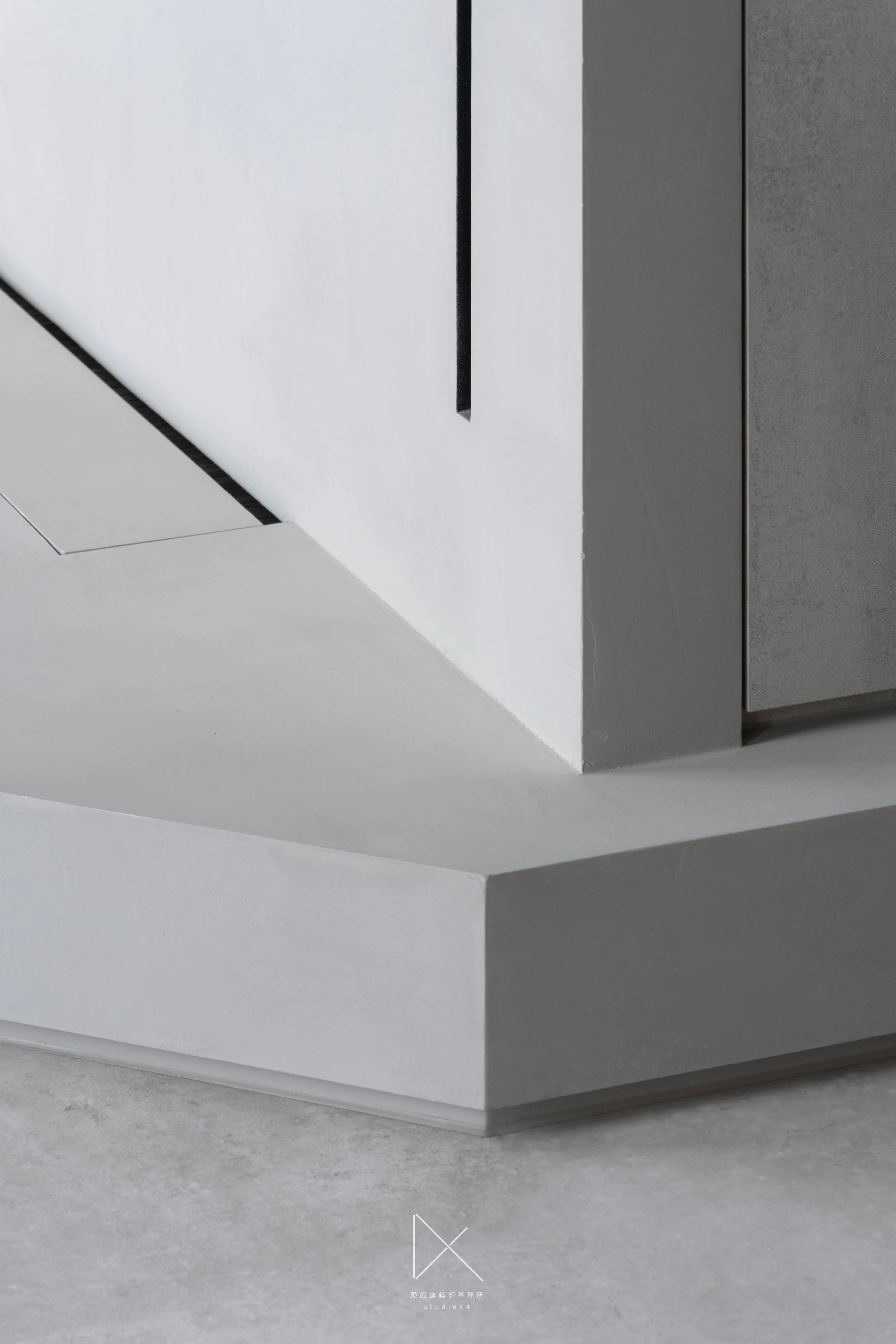
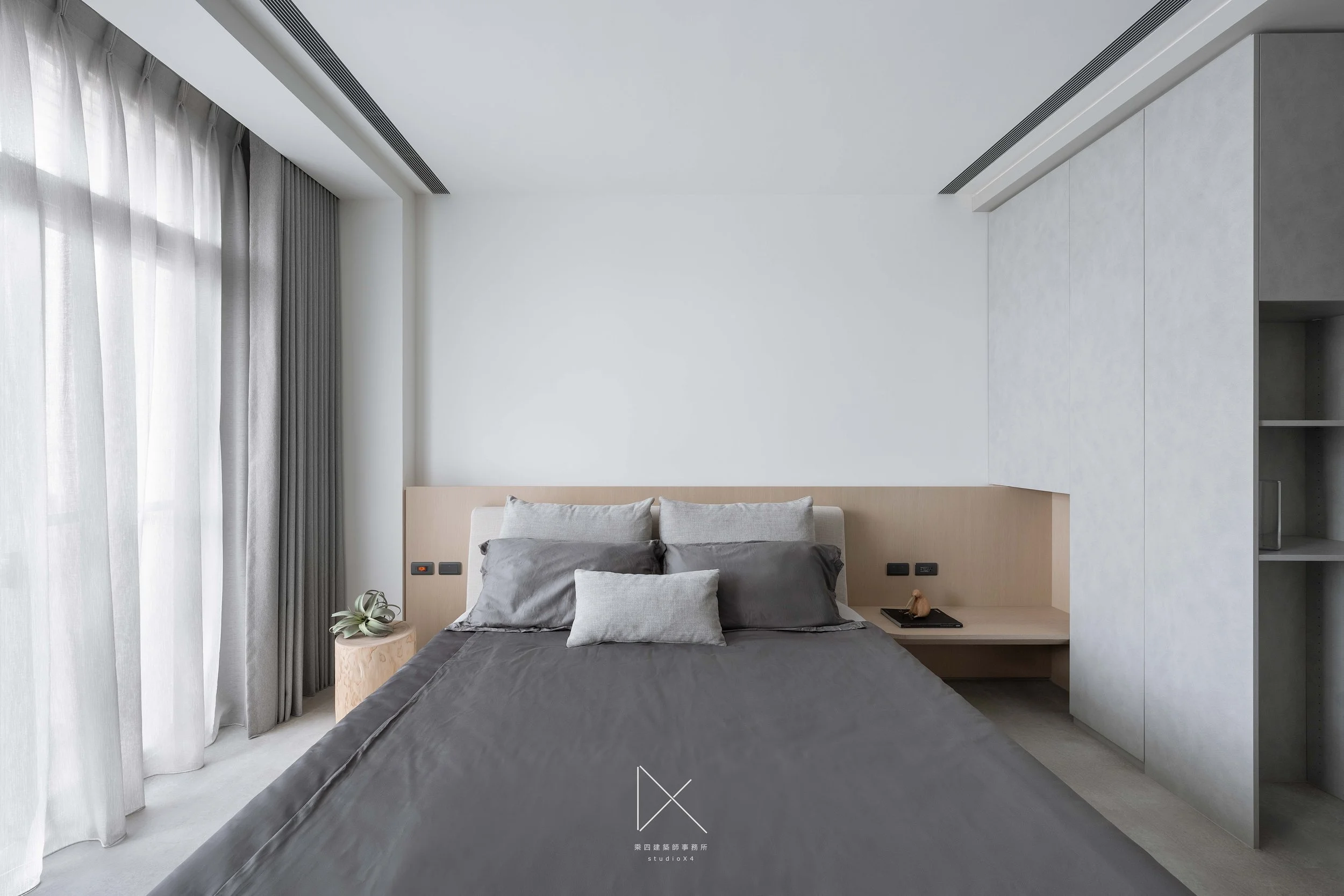
主臥以懸挑床側案與嵌牆衣櫃整理睡眠的尺度,灰色是這裡的主角。 · The master bedroom is calibrated by a cantilevered bedside ledge and a flush wardrobe wall — grey carries the room.
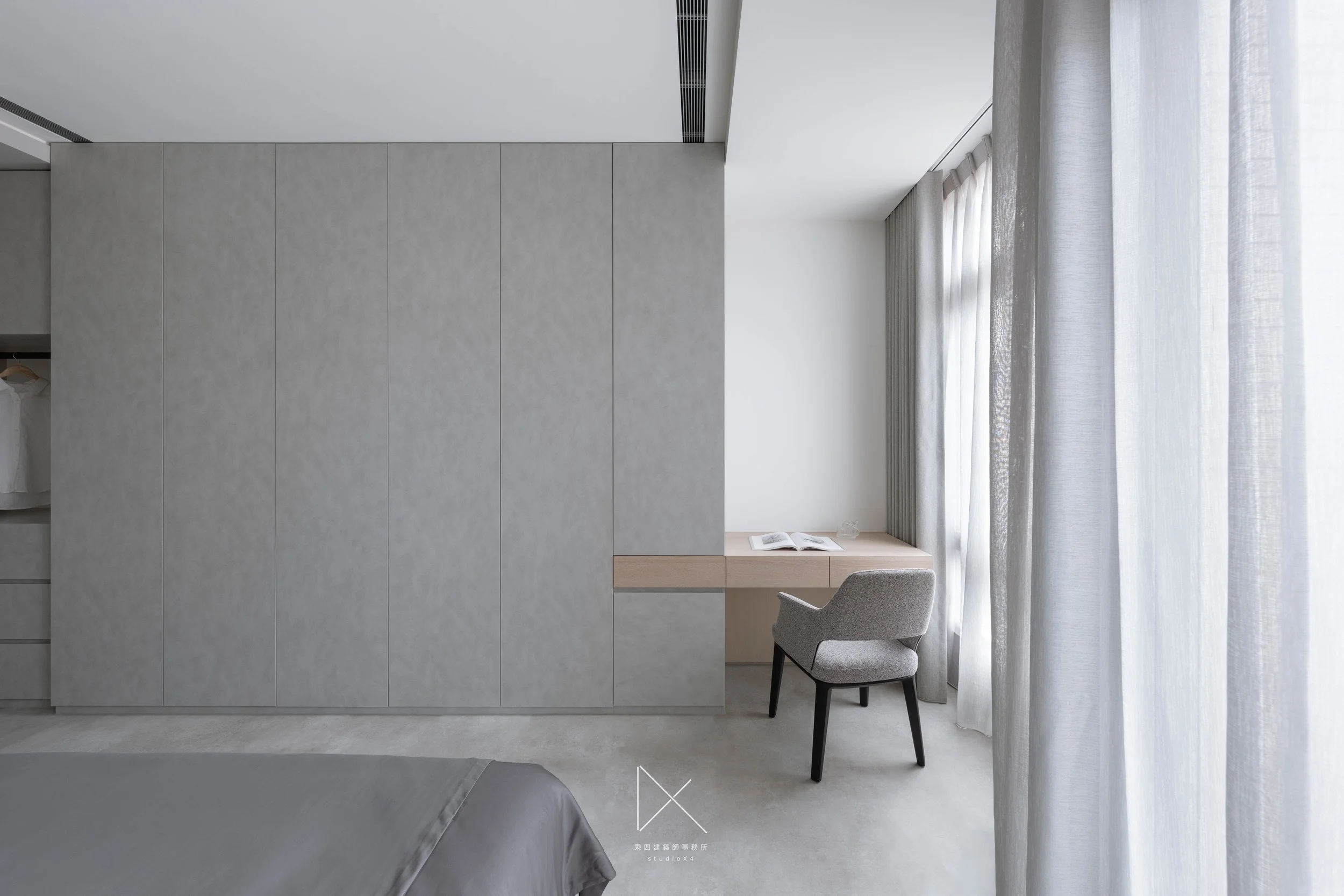
材料語言以中性與消化為原則:微水泥牆面以霧灰質地統一所有立面,把老屋原本斑駁的痕跡覆蓋成一片安靜的底;米白橡木只出現在收納立面、書桌、與隱形門的把手帶上,作為材料的呼吸點;地坪以無縫灰色磐多魔(micro-cement floor)連續鋪設,視覺上把所有空間串成一張平面;天花的細黑線是空調與燈具的邊界,整理視線而不奪走重量。把結構翻新、格局重整、收納消化都做到位,老華廈才真正回得到當代日常。這就是 NestingSeries 在譚宅想說的事。
Material choices follow a principle of neutrality and absorption. Micro-cement walls bring every elevation into a single misted-grey plane, covering the marks of the original apartment with a quiet ground tone. Pale oak appears only on storage faces, the desk, and the integrated pull-strips of hidden doors — moments of breath in the material register. The floor is laid in a continuous seamless micro-cement plane, threading every room onto one visual surface. Thin black lines on the ceiling mark the edges of HVAC and lighting; they organize the eye without claiming weight. Once structure, plan, and storage have all been resolved, an aging apartment can truly come back to contemporary daily use. That is what NestingSeries is saying in TanResidence.
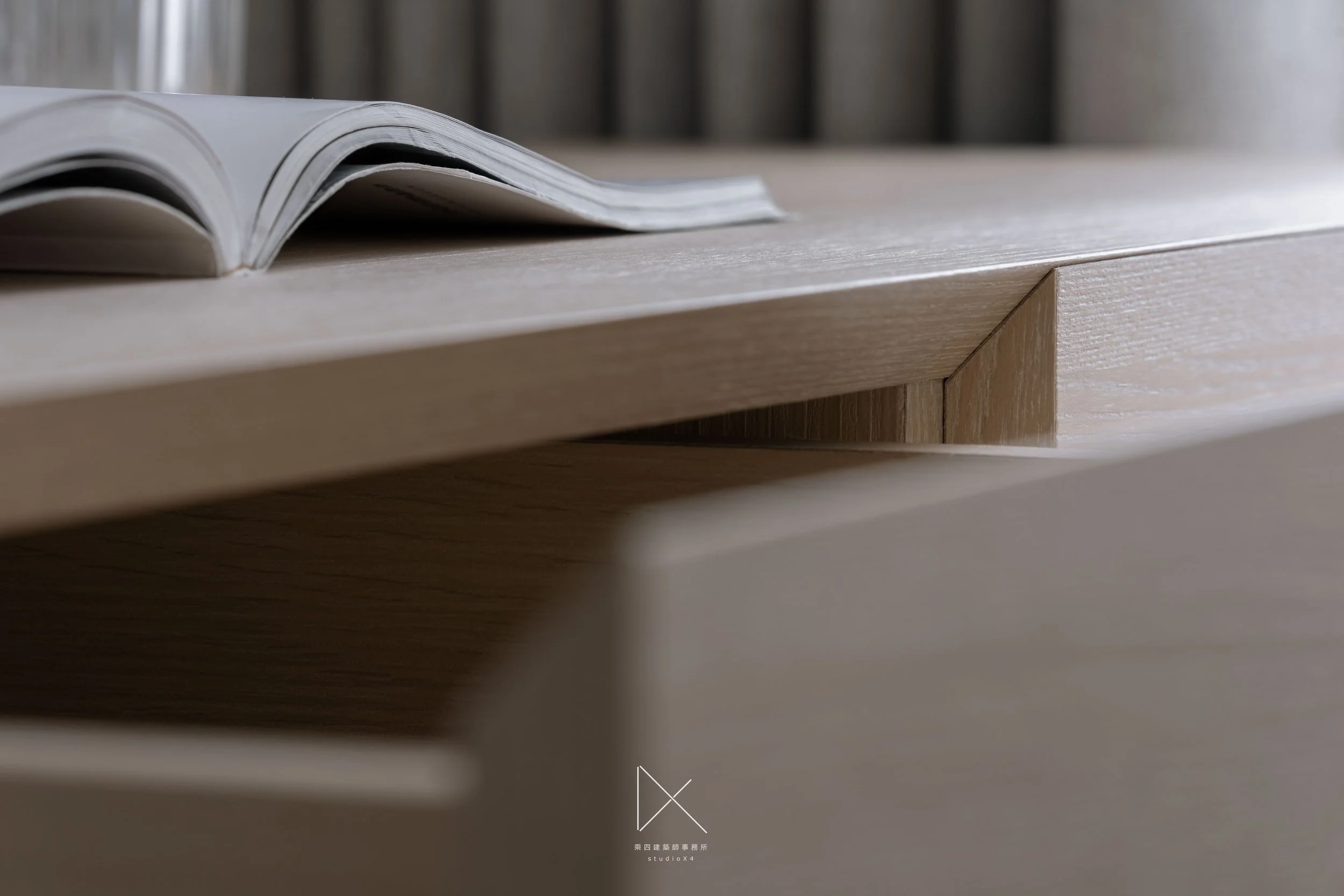
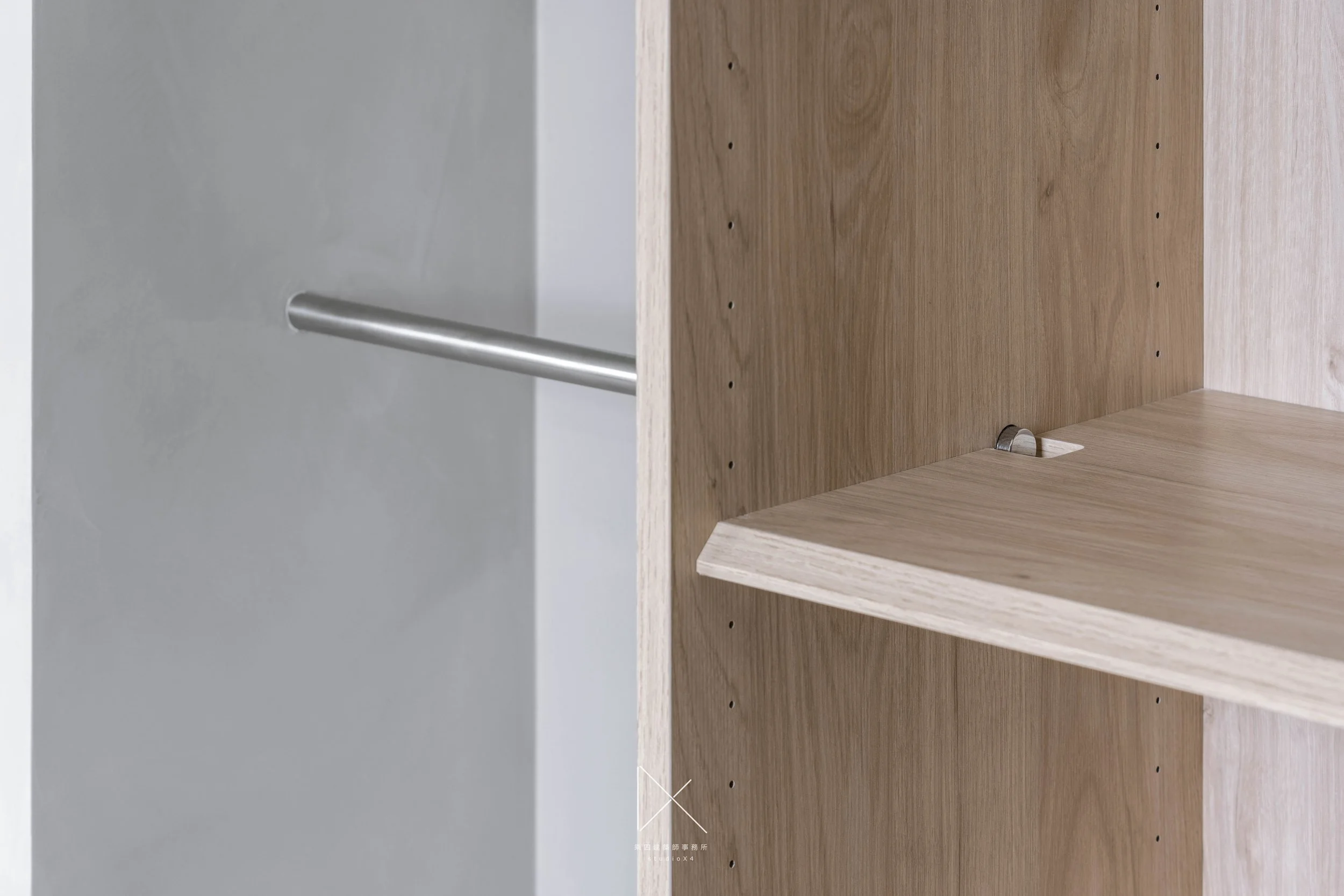
書桌邊收與衣櫃內裡的工藝細節。 · Desk-edge joinery and wardrobe interior — craft at its smallest scale.